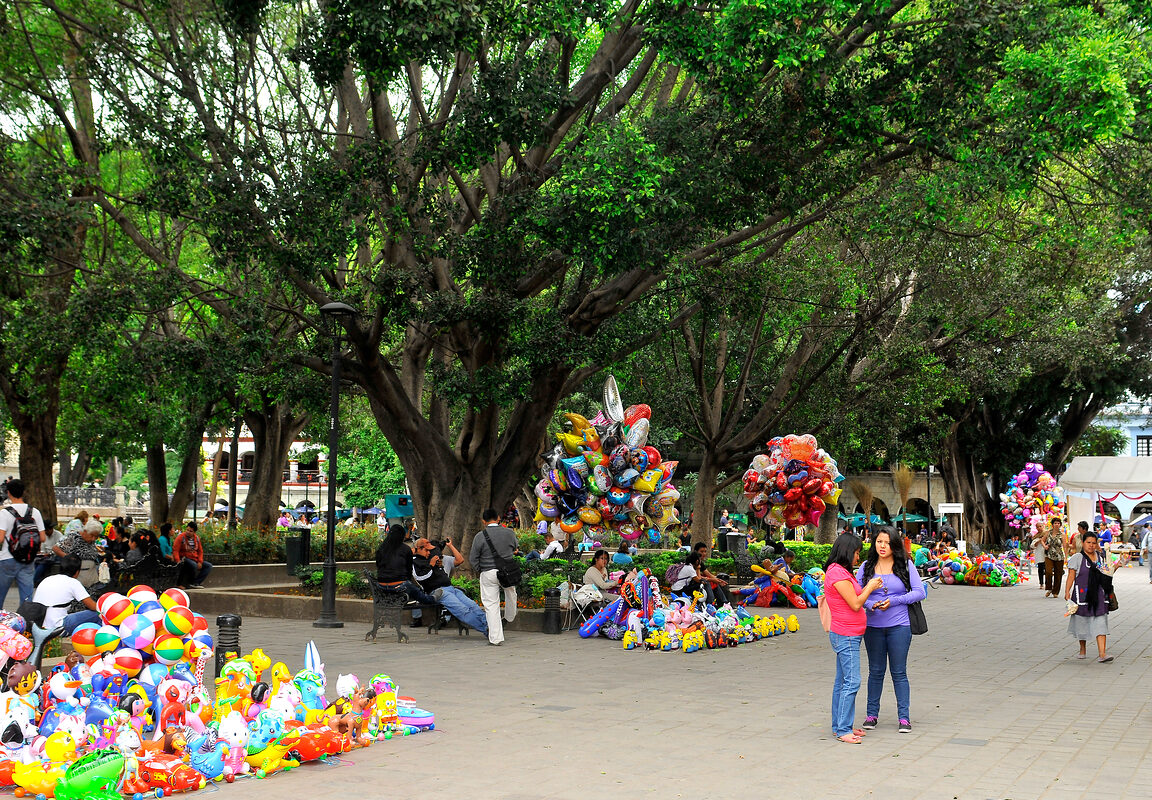
Oaxaca: Where Mexico Becomes Unmistakable
Oaxaca rewires how you taste, listen, and understand Mexico. This guide covers mole, mezcal, Monte Albán, and Hierve el Agua — and teaches you to slow down...
TL;DR
Oaxaca is Mexico’s best food city, its mezcal capital, and one of the most culturally rich destinations in the Americas. Five days here should not be packed with ruins and museums back to back. It should be half exploration and half permission to sit in a market, drink mezcal with a master distiller, and watch the light change on a 2,500-year-old mountaintop. This guide gives you a route through Oaxaca City, Monte Albán, Hierve el Agua, and the Central Valleys that balances ancient history with the most alive food scene in Mexico. The goal is not to see everything. The goal is to leave understanding why Oaxacans say “the land is so generous.”
Who This Guide Is For
Travelers who arrive with a checklist and leave with a changed palate. First-timers who want the classic volcano-to-beach route without the 6 a.m. alarm every day. Anyone who has heard “mole” on a menu and wants to know what it actually tastes like when it is made by the grandmother who invented the recipe. This guide assumes you are comfortable with bumpy roads, Spanish that is mostly gestures, and the idea that a 2,000-year-old tree deserves more respect than your Instagram feed.
Quick Facts
| Question | Answer |
|---|---|
| Best time to visit | October–April (dry season); July for Guelaguetza festival |
| Language | Spanish; 16 indigenous languages including Zapotec and Mixtec |
| Currency | Mexican Peso (MXN) |
| Time zone | Central Standard Time (UTC-6) |
| Getting there | Oaxaca International Airport (OAX) or 6-hour bus from Mexico City |
| Must try | Mole negro, mezcal, tlayuda, chapulines, tejate |
| Safety | Level 2 advisory; city is walkable and tourist-friendly — see US State Dept Mexico |
Before You Go
Documents
- Passport valid for 6+ months
- No visa required for US, Canada, EU, UK citizens (tourist card up to 180 days)
- Print hotel reservation — immigration sometimes asks
- Travel insurance recommended
Gear
- Comfortable walking shoes — cobblestones are uneven
- Sun hat and sunscreen — altitude is 1,550m, sun is strong
- Light rain jacket — afternoon showers in rainy season (May–Sep)
- Swimwear — for Hierve el Agua pools
- Reusable water bottle — altitude and dry climate dehydrate you fast
Apps / Navigation
- Google Maps offline — cell service drops in valleys
- WhatsApp — taxis, restaurants, hotels all use it
- Spanish translation app — English is less common outside the city center
Health
- Altitude: 1,550m in the city, higher at Hierve el Agua (1,700m). Drink water, avoid alcohol first day.
- Tap water: do not drink. Bottled water widely available.
- Street food: eat it. Oaxaca’s food safety record is excellent, but choose stalls with high turnover.
Getting There
By Air
- Oaxaca International Airport (OAX) — 30 minutes from city center
- Direct flights from Mexico City (Aeroméxico, Volaris, Viva Aerobus — 1hr)
- Direct flights from Houston (United), Dallas (American), Monterrey (Viva)
- From US/Canada: most connect through Mexico City
- Flight cost: $150–400 USD round-trip from US major cities
- For official tourism information, see Oaxaca Tourism
By Bus
- ADO bus from Mexico City (TAPO station) — 6 hours, $30–50 USD
- First-class buses with WiFi, reclining seats, air conditioning
- Recommended if you are already in Mexico City and want to save money
By Car
- 6 hours from Mexico City via Cuernavaca and Puebla
- Mountain roads are winding but well-paved
- Parking in Oaxaca City: most hotels have parking, street parking is metered
Airport Transfer
- Taxi to city center: $15–25 USD, 30 minutes
- Colectivo (shared shuttle): $5–8 USD, 45 minutes
- Ride-share apps work from the airport
Where to Stay
| Area | Vibe | Budget/Night | Best For |
|---|---|---|---|
| Centro Histórico | Colonial streets, Zócalo, restaurants | $40–80 | First-timers, walkers |
| Xochimilco / Jalatlaco | Quiet residential, art galleries | $30–60 | Return visitors, families |
| San Felipe | Upscale, boutique hotels | $80–150 | Foodies, celebration trips |
| Rustic cabins Hierve el Agua | Basic, community-run | $30–50 | Overnight at the pools |
Where to Eat
| Meal | Recommendation | Area | Cost/Person |
|---|---|---|---|
| Breakfast | Mercado 20 de Noviembre — memelas + hot chocolate | Centro | $3–6 |
| Lunch | Tlayuda at a market stall | Centro | $5–10 |
| Dinner | Mole negro at Casa Oaxaca | Centro | $20–35 |
| Mezcal | In Situ — 200+ mezcals by the glass | Centro | $10–20 |
| Street food | Chapulines (grasshoppers) at Mercado Benito Juárez | Centro | $2–4 |
| Fine dining | Criollo — farm-to-table, 8-course menu | Centro | $60–90 |
| Coffee | Café Brújula — local roaster, vegan options | Centro | $3–6 |
Day-by-Day Itinerary
Day 1: Arrival + Oaxaca City Historic Center
- 10:00 — Arrive OAX, taxi to hotel
- 12:00 — Lunch at Mercado 20 de Noviembre: try a tlayuda and chapulines
- 14:00 — Walk the Zócalo, visit Templo de Santo Domingo and Museo de las Culturas
- 16:00 — Stroll Macedonio Alcalá street, browse alebrije shops
- 19:00 — Dinner at a local comedor: mole coloradito with rice
- 21:00 — Mezcal at In Situ or Mezcaloteca
Day 2: Monte Albán + Tlacolula Valley
- 08:00 — Taxi to Monte Albán (20 min)
- 08:30 — Explore ruins: main plaza, Building J observatory, ball court, tombs
- 11:00 — Visit on-site museum
- 12:00 — Lunch in the valley: Teotitlán del Valle textile workshop + comida corrida
- 14:00 — Mitla archaeological site — geometric stone mosaics
- 16:00 — El Tule — 2,000-year-old Montezuma cypress, widest tree in the world
- 18:00 — Return to Oaxaca City
- 19:30 — Dinner at Casa Oaxaca
Day 3: Hierve el Agua Day Trip
- 07:00 — Depart Oaxaca City (private driver recommended)
- 08:30 — Arrive Hierve el Agua — swim in the cliff-edge pools before crowds
- 10:30 — Hike the lower trail to the petrified waterfall viewpoint
- 12:30 — Lunch at local comedor near the entrance
- 14:00 — Return via Teotitlán del Valle — textile demonstration
- 16:00 — Stop at a mezcal palenque for tasting
- 18:00 — Return to Oaxaca City
- 20:00 — Casual dinner at Mercado Benito Juárez
Day 4: Mezcal Trail + Indigenous Villages
- 09:00 — Breakfast at Café Brújula
- 10:00 — Mezcal day trip: visit 2–3 palenques in the Central Valleys
- Santiago Matatlán (the mezcal capital)
- Tlacolula valley family palenque
- 13:00 — Lunch at a village comedor
- 15:00 — Visit San Bartolo Coyotepec — black pottery workshop
- 17:00 — Return to Oaxaca City
- 19:00 — Mole and mezcal pairing dinner
Day 5: Last Morning + Departure
- 08:00 — Morning walk through the Zócalo, people-watch
- 09:30 — Last-minute shopping: mezcal bottles, alebrijes, chocolate
- 11:00 — Check out, taxi to OAX
- 13:00 — Depart Oaxaca
Plan B Alternatives
- Rainy season (May–Sep): Move Hierve el Agua to Day 2 (weather is usually clear mornings). Afternoon showers are brief; keep a flexible schedule.
- Guelaguetza festival (late July): Book hotels 3+ months in advance. The city is vibrant but crowded; add an extra day for festival events.
- Road blocks: Access to Hierve el Agua has been periodically disrupted. Always check with your hotel concierge the day before. If blocked, swap for a Mitla + Teotitlán day trip.
- If short on time: Cut Day 4 and spend the morning at the Ethnobotanical Garden instead.
Practical Tips
- Money: MXN cash everywhere. Cards accepted in mid-range restaurants and hotels. ATMs in the city center.
- Taxis: Agree on price before riding or use WhatsApp to call a radio taxi. Most short trips cost $3–8 USD.
- Safety: Oaxaca City is one of the safest colonial cities in Mexico. Standard precautions: watch your belongings in markets, avoid walking alone late at night in unfamiliar areas.
- Altitude: Drink twice as much water as you think you need. Alcohol hits harder at 1,550m.
- Bargaining: Expected at markets for crafts and alebrijes. Start at 50% of asking price.
- Language: Learning 5 Zapotec phrases will get you smiles. See Useful Phrases below.
Before You Go: Last-Minute Checks
- Book Monte Albán entry online to skip the line (210 MXN)
- Confirm Hierve el Agua access with your hotel 24 hours before
- Bring small bills (20–50 MXN) for market stalls and colectivos
- Check Guelaguetza dates if traveling in July
- Download offline maps — cell service is spotty in valleys
Insider Tips
- The best tlayuda in Oaxaca is at Mercado 20 de Noviembre, stall #42. Ask for “tlayuda con tasajo.”
- In Situ mezcalería is worth the trip alone. Ask for a flight of espadín, madrecuixe, and tobalá.
- Sunday is market day in Tlacolula — the indigenous market is one of the oldest in Mexico and far more authentic than anything in the city center.
- Temazcal (sweat lodge) ceremonies are offered by local guides. Ask your hotel for a recommended temazcalero.
- Eat at the comedores in Mercado Benito Juárez — the food is better, cheaper, and more authentic than any restaurant in the centro.
Etiquette & Culture
- Greetings: A handshake or a kiss on the right cheek is standard. Oaxacans are warm and formal.
- Photos: Always ask before photographing people, especially in indigenous villages.
- Tipping: 10–15% in restaurants. Small tips for market vendors and guides are appreciated.
- Guelaguetza: This is a sacred cultural event. Do not treat it as a party — the dances and processions have deep Zapotec meaning.
- Mezcal culture: Mezcal is not a shot. It is sipped slowly, often with orange slices and sal de gusano. Do not shoot it.
Useful Phrases
| Spanish | Pronunciation | Meaning |
|---|---|---|
| Buenos días | BWEH-nohs DEE-ahs | Good morning |
| ¿Cuánto cuesta? | KWAN-toh KWEH-stah? | How much does it cost? |
| Una tlayuda con tasajo, por favor | OO-nah tlah-YOO-dah kohn tah-SAH-ho por fah-VOR | A tlayuda with beef, please |
| ¿Mezcal? | Meh-SKAL? | Mezcal? |
| Está delicioso | Eh-STAH deh-lee-SYOH-soh | It is delicious |
| Zapotec: Padiux | pah-DEE-oosh | Hello / Thank you |
FAQs
Do I need a visa? Most nationalities (US, Canada, EU, UK) do not need a visa for tourist stays up to 180 days. Check with the Mexican consulate for your specific nationality. Sources: US State Dept Mexico · wikitravel
Is Oaxaca safe for solo travelers? Yes. Oaxaca City is walkable and tourist-friendly. Standard precautions apply: watch your belongings in crowded markets, avoid walking alone late at night in unfamiliar areas. The city has a strong community feel. Sources: US State Dept Mexico · wikitravel
What is the best way to get around? Walking in the city center, taxis for longer trips, guided tours for Hierve el Agua and mezcal routes. colectivos are cheap but confusing for first-timers.
Can I drink the water? No. Bottled water is cheap and widely available. Ice in restaurants is generally safe (made from purified water), but when in doubt, ask.
Do I need to speak Spanish? English is spoken in hotels and mid-range restaurants, but outside the city center, basic Spanish is essential. Download a translation app and learn a few key phrases.
When should I go? Dry season (October–April) is ideal. July is culturally packed with Guelaguetza but crowded and expensive. Rainy season (May–September) has brief afternoon showers and fewer tourists.
Related Guides
- San Miguel de Allende: World’s Best City 2026 (coming soon)
- Bacalar: The Maldives of Mexico (coming soon)
- Mexico City: Roma Norte + Condesa (coming soon)
- Tulum: Beachfront Coworking + Cenotes (coming soon)
The best trips do not just move you across a map. They change how you see the world. Use this guide to build your own story.
Start Planning Your Story