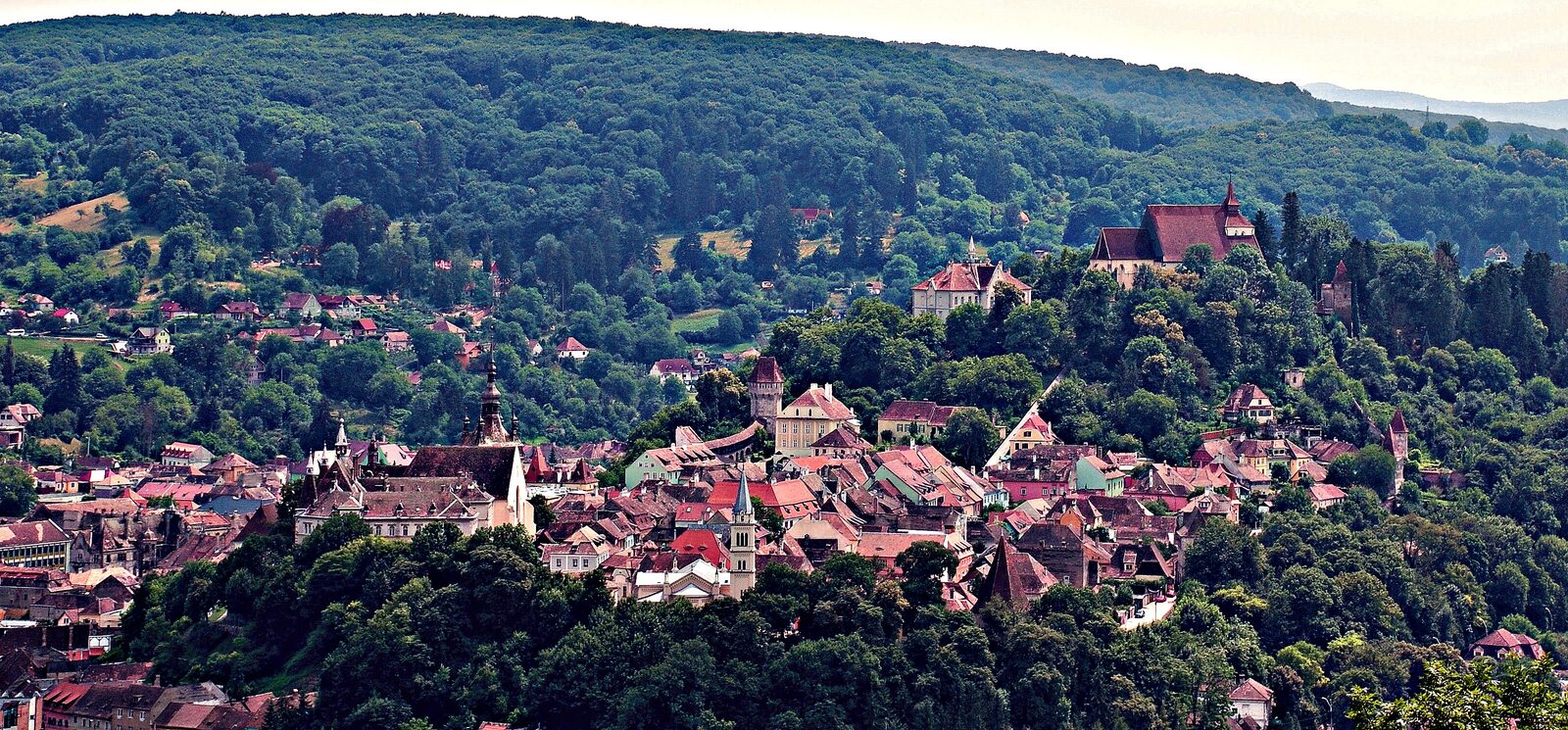
Romania: The Balkans' Best-Kept Secret — Where Medieval Castles Meet Wild Carpathians
Romania: Transylvania's fairy-tale towns, Bran Castle, the Danube Delta's wildlife, and painted monasteries — Schengen-area affordability meets medieval magic.
TL;DR
Romania is Eastern Europe’s last under-the-radar destination that still feels like discovery. It is also one of the most affordable countries in the Schengen Area, with medieval towns that look like Disney concept art, a Carpathian wilderness where bears outnumber people, and a Danube Delta so biodiverse it is a UNESCO World Heritage site. The country joined Schengen for air and sea borders in 2024, with full land border integration pending — meaning you can fly in visa-free from most Western countries and road-trip without border checks (for now). This guide gives you a 10-day route through Bucharest, Transylvania, and the Danube Delta that balances medieval history, mountain hiking, and the kind of low-key authenticity that has made Romania a cult favorite among travelers who have already done Prague and Budapest. The goal is not to count Dracula tourist traps. The goal is to understand why Romania is the only country in Europe where you can still have a 15th-century town square entirely to yourself at sunrise.
Who This Guide Is For
Travelers who have done Prague, Budapest, and Kraków and want something that still feels like a discovery. History lovers who want Transylvania not as a Halloween theme park but as a living archive of Saxon heritage, Ottoman borderland, and Austro-Hungarian architecture. Budget-conscious travelers who want EU infrastructure at Balkan prices — Romania is 30–50% cheaper than Western Europe for food, accommodation, and transport. Solo travelers who want safe, walkable cities with a growing digital nomad scene and a café culture that rivals Vienna for half the price. Nature lovers who want the Carpathians — home to 60% of Europe’s brown bears — without the Alps crowds. Anyone who reads “Schengen Area” and “under €50/night” in the same sentence and thinks that sounds exactly right. This guide assumes you are comfortable with a mix of trains, rental cars, and the occasional marshrutka, and that you believe medieval towns are better without gift shops.
Quick Facts
| Question | Answer |
|---|---|
| Best time to visit | May–October (dry season); June–September peak for hiking and Delta boat trips |
| Typical duration | 10 days |
| Difficulty | Easy (paved roads, good train network, well-marked trails) |
| Typical daily budget | €35–€100+ USD (wide range; see Where to Stay) |
| Visa | Schengen visa-free for US, UK, EU, CA, AU for stays up to 90 days; see GOV.UK entry requirements |
| Currency | Romanian leu (RON) — ~4.6 RON = 1 USD |
| Language | Romanian (Latin-based); English widely spoken in cities and tourist areas |
| Getting there | Fly into Bucharest (OTP) or Cluj-Napoca (CLJ) from most European hubs; train from Budapest (6 hrs) |
Before You Go
Checklist
Documents & Money
- Passport with 3+ months validity beyond your departure date from Schengen
- No visa required for stays up to 90 days for US, UK, EU, CA, AU citizens (Schengen visa-free)
- Travel insurance with medical coverage (EU health insurance card is accepted but travel insurance is strongly recommended)
- RON cash for small towns, markets, and rural stops (ATMs in cities; withdraw RON 500–1,000 at airport)
- Credit card with no foreign transaction fees (widely accepted in cities)
Apps to Download
- Google Maps offline for cities and main roads
- Trainline or CFR Călători app for train schedules and bookings
- Omio or Flixbus for intercity bus connections
- Windy or local weather app for Carpathian hiking forecasts
Gear
- Comfortable walking shoes (cobblestones in medieval towns are uneven)
- Daypack for hiking in the Carpathians or Delta birdwatching
- Binoculars (the Danube Delta has 320+ bird species)
- Power bank (electricity is 230V, Type C/F plugs)
- Reusable water bottle (tap water is safe in most cities)
Health
- No mandatory vaccines; routine vaccines recommended
- Tick-borne encephalitis vaccine if hiking extensively in the Carpathians (May–October)
- Basic first-aid kit with blister treatment
Getting There
Most international visitors fly into Bucharest Henri Coandă International Airport (OTP) or Cluj-Napoca International Airport (CLJ). Bucharest is the main hub with connections from most European capitals and seasonal intercontinental flights. Cluj is the gateway to Transylvania and often cheaper from Western Europe. From the US, the easiest route is through a European hub like Frankfurt, Amsterdam, or London.
| Route | From | To | Time | Cost |
|---|---|---|---|---|
| International | FRA → OTP | Direct (Lufthansa, TAROM) | 2 hrs | €150–€350 return |
| International | AMS → CLJ | Direct (Wizz Air, KLM) | 2.5 hrs | €120–€280 return |
| International | LHR → OTP | Direct (TAROM, British Airways) | 3 hrs | €180–€400 return |
| Land | Budapest → Brasov | Train or bus | 6–8 hrs | €30–€60 |
| Airport → Bucharest center | OTP | Express bus 780/181 | 40 min | RON 7 (€1.50) |
Visa note: Romania joined the Schengen Area for air and sea borders in March 2024, with full land border integration expected in 2026–2027. US, UK, EU, Canada, Australia, and New Zealand citizens enjoy visa-free stays up to 90 days. The GOV.UK rates Romania low-risk for tourist travel.
Where to Stay
Romania’s accommodation market is one of the best value propositions in Europe. You can stay in a 15th-century Saxon citadel for the price of a hostel bunk in Prague. The 2026 landscape is shifting: EU funds are modernizing rural guesthouses, and Transylvania’s “slow tourism” movement has produced a new generation of boutique stays.
| Type | Where | Price Range per Night | What You Get |
|---|---|---|---|
| Hostel | Bucharest, Brasov, Cluj | €10–€25 | Dorm bed, shared bathroom, often breakfast |
| Budget guesthouse | Sibiu, Sighișoara, Brașov | €25–€50 | Private room, private bathroom, local breakfast |
| Mid-range hotel | Bucharest, Cluj, Timișoara | €50–€100 | Private bathroom, Wi-Fi, central location |
| Rural guesthouse | Maramureș, Bucovina, Delta | €40–€80 | Traditional house, home-cooked meals, garden |
| Luxury | Bucharest, Sinaia | €150–€300+ | Historic palace hotels, spa, fine dining |
Booking tip: The high season (June–September) fills up fast in Transylvania’s medieval towns, especially Sighișoara and Biertan. Book 2–3 months ahead if you want to stay inside a citadel or a converted Saxon house. The shoulder months (May, October) offer better availability, 20–30% lower prices, and autumn colors in the Carpathians that rival New England.
Where to Eat
Romanian food is hearty, meat-heavy, and surprisingly varied. The national dish is sarmale — cabbage rolls stuffed with minced pork and rice, served with mamaliga (polenta) and smântână (sour cream). Mici are grilled minced meat rolls, the universal barbecue staple. In the Delta, fish soups (storceag, borsch) dominate. In Transylvania, Saxon influence brings hearty soups and smoked meats. In Bucharest, the restaurant scene has exploded in the last five years.
| Meal | Recommendation | Where | Approx. Cost |
|---|---|---|---|
| Breakfast | Covrigi (sesame bread rings) + coffee | Local bakery | RON 5–15 (€1–€3) |
| Lunch | Sarmale with mamaliga and smântână | Traditional restaurant | RON 25–45 (€5–€10) |
| Dinner | Mici grill platter with mustard and bread | Local grill house | RON 30–60 (€6–€13) |
| Drink | Țuică (plum brandy) or beer | Local bar | RON 8–20 (€2–€4) |
Etiquette: Tipping is not mandatory but appreciated — 10% in restaurants, round up in taxis. If invited to a local home, bring flowers or chocolate. Remove shoes when entering a home.
Day-by-Day Itinerary
This itinerary covers Bucharest, Transylvania’s medieval triangle (Brasov, Sibiu, Sighișoara), the painted monasteries of Bucovina, and the Danube Delta. It is designed around the best weather window (May–October) and assumes a mix of trains and rental car for flexibility.
Day 1: Arrival in Bucharest — The Paris of the East
| Time | Activity | Location | Notes |
|---|---|---|---|
| 10:00 | Land at OTP, take express bus to center | Bucharest | Bus 780 goes to Gara de Nord; 40 min, €1.50 |
| 12:00 | Check in to hotel | Old Town | Stay in Lipscani for nightlife and history |
| 13:30 | Lunch at a traditional grill house | Bucharest | Try mici and țuică |
| 15:30 | Walking tour: Revolution Square → Calea Victoriei → Old Town | Bucharest | 3 hours; see the People’s Salvation Cathedral (still under construction) |
| 19:30 | Dinner in the Old Town | Bucharest | Book a table at Caru’ cu Bere for historic atmosphere |
Plan B: If you arrive on a Sunday when many museums are closed, spend the afternoon in Herăstrău Park or do a Danube Delta day trip from Bucharest (too rushed for this guide, but possible for a second visit).
Day 2: Bucharest → Brașov — Gateway to Transylvania
| Time | Activity | Location | Notes |
|---|---|---|---|
| 08:00 | Train or rental car to Brașov | Brașov | 2.5 hrs by train, 3 hrs by car |
| 11:00 | Check in and explore the Old Town | Brașov | Council Square, Black Church, Rope Street |
| 13:30 | Lunch at a Saxon restaurant | Brașov | Try ciorbă (sour soup) with sour cream |
| 15:30 | Hike to Brașov Citadel or Tampa Mountain | Brașov | 1–2 hours; panoramic views of the city |
| 19:00 | Dinner and folk music | Brașov | Some restaurants have live Romanian folk bands |
Plan B: If the weather is bad, visit the Brasov History Museum or do a Bran Castle day trip in the afternoon instead of hiking.
Day 3: Bran Castle + Râșnov — Dracula Country
| Time | Activity | Location | Notes |
|---|---|---|---|
| 09:00 | Drive or bus to Bran Castle | Bran | 30 min from Brașov |
| 10:00 | Explore Bran Castle and museum | Bran | Learn the real Vlad the Impaler history |
| 12:30 | Lunch in Bran village | Bran | Traditional Romanian food |
| 14:00 | Visit Râșnov Citadel | Râșnov | 20 min from Bran; medieval fortress with views |
| 16:30 | Optional: Bear Sanctuary | Zărnești | 30 min from Brașov; rescue center for bears from captive conditions |
| 19:00 | Return to Brașov for dinner | Brașov | Try local craft beer |
Plan B: If Bran Castle is too crowded, skip it and do a Poiana Brașov hiking day instead. The Carpathian trails around Brașov are excellent and much quieter.
Day 4: Brașov → Sibiu — The Saxon Heartland
| Time | Activity | Location | Notes |
|---|---|---|---|
| 09:00 | Train or drive to Sibiu | Sibiu | 1.5 hrs by train, 2 hrs by car |
| 11:00 | Explore the Old Town | Sibiu | Great Square, Small Square, Council Tower |
| 13:00 | Lunch at a traditional Sibiu restaurant | Sibiu | Try local sausages and Transylvanian cheese |
| 15:00 | Visit the ASTRA National Museum complex | Sibiu | Open-air folk museum; 3–4 hours minimum |
| 19:00 | Dinner in the Old Town | Sibiu | Book at a restaurant with a courtyard |
Plan B: If you have extra time, do a day trip to Viscri fortified church (a UNESCO site and the former home of King Charles III) or Biely Kostol for a quieter Saxon experience.
Day 5: Sibiu → Sighișoara — Europe’s Last Inhabited Medieval Citadel
| Time | Activity | Location | Notes |
|---|---|---|---|
| 09:00 | Train or drive to Sighișoara | Sighișoara | 1 hr by train, 1.5 hrs by car |
| 10:30 | Explore the Citadel | Sighișoara | UNESCO World Heritage; climb the Clock Tower |
| 12:30 | Lunch inside the Citadel | Sighișoara | Try local pastries and wine |
| 14:30 | Visit Vlad the Impaler’s birthplace | Sighișoara | Small museum inside the Citadel |
| 16:30 | Hike up to the cemetery church | Sighișoara | 20 min walk; views over the Târnava Mare Valley |
| 19:00 | Dinner in the Citadel | Sighișoara | Quiet, historic atmosphere |
Plan B: If Sighișoara feels too touristy, stay in Mediaș instead — a smaller Saxon town with a 15th-century church tower and almost no foreign tourists.
Day 6: Sibiu → Painted Monasteries of Bucovina — Spiritual Art
| Time | Activity | Location | Notes |
|---|---|---|---|
| 08:00 | Drive or bus to Sucevița | Sucevița | 4–5 hrs by car; longer by public transport |
| 12:00 | Visit Sucevița Monastery | Sucevița | UNESCO; painted exterior frescoes from the 16th century |
| 14:00 | Lunch at a local guesthouse | Bucovina | Home-cooked meals; try local honey |
| 15:30 | Visit Voroneț Monastery | Voroneț | “The Sistine Chapel of the East”; blue frescoes |
| 19:00 | Overnight in a rural guesthouse | Gura Humorului | Sleep in a traditional wooden house |
Plan B: If you do not have a car, this day is difficult. Consider booking a guided tour from Suceava or staying in Sucevița and visiting only the monasteries within walking distance.
Day 7: Bucovina → Danube Delta — Europe’s Last Wilderness
| Time | Activity | Location | Notes |
|---|---|---|---|
| 08:00 | Drive or train to Tulcea | Tulcea | 5–6 hrs by car; 7–8 hrs by train |
| 13:00 | Lunch in Tulcea | Tulcea | Fish soup and local wine |
| 14:30 | Board a boat to the Delta | Sulina or Crișan | 1–2 hrs by speedboat |
| 16:00 | Check in to a Delta guesthouse | Sulina / Crișan | Simple but charming; on the water |
| 17:30 | Sunset birdwatching boat tour | Danube Delta | Pelicans, herons, cormorants |
| 19:30 | Dinner with fresh fish | Delta guesthouse | Storceag or fish grilled over wood |
Plan B: If the Delta feels too far, replace this day with a Piatra Craiului National Park hike near Brașov — limestone ridges, alpine meadows, and one of the most scenic day hikes in the Carpathians.
Day 8: Danube Delta — Full Day by Boat
| Time | Activity | Location | Notes |
|---|---|---|---|
| 06:30 | Wake for coffee | Guesthouse | Coffee and local pastries on the terrace |
| 07:30 | Full-day boat tour | Delta channels | 4–6 hours; channels, lakes, reed beds |
| 12:30 | Lunch on the boat or in a village | Delta | Fresh fish, salads, local brandy |
| 15:00 | Visit a fishing village | Letea or Sulina | See how locals live in the Delta |
| 18:00 | Return to guesthouse | Delta | Freshen up before dinner |
| 19:30 | Dinner and stargazing | Delta | Zero light pollution; the Milky Way is visible |
Plan B: If the boat tour is canceled due to wind, spend the day in Tulcea visiting the Danube Delta Museum or take a Letea Forest boardwalk walk — the only natural forest in the Delta with oak trees and wild horses.
Day 9: Danube Delta → Bucharest — Return to Civilization
| Time | Activity | Location | Notes |
|---|---|---|---|
| 08:00 | Slow breakfast | Delta guesthouse | Last fresh fish and coffee |
| 09:30 | Boat back to Tulcea | Tulcea | 1–2 hrs |
| 12:00 | Train or drive to Bucharest | Bucharest | 3–4 hrs by car, 4–5 hrs by train |
| 16:00 | Check in to hotel | Bucharest | Old Town or Dorobanți |
| 17:30 | Shopping for souvenirs | Bucharest | Buy țuică, woven textiles, or painted eggs |
| 19:30 | Farewell dinner | Bucharest | Try a fine-dining Romanian restaurant like The Kitsch |
Plan B: If you are tired, skip the return to Bucharest and fly from Constanța or Bucharest the next morning. The Romanian Black Sea coast is 2 hrs from the Delta and worth an extra night if you want beach time.
Day 10: Departure Day
| Time | Activity | Location | Notes |
|---|---|---|---|
| 08:00 | Slow breakfast | Bucharest café | Last covrigi and coffee |
| 09:30 | Last-minute souvenir shopping | Bucharest | Old Town markets; bargain respectfully |
| 11:00 | Transfer to OTP | Bucharest Airport | Allow 2+ hours before departure |
| 13:00 | Fly OTP → home | Bucharest | Or connect via a European hub |
Plan B: If your flight is late, spend the afternoon at Village Museum (open-air museum of traditional Romanian houses) or do a slow walk through Herăstrău Park.
Practical Tips
- Trains are cheap but slow. The CFR network covers the country, but speeds are often 50–80 km/h on secondary lines. Book first class (class I) for a quieter, more comfortable ride. The Bucharest–Brașov route is the fastest and most reliable.
- Rental cars are affordable and essential for the Delta and Bucovina. Expect €30–€50/day for a compact car in the off-season. Gas is roughly €1.50/liter. Manual transmission is standard; automatics cost more and book out fast.
- The Schengen Area border is semi-open as of 2026. Romania joined for air and sea in March 2024. Land border checks with Hungary, Serbia, and Bulgaria are still in place but expected to be removed by 2027. No passport stamps for internal Schengen flights.
- Cash is king outside Bucharest. While cards work in most hotels and restaurants, rural guesthouses, markets, and small transport operators prefer cash. Withdraw RON 500–1,000 at the airport before heading to the Delta or Bucovina.
- Romania is one of the safest countries in the EU. Violent crime is rare. The main risks are petty theft in crowded tourist areas and bear encounters in the Carpathians (carry bear spray if hiking deep trails).
- Spring and autumn are the best seasons. May–June and September–October offer mild temperatures, fewer crowds, and lower prices. July–August is peak season with prices 30–40% higher.
Before You Go: Last-Minute Checks
- Train tickets booked for major legs (Bucharest–Brașov, Brașov–Sighișoara) or rental car reserved
- Delta boat tour booked in advance (June–September sells out)
- Cash withdrawn in RON at airport ATM
- Offline maps downloaded for Transylvania and the Delta
- Travel insurance covers medical evacuation (EU health card accepted but limited)
- Bear spray purchased if hiking in the Carpathians (available in Brasov)
- Power adapter (Type C/F, 230V)
- Comfortable walking shoes for medieval cobblestones
Insider Tips
- Visit Sighișoara at sunrise. The Citadel is empty before 8 am. You will have the Clock Tower, the covered stairs, and the medieval streets entirely to yourself — a rare experience in modern Europe.
- Eat at the Obor Market in Bucharest. This is where locals shop. The upstairs food hall serves excellent traditional dishes for a fraction of restaurant prices.
- Take the slow train from Brașov to Sibiu. The train follows the Olt River valley and takes 2.5 hours — longer than the car — but the views of the Carpathians are worth it.
- Skip Bran Castle if you hate crowds. It is the most visited site in Transylvania and often packed. Râșnov Citadel offers better views, fewer tourists, and a more authentic medieval atmosphere.
- Book Delta tours through local operators. The small family-run guesthouses in Sulina and Crișan offer better value and more authentic experiences than the big international operators. Ask your guesthouse to arrange it.
- Learn three Romanian phrases. “Bună ziua” (good day), “Mulțumesc” (thank you), and “La revedere” (goodbye) will earn you smiles and better service everywhere.
Etiquette & Culture
- Romanians are warm and hospitable. If invited to a home or a family gathering, accept. Refusing food or drink is considered impolite.
- Remove shoes when entering a home. This is standard practice in rural Romania.
- Church etiquette. When visiting Orthodox monasteries, dress modestly (covered shoulders and knees for women, long pants for men). Women may be given a scarf to wrap around their shoulders.
- Tipping. 10% in restaurants is appreciated but not mandatory. Round up taxi fares. Hotel porters expect RON 5–10 per bag.
- Politeness. Older Romanians may seem formal initially. A handshake and direct eye contact are standard greetings. Titles are used in formal settings.
Useful Phrases (Romanian)
| Phrase | Pronunciation | Context |
|---|---|---|
| Bună ziua | BOO-nah ZEE-wah | Good day / Hello |
| Mulțumesc | Mool-tzoo-MEHSK | Thank you |
| Te rog | teh ROHG | Please |
| Da / Nu | dah / noo | Yes / No |
| Unde este…? | OON-deh YES-teh…? | Where is…? |
| Cât costă? | KUHT KOH-stah? | How much does it cost? |
Good to know (2026)
- Schengen integration: Romania joined for air and sea borders in March 2024. Full land border integration with Hungary, Serbia, and Bulgaria is expected by 2027, making overland multi-country trips seamless.
- OECD Tourism Trends 2026: Romania recorded 14.2 million arrivals in 2025, with 7.9% growth in January 2026 alone. Germany is the #1 source market (10% of foreign overnight stays), followed by Hungary and the UK. US arrivals grew 23.5% YoY.
- Visa-free entry: US, UK, EU, Canada, Australia, and New Zealand citizens enjoy visa-free stays up to 90 days. The GOV.UK rates Romania low-risk for tourist travel.
- Best time: May–June and September–October are ideal. July–August is peak season with prices 30–40% higher. The Carpathians are best for hiking in June–September; the Delta is best for birdwatching in May–June and September.
- New in 2026: The Brasov Citadel reopened after major restoration. The Danube Delta Biosphere Reserve expanded its ecotourism offerings with new guided boat routes. Bucharest’s Old Town has seen a wave of new boutique hotels and wine bars.
FAQs
Do I need a visa for Romania? No. Romania is part of the Schengen Area and offers visa-free entry for up to 90 days for US, UK, EU, Canada, Australia, and New Zealand citizens. Check GOV.UK entry requirements for the latest rules. Sources: GOV.UK · Romanian Ministry of Foreign Affairs
What is the best time to visit? May–June and September–October are ideal. July–August is peak season with higher prices and more tourists. The Carpathians are best for hiking in June–September; the Danube Delta is best for birdwatching in May–June and September. Sources: Visit Romania · OECD Tourism Trends 2026
Is Romania safe for solo travelers? Yes. Romania is one of the safest countries in the EU. Violent crime is rare. The main risks are petty theft in crowded tourist areas and bear encounters in the Carpathians (carry bear spray if hiking deep trails). The US State Department rates Romania Level 1: Exercise Normal Precautions. Sources: US State Department · GOV.UK
Do I need a car? A rental car is highly recommended for the Danube Delta, Bucovina, and the Carpathians. Trains connect the major cities (Bucharest, Brașov, Sibiu, Cluj) but are slow. Bucharest and Brasov have good public transport and are walkable. Sources: Visit Romania · CFR Călători
Is Romania expensive? No. Romania is one of the most affordable countries in the EU. You can eat well for €10–€15/day, stay in a private room for €25–€50/night, and travel between cities for €10–€30. It is 30–50% cheaper than Western Europe. Sources: TripAdvisor · Lonely Planet · OECD Tourism Trends 2026
Can I see bears in the Carpathians? Yes. The Carpathians are home to 60% of Europe’s brown bear population. The best place to see them is in the Piatra Craiului National Park or on a guided bear-watching tour from Brașov. Do not hike alone at dawn or dusk without bear spray. Sources: Romanian Forest Administration · Carpathian Bear Sanctuary
What is the currency? Romanian leu (RON). 1 EUR ≈ 4.9 RON, 1 USD ≈ 4.6 RON. ATMs are widely available in cities. Credit cards are accepted in most hotels and restaurants, but cash is essential in rural areas. Sources: National Bank of Romania
Related Guides
- Barcelona: The City That Reinvents Itself — 48 Hours of Gaudí, Gràcia, and Coastal Sun — for travelers who want EU city culture with better food and more grit
- Budapest: The Thermal Bath Capital — How to Soak Like a Local and Eat Like a King — for thermal baths, ruin bars, and Central European history
- Balkans road trip: Albania → Montenegro → Croatia → Slovenia — for the Adriatic circuit that pairs perfectly with Romania
The Bottom Line
Romania is the only country in Europe where you can still have a 15th-century town square entirely to yourself at sunrise, hike through a Carpathian forest with 60% of Europe’s brown bears, and eat a three-course meal for €12 — all while using the euro for prices and Schengen rules for border crossings. It is not perfect: the infrastructure is still catching up, the trains are slow, and the bureaucracy can be Byzantine. But that is exactly why it is worth visiting now. The window for this kind of unfiltered Eastern European travel is closing. Bucharest is already on Airbnb’s radar. Brașov and Sibiu are getting their first boutique hotels. The Delta is getting more tour operators.
Go before the painted monasteries get a ticket booth and the bears get a queue.
Because the Carpathians do not care about your itinerary. They only care that you showed up.
The best trips do not just move you across a map. They change how you see the world. Use this guide to build your own story.
Start Planning Your Story