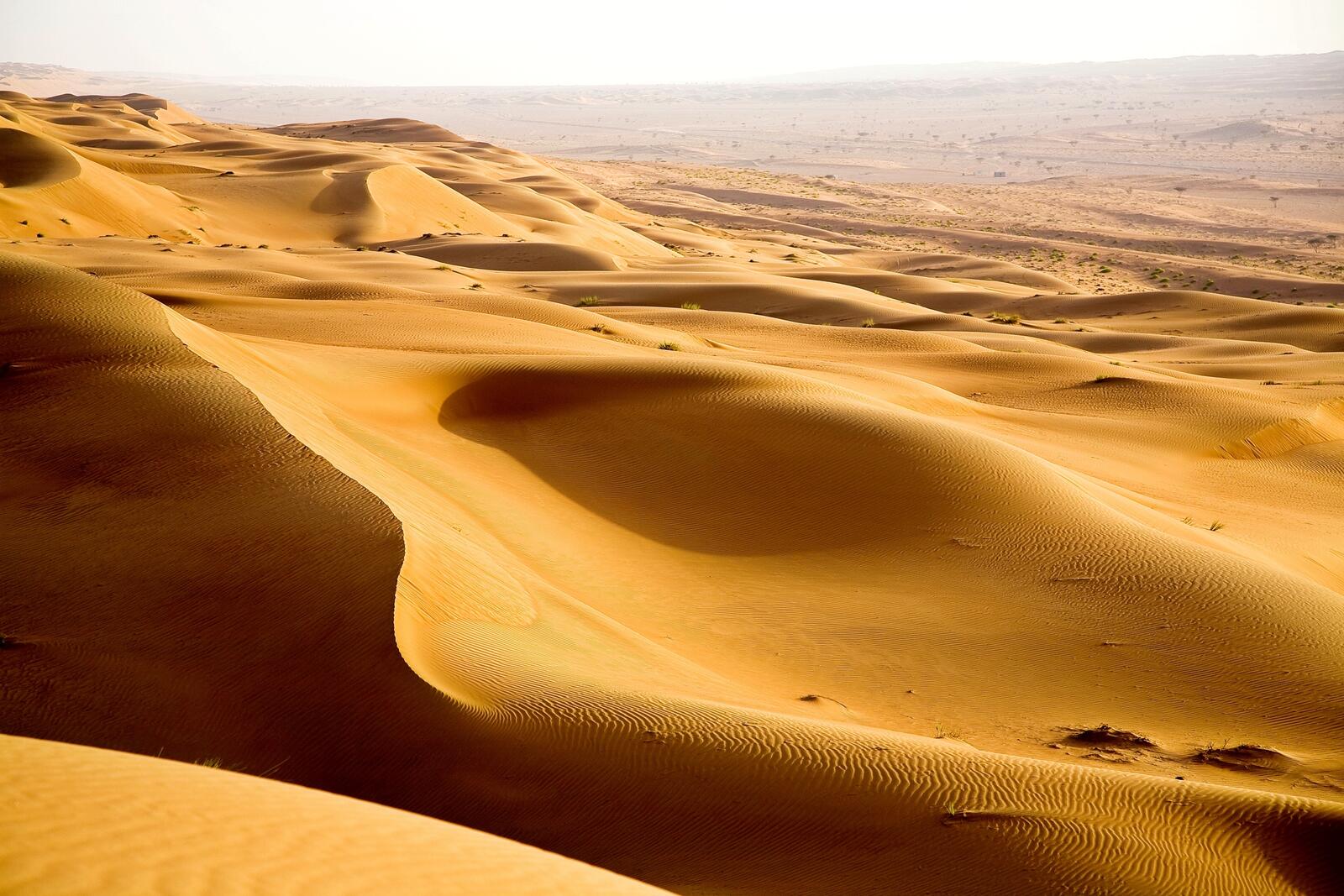
Oman: The Desert That Teaches You What Silence Means
Oman is the Arabian Peninsula's quiet alternative to Dubai. A guide to Wahiba Sands, Wadi Shab, and Musandam for travelers who want authenticity.
TL;DR
Oman is the Arabian Peninsula’s quiet counter-narrative to Dubai. No man-made islands, no Burj Khalifa, no Las Vegas-meets-Arabia spectacle. What you get instead is older, slower, and more visually beautiful: a low-rise capital wrapped between mountains and sea, turquoise wadis carved through limestone, 12,500 square kilometers of orange dunes, and fjords dramatic enough to rival Norway. This guide gives you a 7-10 day route through Muscat, Wadi Shab, Wahiba Sands, and the Musandam Peninsula that balances desert silence, canyon swimming, and Omani hospitality without the Gulf hype. The goal is not to check off luxury. The goal is to understand why Omanis still wear the traditional dishdasha not as costume, but as everyday life — and to leave with a sense of what the Arabian Peninsula felt like before the skyline race began.
Who This Guide Is For
Travelers who have done the European circuit and want something that still feels like discovery. Solo travelers who want to test themselves in a safe, welcoming Muslim country without the party infrastructure of Southeast Asia. Couples looking for a “coolcation” alternative — Oman’s October-March weather stays 20-28°C while Europe sweats through heatwaves. Culture travelers who want souqs, forts, and frankincense without the Disney-fied heritage parks. Anyone who has seen Dubai and thought there must be another way. This guide assumes you are comfortable with 4WD roads, conservative dress codes, and the idea that a Bedouin camp under the stars is better than a seven-star hotel.
Quick Facts
| Question | Answer |
|---|---|
| Best time to visit | October–March (cool dry season, 20–28°C) |
| Typical duration | 7-10 days |
| Difficulty | Moderate (4WD recommended for desert and mountains) |
| Typical daily budget | $60–$150 USD |
| Visa | eVisa ~OMR 20 ($52) for 30 days; 14-day visa-free for some nationalities |
| Currency | Omani Rial (OMR) — ~0.38 OMR = 1 USD |
| Core experience | Desert camping, wadi swimming, fjord cruising, low-rise Muscat |
Before You Go
Checklist
Documents & Money
- Passport with 6+ months validity
- eVisa approved via Royal Oman Police eVisa (OMR 20, ~$52 USD for 30 days; allow 3 business days)
- Travel insurance with evacuation coverage (medical evacuation from remote wadis costs $5,000+)
- Cash: withdraw OMR 50-100 at airport ATM for souqs, tips, and rural stops
- Credit card with no foreign transaction fees (widely accepted in Muscat hotels and restaurants)
- Printed hotel confirmations (immigration sometimes asks)
Apps to Download
- Google Maps offline (cell service is spotty in Wahiba Sands and Musandam)
- Windy or Mountain Weather for wadi flash-flood alerts
- WhatsApp (guides, drivers, and hotels use it for coordination)
- Oman Airports app (for MCT departures and terminal info)
Gear
- Waterproof sandals or shoes for wadi hiking (Wadi Shab rocks are sharp and slippery)
- Waterproof dry bag for valuables during cave swims
- Modest clothing: shoulders and knees covered for mosque and souq visits
- Light scarf or shawl for women (Grand Mosque requires head covering)
- Sun protection: SPF 50+, hat, sunglasses (UV is intense even in winter)
- Reusable water bottle (drink 3-4 liters daily in the heat)
- Headlamp for desert camp evenings and early morning starts
- Power bank for long days without charging access
Health
- Basic first-aid kit with blister treatment
- Anti-nausea medication for winding mountain roads (Jebel Akhdar and Musandam)
- Hand sanitizer — many rural facilities are basic
- Motion sickness pills for dhow cruises in Musandam fjords
Getting There
Muscat International Airport (MCT) is the main gateway. Oman Air, Emirates, Qatar Airways, and Etihad connect through their respective hubs. From the US, expect one stop in Europe or the Gulf. From Europe, direct flights from London, Frankfurt, and Istanbul are common. For official tourism info, see Visit Oman.
| From | To | Time | Cost |
|---|---|---|---|
| London (LHR) → MCT | Direct (Oman Air) | 7 hrs | $500–$900 return |
| Istanbul (IST) → MCT | Direct (Oman Air / TK) | 4 hrs | $300–$600 return |
| Dubai (DXB) → MCT | Direct | 1 hr | $150–$400 return |
| Frankfurt (FRA) → MCT | Direct (Oman Air) | 6 hrs | €400–€800 return |
| Airport → Muscat center | Taxi | 20 min | OMR 8–15 ($20–$40) |
Musandam note: If you are based in Dubai, you can drive to Khasab in 2 hours via Ras Al Khaimah and cross the Tibat land border. This is the fastest way to reach the fjords, but you still need an Oman eVisa in advance.
Where to Stay
Rotate between three bases so you are not packing and unpacking every day. Muscat for arrival, culture, and the Grand Mosque. Wahiba Sands for the desert night. Musandam / Khasab for the fjords. Wadi Shab works as a day trip from Muscat or as a stop on the way to Wahiba Sands.
| Area | Best For | Price Range per Night |
|---|---|---|
| Muscat (Muttrah / Qurum) | Culture, souqs, beach access | $50–$200 |
| Muscat (Al Mouj) | Marina, restaurants, walkability | $80–$300 |
| Wahiba Sands (Desert Camp) | Stars, silence, dune bashing | $80–$400 |
| Khasab (Musandam) | Fjord base, dhow departure | $40–$150 |
| Jebel Akhdar (mountain) | Cooler air, rose gardens, terraces | $100–$300 |
Budget guesthouses in Khasab run $25–$50 per night. Desert camps in Wahiba Sands with dinner and breakfast run $100–$250. Muscat mid-range hotels with breakfast and pool run $80–$150. The Chedi or Six Senses are the luxury benchmarks, but Oman’s real luxury is the landscape, not the lobby.
Where to Eat
Omani food is meat-first, rice-heavy, and deeply hospitable. Look for shuwa (lamb slow-cooked underground for 24 hours), majboos (spiced rice with meat or fish), mashuai (whole grilled kingfish), and halwa (Omani rosewater-saffron dessert) served with cardamom-spiced kahwa coffee. The rule: if a restaurant has plastic chairs and a menu handwritten in Arabic, the food is better than the hotel buffet.
| Meal | Recommendation | Location | Approx. Cost |
|---|---|---|---|
| Breakfast | Omani breakfast: eggs, dates, khubz, kahwa | Local café or hotel | OMR 1.5–3 ($4–$8) |
| Lunch | Majboos or fish rice at a shawarma shop | Muscat souq or roadside | OMR 2–4 ($5–$11) |
| Dinner | Shuwa or mashuai at a family restaurant | Muttrah or Nizwa | OMR 4–8 ($10–$21) |
| Drink | Kahwa with dates or fresh juice | Souq stall | OMR 0.3–0.8 ($1–$2) |
Reservation tip: The best restaurants in Muscat are walk-in. The fancy hotel restaurants require reservations but are rarely the best food. Bait Al Luban near the souq is the most authentic Omani restaurant most visitors miss.
Day-by-Day Itinerary
This itinerary is designed around the best weather window (October–March) and assumes you rent a 4WD or hire a private driver. Muscat is your arrival and departure hub. Wahiba Sands and Musandam are the two overnight pillars. Wadi Shab is the day-trip highlight on the coastal route.
Day 1: Arrival + Muscat
| Time | Activity | Location | Notes |
|---|---|---|---|
| 10:00 | Arrive MCT, collect 4WD or meet driver | Muscat International Airport | Pre-book transfer; airport is 16km from city |
| 12:00 | Check in to hotel | Muttrah or Qurum | Request a room with a mountain or sea view |
| 13:30 | Lunch at Bait Al Luban | Muttrah | Try mashuai or majboos; book ahead |
| 15:00 | Sultan Qaboos Grand Mosque | Muscat | Women must cover hair, shoulders, ankles; abayas available at entrance |
| 17:00 | Mutrah Souq walk | Muttrah | Frankincense, silver khanjars, pashminas; bargain at 40% of asking price |
| 19:00 | Corniche sunset walk | Muttrah | 3km waterfront promenade; photograph Jalali Fort |
| 20:00 | Dinner at local shawarma shop | Muscat | Shawarma is OMR 0.5–1.5; best meal in the city for the price |
Plan B: If the Grand Mosque is closed for prayer or a royal event, swap for the Royal Opera House tour and Bait Al Zubair Museum. Both are 10 minutes away and equally rich in Omani heritage.
Day 2: Muscat Deep Dive + Coastal Drive
| Time | Activity | Location | Notes |
|---|---|---|---|
| 08:30 | Slow breakfast with kahwa | Hotel café | Try halwa with your coffee |
| 10:00 | Royal Opera House | Muscat | Architecture alone is worth it; check performance schedule |
| 12:00 | Lunch at Amouage factory café | Near airport | Oman’s world-class perfume; factory tour available |
| 14:00 | Qurum Beach walk | Qurum | Public beach; lifeguards in season |
| 16:00 | Old Muscat: Jalali + Mirani forts | Old Muscat | 16th-century Portuguese forts; exterior photography only |
| 19:00 | Dhow cruise from Mutrah Harbour | Muttrah | Sunset cruise; buffet dinner available on board |
Plan B: If the dhow cruise is canceled due to wind, visit the National Museum of Oman instead. It is one of the best museums in the Gulf and covers 2,000 years of maritime history.
Day 3: Wadi Shab Day Trip
| Time | Activity | Location | Notes |
|---|---|---|---|
| 07:00 | Depart Muscat for Wadi Shab | Highway 17 | 2 hours south; leave early to beat crowds and heat |
| 09:00 | Boat crossing to wadi entrance | Wadi Shab car park | OMR 0.500 each way; have small change ready |
| 09:30 | Hike to swimming pools | Wadi Shab canyon | 1.5-2 km easy walk; turquoise pools begin immediately |
| 11:00 | Swim through pools toward cave | Inner wadi | Strong swimming required for final underwater section |
| 12:30 | Hidden cave and waterfall | Inner cave | Waterproof camera recommended; the acoustics inside are unreal |
| 14:00 | Return hike and boat back | Wadi Shab car park | No food inside the wadi; pack snacks and 2+ liters of water |
| 15:30 | Optional: Bimmah Sinkhole | 30 min east | Free, easy stop; swim in the crater before heading back |
| 18:00 | Return to Muscat | Highway 17 | 2 hours; dinner near hotel |
Plan B: If rain is forecast anywhere in the Al Hajar mountains, postpone Wadi Shab. Flash floods funnel through the narrow canyon with no warning. If you are not a strong swimmer, stop at the first pools and enjoy the walk without the cave — it is still spectacular.
Day 4: Muscat → Wahiba Sands
| Time | Activity | Location | Notes |
|---|---|---|---|
| 08:00 | Late breakfast + checkout | Muscat | Stock up on water and snacks for the desert |
| 09:30 | Drive to Wahiba Sands | Sharqiyah Sands | 2-3 hours south; road is paved until the dune edge |
| 12:30 | Lunch at desert camp | Wahiba Sands | Arrive in time for a hot meal before the afternoon heat peaks |
| 14:00 | Dune bashing + sunset camel ride | Wahiba Sands | 4WD takes you over the orange dunes; camel ride at golden hour |
| 19:30 | Dinner under the stars | Desert camp | Shuwa cooked in an underground sand pit; an Omani celebration dish |
| 21:30 | Stargazing from the dunes | Wahiba Sands | No light pollution; the Milky Way is visible to the naked eye |
Plan B: If the 4WD cannot reach the camp due to sand conditions, stay at a guesthouse in the nearby town of Bidiyah and do a shorter dune drive the next morning. The desert is safer with a guide who knows the sand patterns.
Day 5: Wahiba Sands → Muscat → Nizwa
| Time | Activity | Location | Notes |
|---|---|---|---|
| 06:00 | Sunrise over the dunes | Wahiba Sands | Wake early; the light at 6 a.m. is worth the alarm |
| 08:00 | Breakfast at camp | Wahiba Sands | Dates, khubz, eggs, strong coffee |
| 09:30 | Drive to Nizwa | Nizwa | 2 hours northwest; stop at a date farm en route |
| 12:00 | Nizwa Fort and souq | Nizwa | Round fort with panoramic views; Friday goat market if it is the weekend |
| 14:00 | Lunch at Nizwa restaurant | Nizwa | Try majboos with local chicken |
| 16:00 | Bahla Fort (UNESCO) | Bahla | 15 minutes from Nizwa; 13th-century walled town |
| 18:00 | Drive to Muscat | Muscat | 1.5 hours back; rest before an early start tomorrow |
Plan B: If Nizwa Fort is closed for restoration, visit Jabrin Fort instead. It is 20 minutes away, has a stunning painted ceiling, and fewer crowds. If you are tired from the desert, skip Bahla and return to Muscat early.
Day 6: Muscat → Musandam
| Time | Activity | Location | Notes |
|---|---|---|---|
| 06:00 | Early breakfast + checkout | Muscat | Fuel up for the long drive or flight |
| 07:00 | Drive to Musandam | Khasab | 4-5 hours northwest; border crossing at Tibat if coming from UAE |
| 12:00 | Lunch in Khasab | Khasab | Local fish dishes at a family café |
| 14:00 | Check in to hotel | Khasab | Request a fjord-view room if available |
| 15:30 | Khasab Castle museum | Khasab | 18th-century fort; tells the story of the Shihuh tribe |
| 17:00 | Half-day dhow cruise | Khor Sham fjord | Dolphin watching, snorkeling at Telegraph Island |
| 20:00 | Dinner at hotel or local restaurant | Khasab | Fresh grilled fish with lemon and rice |
Plan B: If the border crossing is slow, fly from Muscat to Khasab instead (45 minutes, ~$80 USD). This saves 4-5 hours on the road. If the dhow cruise is canceled due to rough seas, do the Jebel Harim mountain safari instead — it is the side of Musandam most day-trippers miss.
Day 7: Musandam Fjords + Return
| Time | Activity | Location | Notes |
|---|---|---|---|
| 08:00 | Full-day dhow cruise | Musandam fjords | Telegraph Island, Seebi Island, snorkeling, buffet lunch |
| 13:00 | Lunch on board | Dhow | Fresh fruit, soft drinks, rice and grilled chicken |
| 15:00 | Snorkeling at Telegraph Island | Telegraph Island | Clear water, colorful fish, coral gardens |
| 17:00 | Return to Khasab | Khasab port | Last-minute shopping at the souq for frankincense |
| 19:00 | Farewell dinner | Khasab | Try mashuai (whole grilled kingfish) |
| 21:00 | Drive or fly back to Muscat | Khasab / MCT | Allow 4-5 hours driving or 45 minutes flying |
Plan B: If you have extra time, extend in Musandam with Jebel Harim mountain safari (highest point on the peninsula at 2,087m, views across the Strait of Hormuz to Iran on a clear day). If you are short on time, skip the full-day dhow and do a half-day cruise on Day 6, then fly back to Muscat on Day 7 morning.
Day 8: Departure Day (Optional Extension: Salalah)
| Time | Activity | Location | Notes |
|---|---|---|---|
| 08:00 | Slow breakfast | Muscat café | Last bowl of eggs with khubz and dates |
| 09:30 | Last-minute souvenir shopping | Muttrah Souq | Frankincense, silver, Omani halwa |
| 11:00 | Transfer to MCT | Muscat | 20-30 min; arrive 3 hours before departure |
| 13:00 | Fly MCT → Salalah (optional) | Salalah | 2 hours; only if you have 3+ extra days |
| 15:00+ | International departure | MCT | Add 3-4 hours for the connection |
Plan B: If your international flight is late, spend the afternoon in Muscat’s Al Mouj marina or at the beach. Qurum Beach is 15 minutes from the airport and has food stalls and sun loungers.
Practical Tips
- 4WD is non-negotiable outside Muscat. Wahiba Sands dunes, Jebel Akhdar mountain roads, and Musandam gravel tracks all require a proper 4x4. Daily rates: OMR 12-20 ($30–$50). Most EU/UK/US licenses are valid for 6 weeks; an international permit is safer for longer.
- Fuel is cheap and roads are excellent. Oman’s highways are well-signed in English and Arabic, with very low traffic. Fuel costs around OMR 0.15 per liter ($0.40). Fill up whenever you see a station — they are sparse in the desert.
- Cash is king outside Muscat. ATMs are everywhere in the capital but rare in Wahiba Sands and Musandam. Withdraw OMR 100–150 ($260–$390) before heading into the interior. Cards work at hotels and larger restaurants.
- Dress modestly everywhere. Shoulders and knees covered in public, regardless of gender. At the Grand Mosque, women must cover hair, ankles, and wrists. Resort pools allow swimwear; everything else is conservative.
- Friday is the quiet day (weekend). Many shops and some restaurants close on Friday. Saturday is the start of the work week. Plan your Muscat city day for Saturday–Thursday.
- Flash floods are real. Wadis are dry riverbeds that can flood within minutes of rain upstream. Check the weather forecast for the Al Hajar mountains before visiting Wadi Shab or any other wadi. If rain is forecast, postpone.
- Alcohol is not available in public. It is served only at licensed hotels and restaurants. Do not ask for it in a café or souq.
Before You Go: Last-Minute Checks
- eVisa printed or downloaded as PDF (name and passport number must match)
- 4WD rental confirmed or private driver booked
- Desert camp confirmed for Wahiba Sands (October–March sells out)
- Dhow cruise booked in Khasab (peak season October–April)
- Cash withdrawn: OMR 100–150 ($260–$390) in Muscat before heading into the interior
- Modest clothing packed: long sleeves, long pants, headscarf for mosque
- Waterproof bag for Wadi Shab swim and cave
- Travel insurance policy number saved offline
Insider Tips
- Eat shuwa if a local invites you. It is meat slow-cooked underground for 24-48 hours, wrapped in banana leaves. It is the Omani celebration dish and rarely appears on tourist menus. If you are invited to a family meal, accept — this is the heart of Omani hospitality.
- Visit the Grand Mosque at 8 a.m. on a Saturday. It opens at 8 a.m. and the morning light is better for photography. Friday mornings are crowded and closed to non-Muslims for prayer.
- Sit on the left side of the dhow for the best fjord views. From Khasab, the left side faces the open Strait of Hormuz and the most dramatic cliff faces.
- Bring small change for the Wadi Shab boat. The crossing costs OMR 0.500 each way. A 1-rial coin is the perfect denomination. Larger notes are impossible to break at the boatman.
- Haggling is expected at Mutrah Souq but not in stores. Start at 40% of the asking price and negotiate up for frankincense, silver, and textiles. In formal shops and malls, prices are fixed.
- Skip the north-shore Musandam hotels unless you are into luxury isolation. Khasab town has more character, better restaurants, and is closer to the dhow departure point.
Etiquette & Culture
- Ask before photographing people. Omani villagers, especially women and elders, may decline. A simple gesture with your camera and a smile goes a long way.
- Right-hand rule. Pass items, shake hands, and eat with your right hand. The left hand is traditionally used for hygiene.
- Head and feet. Do not touch anyone’s head or point your feet at people or religious objects.
- Dress. In cities, modest Western wear is acceptable with long sleeves and long pants. In rural areas and mosques, cover everything. Women should carry a light scarf at all times.
- Religion. Oman is majority Ibadi Muslim — a distinct, moderate branch. Alcohol is available only at hotels. Dress codes in Muscat are relaxed compared to Saudi Arabia, but respect local norms.
- Hospitality. If a Bedouin camp family or shop owner offers you kahwa and dates, accept. Refusing is considered rude. You do not need to bring a gift, but a small bag of sweets from Muscat is thoughtful.
Useful Phrases (Arabic)
| Phrase | Pronunciation | Context |
|---|---|---|
| As-salamu alaykum | Ahs-sah-lah-moo ah-lay-kum | Peace be upon you (standard greeting) |
| Wa alaykumu s-salam | Wah ah-lay-koo-moo sah-lahm | And upon you peace (reply) |
| Shukran | Shook-ran | Thank you |
| Marhaba | Mar-hah-bah | Hello (informal) |
| Min fadlak / Min fadlik | Meen fahd-lak / meen fahd-lik | Please (m/f) |
| Ma’asalama | Mah-ah-sah-lah-mah | Goodbye / safe travels |
FAQs
Do I need a visa to visit Oman? Yes for most nationalities. US, EU, UK, and Canadian citizens can apply for an eVisa online at evisa.rop.gov.om. A single-entry 30-day tourist eVisa costs approximately OMR 20 (~$52 USD). Some nationalities qualify for 14-day visa-free entry. Processing takes 1–3 business days. Sources: Royal Oman Police eVisa · Visit Oman · VisaRequirements.info
Is Oman safe for solo travelers? Yes. Oman is one of the safest countries in the Middle East. The US State Department maintains a Level 1 “Exercise Normal Precautions” advisory — the lowest level. Violent crime against tourists is extremely rare. Solo female travelers consistently report Oman as the most respectful Gulf destination. Sources: US State Department · wikitravel · r/solotravel
What is the best time of year to visit? October through March is ideal, with temperatures of 20–28°C across the country. April–May is warm but manageable for desert trips. June–September is extremely hot in Muscat and the interior (40–48°C) but is the best time to visit Salalah in the south for the Khareef monsoon. Sources: BestTimeToVisit.com · Lonely Planet · Visit Oman
Do I need a 4WD? Yes, if you want to go beyond Muscat. Wahiba Sands, Jebel Akhdar, and Musandam all require 4WD for the best routes. The desert camps arrange transfers, and you can hire a private driver for OMR 30-50 ($80–$130) per day if you do not want to self-drive. Sources: Oman Spirit · Fairtravels · localsinsider.com
Can I visit Wadi Shab if I am not a strong swimmer? The walk to the first pools is rewarding without swimming. However, the hidden cave requires swimming through water over your head for a short distance. If you are not confident in open water, enjoy the first pools and turn back. Life vests are available for rent near the car park. Sources: Oman Spirit · ZigZagOnEarth · TakeYourBackpack
Is it safe to drink the tap water? Tap water in Muscat is desalinated and generally safe, but most locals and tourists drink bottled water due to taste and storage-tank variability. In rural areas and desert camps, drink only bottled water. It is safe to use tap water for brushing teeth. Sources: BestTimeToVisit.com · wikitravel · CDC
How much should I budget for a 7-day Oman trip? $700–$1,200 USD per person excluding international flights. Mid-range travelers spending $100–$150 per day will cover hotels, a 4WD rental, guided tours, and good meals. Luxury travelers should budget $300–$500+ per day. Desert camps and Musandam dhow cruises are the premium experiences. Sources: Nomad List 2026 · Settled Nomad 2026 · Oman Spirit
What currency is used and can I use credit cards? The Omani Rial (OMR) is pegged to the US dollar (~0.38 OMR = 1 USD). It is one of the world’s strongest currencies. Credit cards are widely accepted in Muscat hotels, restaurants, and malls. Cash is essential for souqs, taxis, desert camps, and Musandam small shops. ATMs are everywhere in Muscat but scarce outside the capital. Sources: wikitravel · BestTimeToVisit.com · Visit Oman
Related Guides
- Kyrgyzstan: The Steppe That Reminds You What Freedom Means — For travelers who want another landscape that rewires your sense of scale, but with horses and yurts instead of dunes and 4WDs.
- Patagonia: Hike the W Trek and Earn the View — For hikers who loved the desert silence and want the next level of mountain trekking.
- Canadian Rockies: The Mountain Medicine That Works — For North American alpine alternatives with better infrastructure and no jet lag from the Gulf.
The Bottom Line
Oman is the last place on Earth where you can still be a pioneer without sacrificing safety. The infrastructure is good enough, the people are welcoming enough, and the scenery is dramatic enough — but the crowds have not arrived yet. The window for this kind of travel is closing. Not because Oman is becoming unsafe or overpriced, but because social media has already discovered it. The tour buses are coming.
Go before the shuwa becomes a tourist-menu item and the desert camps start taking credit cards.
Because the desert does not care about your Instagram feed. It only cares that you showed up.
The best trips do not just move you across a map. They change how you see the world. Use this guide to build your own story.
Start Planning Your Story