New Zealand (South Island): How the Landscape Rewires Your Sense of Scale
The South Island reorders how you see the world. A 10-day self-drive loop from Christchurch through Mount Cook, Wanaka, Queenstown, and Milford Sound.
TL;DR
The South Island is not a destination you visit. It is a landscape that reorders how you see the world. Ten days here should not be packed with 15 stops and 4 a.m. alarms. It should be half driving and half permission to stop. This guide gives you the classic Christchurch loop through Mount Cook, Wanaka, Queenstown, and Milford Sound — the route that teaches you to stop rushing and start noticing. The goal is not to see everything. The goal is to come home and realize you have stopped hurrying.
Who This Guide Is For
First-timers who want the iconic South Island loop without the 6 a.m. alarm every day. Road-trippers who want to self-drive but do not want to plan every meal. Anyone who has seen a photo of Milford Sound and wants to know what it feels like when the boat cuts the engine and the only sound is water hitting rock. This guide assumes you are comfortable with left-side driving, okay with winding roads, and ready to spend a few hours a day in the car without complaining.
Quick Facts
| Question | Answer |
|---|---|
| Best time to visit | October–April (summer/autumn); March–April for fall colors and fewer crowds |
| Typical duration | 10–14 days |
| Difficulty | Moderate |
| Typical daily budget | $120–$250 USD |
| Core principle | Drive slowly. Stop often. Let the landscape do the work. |
| Best for | Road trips, hiking, photography, skiing, stargazing, self-discovery |
Before You Go
Checklist
Documents & Money
- Passport with 6+ months validity
- NZeTA electronic visa (apply online at NZ Immigration, ~NZD $12 + service fee)
- Credit card for car rental, accommodation, and most purchases
- Cash: withdraw NZD at airport ATM; small towns may not accept cards
Apps to Download
- Google Maps offline (cell service is spotty in alpine areas)
- NZTA app for road conditions and snow chain requirements
- MetService app for mountain weather forecasts
- CamperMate for dump stations, fuel stations, and amenities
Gear
- Warm layers (weather changes fast in the mountains)
- Waterproof jacket (even in summer)
- Broken-in hiking shoes or trail runners
- Sunglasses and sunscreen (UV is strong at high altitudes)
- Reusable water bottle (tap water is potable everywhere)
- Snow chains if traveling June–October (mandatory on some alpine passes)
- Power adapter if coming from outside Australia/NZ (Type I, 230V)
Getting There
Most international visitors arrive at Christchurch Airport (CHC) or Queenstown Airport (ZQN). Christchurch is the best starting point for the classic loop because it has the best car rental selection and the most flights. Queenstown is better if you only have time for the southern half. For official tourism information, see Tourism New Zealand.
| From | To | Time | Cost |
|---|---|---|---|
| Auckland → Christchurch | Domestic flight | 1h 20m | NZD $80–200 |
| Auckland → Queenstown | Domestic flight | 1h 45m | NZD $100–250 |
| Christchurch → Lake Tekapo | Drive | 3h | Car rental |
| Queenstown → Milford Sound | Coach tour | 13h return | NZD $165–215 |
Rental cars are the best way to see the South Island. Book 3–6 months ahead for peak season (December–February). Manual transmission is cheaper; automatic is worth the extra cost if you are not used to left-side driving on winding roads.
Where to Stay
Christchurch — one night to recover from the flight and stock up on supplies. The city center has rebuilt beautifully after the 2011 earthquakes.
Lake Tekapo — two nights. The Church of the Good Shepherd and the dark sky reserve are non-negotiable. Book accommodation early; the village is tiny.
Mount Cook Village — two nights. The only accommodation inside the national park. The hotel books out months in advance. If you cannot get a room, base in Twizel (45 minutes away).
Wanaka — two nights. Quieter and cheaper than Queenstown, equally scenic. The famous Wanaka Tree is best photographed at sunrise.
Queenstown — two nights. The adventure capital. Stay on the lakefront or in central Queenstown for walkability.
Te Anau — one night. The gateway to Milford Sound. The glowworm caves are a bonus.
What to Eat
New Zealand food is what you hope it is: lamb that actually tastes like lamb, coffee that would make an Australian barista cry, and fish that was in the water yesterday.
Fergburger (Queenstown) — the world’s most famous burger joint. The lamb burger with beetroot and egg is the order. Go at 11 a.m. or 9 p.m. to avoid the queue.
Huka Prawn Cafe (Taupo, North Island only if you extend) — skip if you are staying South Island.
The Dish (Wanaka) — casual fish and chips by the lake. The flounder is local and fresh.
The Cow (Wanaka) — an ice cream and gelato shop that sources from local producers. The hokey pokey flavor is New Zealand’s answer to toffee.
Mt Cook Alpine Salmon (Lake Pukaki) — smoke-your-own salmon from the visitor center. The views are free; the salmon is not.
Day-by-Day Itinerary
Day 1: Christchurch to Lake Tekapo
Drive 3 hours west from Christchurch through the Canterbury Plains. Stop at Rakaia Gorge for a quick walk if you have time. Arrive at Lake Tekapo in the afternoon. Walk to the Church of the Good Shepherd, the most photographed church in New Zealand. In the evening, book a stargazing tour at Mount John Observatory — the Aoraki Mackenzie International Dark Sky Reserve has some of the clearest skies on Earth.
Day 2: Lake Tekapo to Aoraki / Mount Cook
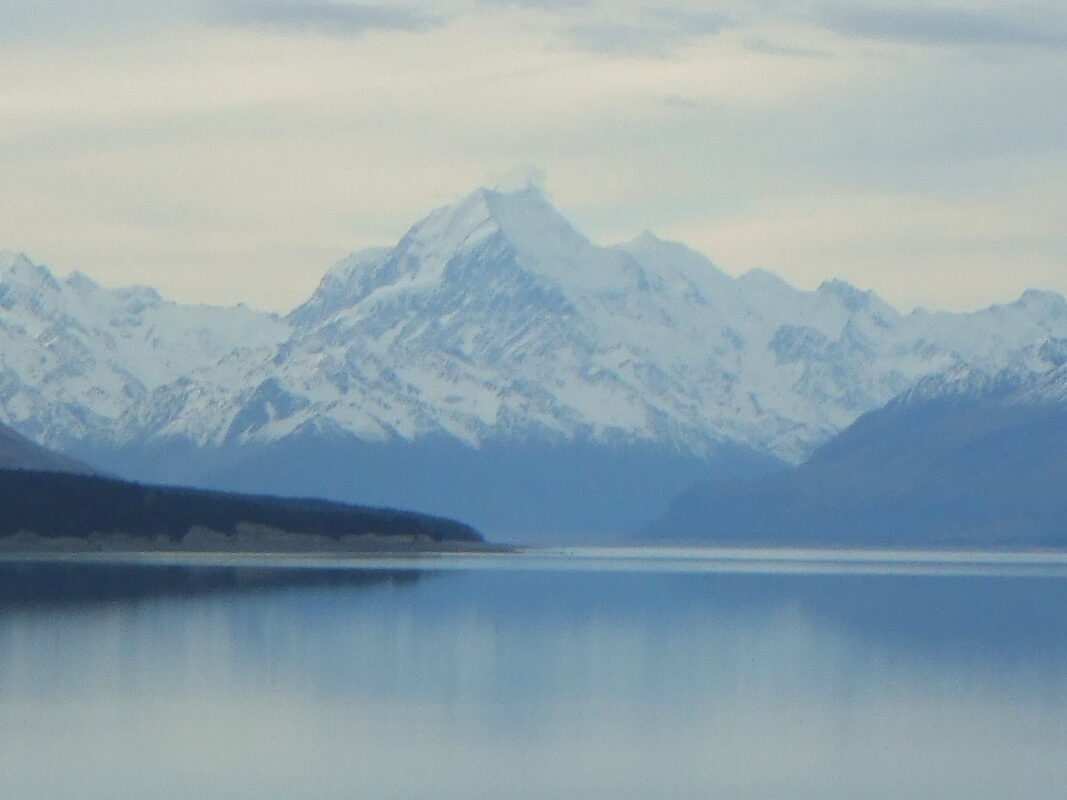
Drive 2 hours along the edge of Lake Pukaki, one of the most spectacular alpine drives in the world. The water is turquoise because of glacial sediment; on a clear day, Aoraki / Mount Cook appears to float above the lake. Check into Mount Cook Village. Spend the afternoon on the Hooker Valley Track — a mostly flat 3-hour return walk across three swing bridges, ending at a glacial lake with reflections of the mountain. If you have energy, add the Tasman Glacier Viewpoint walk.
Day 3: Mount Cook to Wanaka
Drive 2.5 hours via Twizel and Omarama. The Lindis Pass is one of the most photogenic drives in the country — golden tussock hills, open sky, and the Southern Alps in the distance. Arrive in Wanaka in the afternoon. Walk to the Wanaka Tree, the most photographed willow in the world. Sunset at Roy’s Peak is a 5-hour return hike; if that feels aggressive, the Rob Roy Glacier Track is a 4-hour return through beech forest to a glacier viewpoint.
Day 4: Wanaka
Wanaka is the quieter, cheaper, equally scenic alternative to Queenstown. Spend the day exploring without a fixed plan. Options: Puzzling World for optical illusions and a leaning tower; Wanaka Lavender Farm in summer; Cardrona Alpine Resort for skiing or snowboarding in winter; or simply walk the lakefront with a coffee. The village has excellent restaurants — Francesca’s Italian Kitchen is the local favorite.
Day 5: Wanaka to Queenstown
Drive 1 hour over the Crown Range Road, New Zealand’s highest sealed pass at 1,076 meters. The descent into the Wakatipu basin, with the Remarkables glacier range reflected in the lake, is extraordinary. Arrive in Queenstown. Ride the Skyline Gondola up Bob’s Peak for the panoramic view. Evening: dinner at Fergburger or The Cow for gelato.
Day 6: Queenstown — Adventure Day
Queenstown is the birthplace of bungee jumping and the adventure capital of the world. But it is also a place to do nothing. Choose your own adventure: Shotover Jet for 360-degree spins through narrow canyons; Kawarau Bridge Bungy for the original leap; skydiving over the Remarkables; or a Lord of the Rings tour to nearby filming locations. If adrenaline is not your thing, take the TSS Earnslaw Steamship across Lake Wakatipu to Walter Peak Farm for a high-country afternoon tea.
Day 7: Milford Sound
The “Eighth Wonder of the World.” The drive from Queenstown to Milford Sound is 2.5 hours through Fiordland National Park, but those 2 hours are a journey unto themselves — Mirror Lakes, The Chasm, and the hand-drilled Homer Tunnel. Book the fly-cruise-fly option from Queenstown (NZD $565–720, 5–6 hours total) for the best experience: scenic flight over the fiord, 2-hour cruise, scenic flight back. The bus day trip is a 13-hour marathon that leaves you exhausted. If you want to sleep, base yourself in Te Anau the night before and drive to Milford the next morning.
Day 8: Te Anau to Queenstown
Drive 2 hours back to Queenstown via the Milford Road. If you have time, stop at the Te Anau Glowworm Caves before leaving — a short underground boat ride lit by thousands of tiny glowworms. Back in Queenstown, do the Skyline Luge — a go-kart track on a mountain. Or take a wine-tasting tour in the Gibbston Valley; the cool climate produces excellent Pinot Noir.
Day 9: Queenstown to Christchurch
Return the rental car in Queenstown and fly direct to Christchurch (1 hour, NZD $80–200). Alternatively, if you have time, drive the South Island Scenic Route south through the Catlins to Dunedin (4 hours) and then north to Christchurch (4 hours). The Catlins are the road less traveled — waterfalls, sea lions, and the Southern Scenic Route has almost no traffic.
Day 10: Christchurch
Explore the rebuilt city center: Riverside Market for lunch, the Christchurch Botanic Gardens, the Arts Centre, and a punt along the Avon River. Depart from Christchurch in the evening.
Practical Tips
Book accommodation 3–6 months ahead for peak season. Queenstown, Wanaka, and Mount Cook Village sell out months in advance during December–February. The same applies to Milford Sound cruises.
Drive to the conditions. The Crown Range Road and Arthur’s Pass can close in winter. Carry snow chains if you are traveling June–October. Check nzta.govt.nz daily.
Left-side driving is easy until it is not. Roundabouts, parking lots, and mountain passes will test you. Stay on the left, signal early, and let locals pass on the narrow roads.
The Milford Road is the drive, not just the destination. Stop at every pullout. Mirror Lakes, The Chasm, and the Homer Tunnel are all worth 20 minutes.
Buy a regional wine pass. The Central Otago and Canterbury wine regions offer tastings at multiple vineyards for one price. It is the best value in New Zealand.
Sunday closures. Most small-town shops close on Sunday. Fill up with gas and buy food in advance if you are driving through rural areas on a Sunday.
Before You Go: Last-Minute Checks
- Check NZTA road conditions the night before each alpine drive. Snow, ice, and high winds can close passes without warning.
- Book Milford Sound cruises 2–4 weeks ahead in summer. The fly-cruise-fly option needs a week minimum for weather flexibility.
- Confirm Mount Cook accommodation before booking anything else. If the village is full, base in Twizel (45 minutes away) and day-trip into the park.
- Check Queenstown Winter Festival dates if visiting in June. The city shuts down for three days of snow sports, music, and odd events like the “dog sled race.”
Insider Tips
The Lupin Window is mid-November to mid-December. If you arrive in January, the flowers have withered. Time your Lake Tekapo visit for the last week of November to see the Mackenzie Basin blanketed in pink and purple.
The TranzAlpine train from Christchurch to Greymouth is one of the world’s great rail journeys. If you are driving one way, consider returning via train to see the Southern Alps from a different angle.
Glenorchy is 45 minutes from Queenstown and feels like a different planet. The drive along the shores of Lake Wakatipu is one of the most scenic in the country. Stop at Paradise — a hamlet at the end of the road with a historic steamer and no cell service.
Tekapo Springs hot pools are perfect after a day on the road. The outdoor pools overlook Lake Tekapo and the Southern Alps. Book a night soak for sunset.
The Catlins are the road less traveled. If you have an extra day between Queenstown and Christchurch, drive the Southern Scenic Route through the Catlins. The waterfalls are lush from late summer rains, and the sea lions are active on the beaches.
Etiquette & Culture
Māori language. New Zealand has three official languages: English, Māori, and New Zealand Sign Language. You will hear Māori place names everywhere — Aoraki, Wakatipu, Tekapo. Pronouncing them correctly is appreciated. “Aoraki” is pronounced “Ah-oh-rah-kee.” “Wakatipu” is “Wah-kah-tee-poo.”
Tipping. Not expected in New Zealand. Service is included in most restaurants and cafes. Rounding up the bill or leaving a small tip for exceptional service is appreciated but not required.
Driving etiquette. Kiwis are polite drivers. Wave to let someone merge. Give way to traffic turning right (the opposite of most countries). Do not honk unless it is an emergency.
Shoes inside. If you are staying in a hostel or Airbnb, take your shoes off at the door. It is standard practice.
Quiet and relaxed. New Zealanders are generally reserved and friendly. Small talk with strangers is normal but not expected. If you start a conversation, do not be offended if it ends quickly — Kiwis value their personal space.
Useful Phrases
| English | Māori | When to Use |
|---|---|---|
| Hello | Kia ora | Greeting, thanks, agreement |
| Thank you | Kia ora / Mauri ora | Thank you / formal thanks |
| Yes | Āe | Yes |
| No | Kāo | No |
| Goodbye | Ka kite ano | See you again |
| Cheers | Cheers / Kia ora | Toasting, thanking, greeting |
FAQs
How many days do I need? Ten days is enough for the highlights: Christchurch, Lake Tekapo, Mount Cook, Wanaka, Queenstown, and Milford Sound. Fourteen days lets you add the West Coast glaciers, Dunedin, or the Catlins.
Is left-side driving scary? No. The roads are quiet, well-maintained, and the locals are polite. The hardest part is roundabouts and parking lots — just stay left and take your time. Sources: NZTA · Tourism New Zealand Sources: NZTA · Tourism New Zealand
Do I need a 4WD? No. A standard rental car is fine for the main loop. A 4WD is only necessary if you want to drive the Skippers Road or other unsealed routes.
What is the best time to go? March–April (autumn) is the sweet spot: fall colors, fewer crowds, lower prices, and stable weather. December–February is peak summer with the best hiking weather but the most crowds.
Is Milford Sound worth it? Yes. The fly-cruise-fly option is the best way to do it. The bus day trip is exhausting. If you want a more relaxed experience, base yourself in Te Anau and drive to Milford the next morning. Sources: DOC · Tourism New Zealand Sources: DOC · Tourism New Zealand
Can I do this in a campervan? Yes. New Zealand has an excellent campervan infrastructure. Just book your campsites in advance during peak season.
Related Guides
- Patagonia: Hike the W Trek — for travelers who want another landscape that rewires your sense of scale
- Costa Rica: Pura Vida — for a slower, wildlife-focused alternative to the South Island
- Bangkok: A 5-Day Urban Adventure — for the complete opposite: a city that rewards transit mastery and street food
The best trips do not just move you across a map. They change how you see the world. Use this guide to build your own story.
Start Planning Your Story