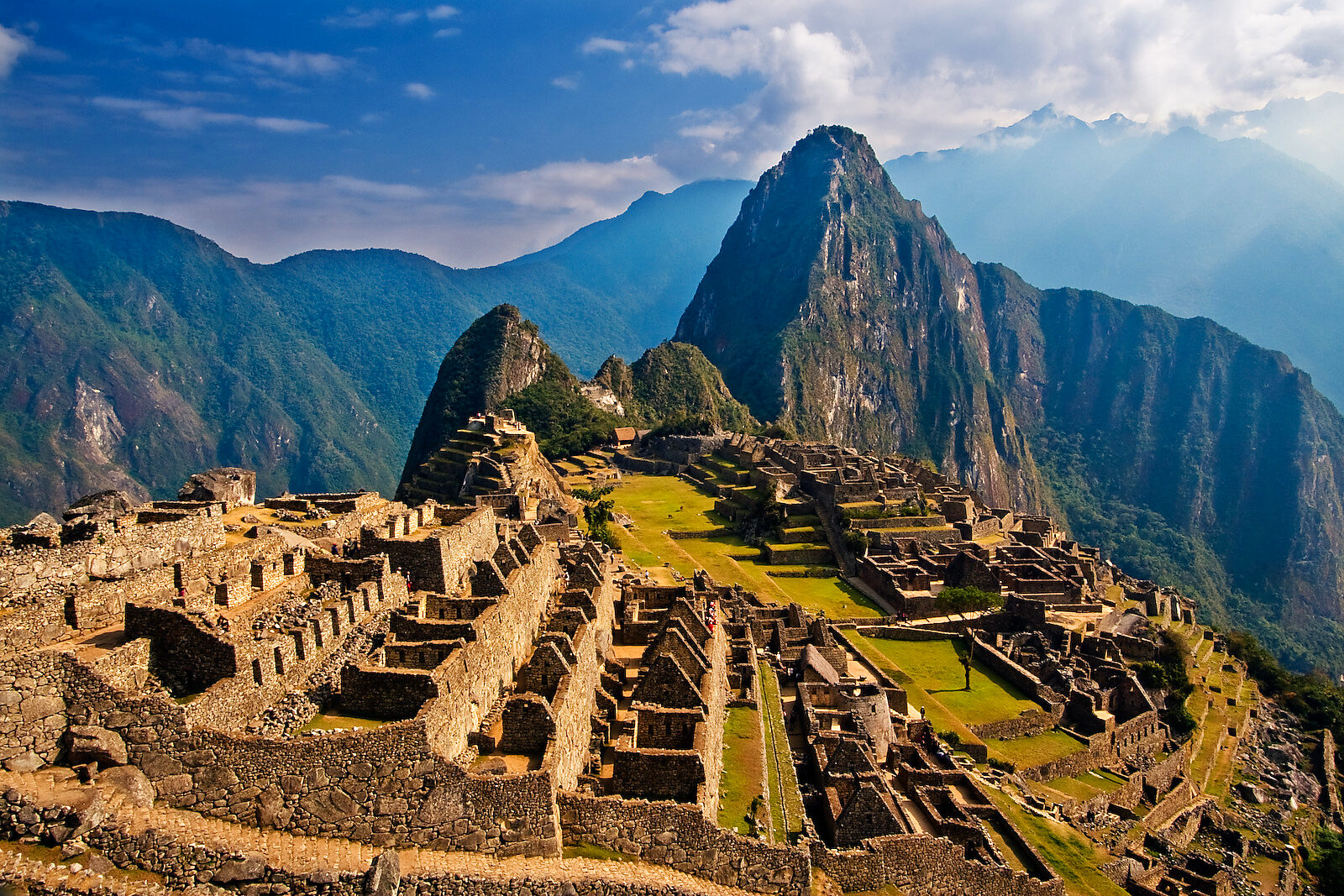
Peru: How the Andes Rewire Your Sense of Time
Peru is a destination that photographs you back. A guide to Cusco, the Sacred Valley, and Machu Picchu with the altitude logic to make it count.
TL;DR
Peru is not a place you conquer. It is a place that re calibrates you. Seven days in the Cusco region should not be a Machu Picchu photo stop with extras. It should be half ancient wonder and half permission to stand still in places where history feels thick enough to touch. This guide gives you a route through Cusco, the Sacred Valley, Machu Picchu, and Rainbow Mountain that balances Inca engineering, altitude reality, and mornings with no agenda. The goal is not to check off a wonder of the world. The goal is to come home understanding that the world is older and more layered than you imagined.
Who This Guide Is For
Travelers who want more than a postcard from Machu Picchu. First-timers who have seen the photos but want to know what the Andes actually feel like at 3,400 meters. Culture travelers who want Inca history, colonial layers, and living Andean traditions in one trip. Hikers who want Rainbow Mountain or the Sacred Valley without the rushed day-trip chaos. Anyone who has heard “Pura Vida” from Costa Rica and now wants “Ayni” — the Andean principle of reciprocity and interconnectedness. This guide assumes you are comfortable with altitude headaches, uneven cobblestones, and the idea that a llama crossing the road is more important than your train schedule.
Quick Facts
| Question | Answer |
|---|---|
| Best time to visit | May–October (dry season, clear skies) |
| Typical duration | 7 days |
| Difficulty | Moderate (altitude is the main challenge) |
| Typical daily budget | $60–$150 USD |
| Language | Spanish (Quechua widely spoken in highlands) |
| Currency | Peruvian Sol (PEN) — ~3.7 PEN = 1 USD |
| Core experience | Inca history, mountain hiking, colonial cities, Andean food |
Before You Go
Checklist
Documents & Money
- Passport with 6+ months validity (required for entry)
- No visa required for US/EU/UK citizens for stays under 183 days; see Peru Immigration for latest rules
- Travel insurance with high-altitude coverage (recommended — altitude sickness can require evacuation)
- Cash: withdraw S/300–500 ($80–$135) at airport ATM for markets and taxis
- Credit card with no foreign transaction fees (widely accepted in Cusco and Valle Sagrado)
- Digital copy of hotel confirmations and tour bookings (immigration sometimes asks)
Apps to Download
- Google Maps offline (cell service is spotty in the mountains)
- WhatsApp (everyone uses it for reservations and directions)
- iNaturalist or Merlin for bird and wildlife ID in the Sacred Valley
- Quechua translator app (helpful in rural villages and markets)
- PeruRail or IncaRail app (train schedules and ticket management)
Gear
- Layered clothing (Andean weather swings from sub-zero mornings to warm afternoons)
- Broken-in hiking shoes or trail runners (Rainbow Mountain and Inca Trail are rough on new boots)
- Waterproof jacket (afternoon rain is common in the highlands)
- Sun protection: SPF 50+, hat, sunglasses (UV is intense at altitude)
- Coca leaves or candies (help with altitude; available everywhere in Cusco)
- Reusable water bottle (altitude dehydration is aggressive — drink 3–4 liters daily)
- Daypack with rain cover
- Headlamp (for early morning Machu Picchu visits and power outages)
Getting There
Most international visitors fly into Lima (LIM) and connect to Cusco (CUZ). The Lima-to-Cusco flight is 1 hour 15 minutes and lands at 3,300 meters — you will feel the altitude immediately. JetBlue, LATAM, and Sky Airline run daily direct flights from the US. From Europe, connect through Lima or Madrid. For official tourism info, see PromPerú.
| From | To | Time | Cost |
|---|---|---|---|
| Lima (LIM) → Cusco (CUZ) | Direct (multiple airlines) | 1 hr 15 min | $80–$180 return |
| JFK → CUZ | Via LIM | 8–10 hrs total | $500–$900 return |
| Miami (MIA) → CUZ | Via LIM | 6–8 hrs total | $400–$750 return |
| Madrid (MAD) → CUZ | Via LIM | 12–14 hrs total | €600–€1,200 return |
| Airport → Cusco center | Taxi / colectivo | 20–30 min | S/20–40 ($5–$11) |
Altitude tip: Do not schedule a full hiking day on arrival day. Arrive in Cusco, drink coca tea, walk slowly, and sleep if you need to. The Sacred Valley (2,800 m) is a better first stop than Cusco (3,400 m) for acclimatization. Many itineraries reverse the order: Lima → Sacred Valley → Cusco → Machu Picchu. This guide follows that logic.
Where to Stay
Rotate between three bases so you are not packing and unpacking every day. Sacred Valley (Urubamba or Ollantaytambo) for acclimatization and Inca ruins. Aguas Calientes (Machu Picchu Pueblo) for the citadel visit. Cusco for colonial history and your final night.
| Area | Best For | Price Range per Night |
|---|---|---|
| Sacred Valley (Urubamba) | Acclimatization, quiet, Inca sites | $50–$200 |
| Ollantaytambo | Inca fortress town, train access | $40–$150 |
| Aguas Calientes | Machu Picchu base, mountain setting | $60–$300 |
| Cusco (San Blas) | Colonial history, restaurants, nightlife | $40–$180 |
| Cusco (San Pedro) | Budget base, market proximity | $20–$80 |
Budget hostels and guesthouses in Cusco run $15–$30 per night. Mid-range boutique hotels in the Sacred Valley with breakfast and mountain views run $80–$150. Aguas Calientes is the most expensive spot on the route because everything is trucked in by train — budget accordingly.
Where to Eat
Peruvian food is one of the world’s great unsold cuisines. In the Cusco region, look for cuy (guinea pig), alpaca steak, rocoto relleno (stuffed pepper), and causa (potato terrine). The rule: if a restaurant has a menu in four languages and a tuxedoed host outside, the food is good but the price is inflated. If a small family kitchen has handwritten specials on a chalkboard, go in.
| Meal | Recommendation | Location | Approx. Cost |
|---|---|---|---|
| Breakfast | Desayuno peruano: eggs, avocado, bread, coffee | Local chifa or café | S/15–30 ($4–$8) |
| Lunch | Menu del día: soup, main, drink | Market or family restaurant | S/12–20 ($3–$5) |
| Dinner | Cuy crocante or lomo saltado | Pachapapa (Pisac) or Cicciolina (Cusco) | S/30–60 ($8–$16) |
| Snack | Empanada de quinua or choclo con queso | Street stall | S/5–10 ($1–$3) |
| Drink | Pisco sour or chicha morada | Bar in San Blas | S/20–35 ($5–$9) |
Reservation tip: Cicciolino and Pachapaca book out two to three days ahead in high season. Walk-in lunch at market stalls is always easier and more authentic.
Day-by-Day Itinerary
This itinerary is designed for altitude. It starts in the Sacred Valley (2,800 m) before moving to Cusco (3,400 m) and Machu Picchu (2,400 m). If you arrive in Cusco the night before Day 1, stay in the Sacred Valley for two nights before spending time in the city.
Day 1: Arrival + Sacred Valley (Ollantaytambo)
| Time | Activity | Location | Notes |
|---|---|---|---|
| 10:00 | Arrive CUZ, transfer to Sacred Valley | Urubamba / Ollantaytambo | 1.5 hrs by taxi; use the time to adjust |
| 12:30 | Lunch at market | Urubamba market | Look for chicharrón and fresh juice |
| 14:00 | Ollantaytambo archaeological site | Ollantaytambo | Inca fortress with terraces; fewer crowds than Machu Picchu |
| 17:00 | Check in to hotel | Ollantaytambo | Walk the cobblestone streets before dark |
| 19:30 | Dinner at hotel or local picantería | Ollantaytambo | Try alpaca steak or trout from local rivers |
Plan B: If the Ollantaytambo site is closed for restoration, visit the Moray circular terraces and Maras salt pans instead. Both are 30–45 minutes away and equally impressive at lower physical effort.
Day 2: Pisac + Ollantaytambo Train to Aguas Calientes
| Time | Activity | Location | Notes |
|---|---|---|---|
| 08:30 | Pisac market and ruins | Pisac | Market is best on Sunday; ruins open all week |
| 11:30 | Lunch in Urubamba | El Alambique or local grill | Fuel up before Machu Picchu |
| 13:30 | Transfer to Ollantaytambo station | Ollantaytambo | Book PeruRail Vistadome or IncaRail 360° for views |
| 15:00 | Train to Aguas Calientes | Vistadome / 360° | 1 hr 50 min; Urubamba River canyon views |
| 17:00 | Check in to hotel | Aguas Calientes | Ask for a room with a mountain view |
| 19:00 | Dinner at local restaurant | Aguas Calientes | Trout ceviche or lomo saltado |
Plan B: If trains are sold out, take the Hidroeléctrica bus + walk (3 hours along the tracks). This is cheaper and scenic but requires more time.
Day 3: Machu Picchu Citadel
| Time | Activity | Location | Notes |
|---|---|---|---|
| 05:30 | Bus to citadel entrance | Aguas Calientes bus stop | 25-minute winding bus ride; go early to beat crowds |
| 06:15 | Enter Machu Picchu | Main entrance | Your ticket has a timed entry — arrive 30 minutes before |
| 06:30–09:30 | Self-guided exploration | Citadel | Sun Gate (Inti Punku) viewpoint, Temple of the Sun, Room of the Three Windows |
| 09:30 | Optional Huayna Picchu hike | Huayna Picchu | 1–2 hrs round trip; steep; requires separate ticket; book 3 months ahead |
| 11:00 | Descend to Aguas Calientes | Citadel → bus → town | Lunch at market or restaurant |
| 14:00 | Train back to Ollantaytambo | Vistadome / 360° | 1 hr 50 min |
| 16:00 | Transfer to Cusco | Ollantaytambo → Cusco | 1.5 hrs by taxi |
| 19:00 | Check in to Cusco hotel | San Blas neighborhood | Walk the cobblestone streets, stretch legs slowly |
Plan B: If weather closes the bus to Machu Picchu, take the train to Hidroeléctrica and walk the 3-hour rail trail to Aguas Calientes. It is flat, scenic, and memorable.
Day 4: Cusco Colonial + Sacsayhuamán
| Time | Activity | Location | Notes |
|---|---|---|---|
| 09:00 | Late breakfast | San Blas café | Rest legs after Machu Picchu day |
| 10:30 | Sacsayhuamán archaeological site | Sacsayhuamán | Inca fortress overlooking Cusco; massive stone walls |
| 12:30 | Qenqo + Tambomachay | Near Sacsayhuamán | Small Inca ritual sites; 20-minute walk between them |
| 13:30 | Lunch in San Blas | San Blas district | Try trout with quinoa or a menu del día |
| 15:00 | San Blas artisan walk | San Blas | Galleries, workshops, cobblestone streets |
| 17:00 | Plaza de Armas and Cathedral | Cusco center | Free entry to the cathedral on Sunday evenings |
| 19:30 | Dinner | Cicciolina or local chifa | Reserve ahead; Cicciolina has a tasting menu |
Plan B: If you are tired from Machu Picchu, skip Qenqo and Tambomachay and spend the afternoon in San Blas with coffee and gallery hopping. The goal is recovery, not more ruins.
Day 5: Rainbow Mountain (Vinicunca) — or Palccoyo Alternative
| Time | Activity | Location | Notes |
|---|---|---|---|
| 04:30 | Pickup from hotel | Cusco | Most tours leave before 5 a.m.; 3-hour drive |
| 07:30 | Breakfast at trailhead | Cusipata or Chillihuani | Simple, hot, and essential |
| 08:30 | Hike to Rainbow Mountain | Vinicunca trailhead | 7 km round trip, 400 m vertical gain; 5,200 m at summit |
| 10:30 | Summit and photography | Vinicunca | Colors are most vivid in clear morning light |
| 11:30 | Descent | Vinicunca trail | Take it slow — altitude makes the descent harder than the ascent |
| 13:00 | Lunch | Cusipata | Soup and grilled chicken; you will be hungry |
| 15:30 | Return to Cusco | Cusipata → Cusco | 3 hours; arrive around 6 p.m. |
Plan B: If Rainbow Mountain is closed by weather or you want a lower-effort alternative, ask for Palccoyo (the “alternative Rainbow Mountain”). It is shorter (2.5 km round trip), lower altitude (4,800 m), and equally colorful. If you are genuinely tired, swap this day for a Sacred Valley rest day with hot springs in Calca or Urubamba.
Day 6: Sacred Valley Deep Dive (Chinchero + Moray + Maras)
| Time | Activity | Location | Notes |
|---|---|---|---|
| 09:00 | Chinchero weaving cooperative | Chinchero | See backstrap loom weaving; buy direct from artisans |
| 11:00 | Moray circular terraces | Moray | Inca agricultural laboratory; concentric terraces at different microclimates |
| 12:30 | Lunch | Urubamba or Pisac | Trout from local rivers |
| 14:00 | Maras salt pans | Maras | 3,000+ pre-Inca salt pools still in use |
| 16:00 | Optional: Pikillaqta ruins | Lucre | Wari culture site, quieter than Inca ruins |
| 18:00 | Return to Cusco | Cusco | Last evening; pack and prepare for departure |
Plan B: If you have had enough ruins, swap the afternoon for a visit to a local chichería (corn beer brewery) or a rest at your hotel. Sacred Valley afternoons are best spent doing nothing with a view.
Day 7: Departure Day
| Time | Activity | Location | Notes |
|---|---|---|---|
| 08:00 | Slow breakfast | Cusco café | Try café con leche and a pan con chicharrón |
| 09:30 | Last-minute souvenir shopping | San Blas or San Pedro market | Textiles, silver, alpaca wool |
| 11:00 | Transfer to CUZ airport | Cusco → Airport | 20–30 min; arrive 2.5 hours before international departure |
| 13:00 | Fly CUZ → LIM | Connection | 1 hr 15 min |
| 15:00+ | International departure | LIM | Add 3–4 hours for the international connection |
Plan B: If your international flight is late, spend the afternoon in Lima’s Barranco neighborhood. It is 30 minutes from LIM and has excellent cevicherías, street art, and Pacific views.
Practical Tips
- Altitude is not optional. Drink 3–4 liters of water daily starting two days before arrival. Coca tea or candies help. Soroche pills (acetazolamide) are available in Cusco pharmacies. If you feel dizzy, nauseous, or short of breath, descend immediately.
- Cash is king in the Sacred Valley. ATMs run out of bills on weekends. Carry S/100–200 ($25–$55) at all times. US dollars are accepted at hotels and tour operators, but small purchases require soles.
- Machu Picchu tickets sell out. Book 3–4 months ahead for peak season (June–August). The official site is
tuboleto.cultura.pe. Buy the circuit that includes Huayna Picchu or Machu Picchu Mountain if you want the summit view. - Train schedules are inflexible. PeruRail and IncaRail both run fixed times. Book the Vistadome or 360° car for open-air viewing and better service. Budget travelers can take the Expedition train, which is basic but reliable.
- Sunday closures. Many museums and some restaurants in Cusco close on Sundays. Plan your Cusco city day for Monday–Saturday.
- Rainy season (December–March). Afternoon showers are intense but brief. Morning hikes are usually clear. If you visit in rainy season, start every day before 9 a.m.
Before You Go: Last-Minute Checks
- Machu Picchu ticket printed or downloaded as PDF (name and passport number must match)
- Train tickets downloaded (PeruRail / IncaRail apps)
- Hotel confirmations for Sacred Valley and Aguas Calientes
- Travel insurance policy number saved offline
- Emergency contacts written down (cell service fails in the mountains)
- Cash withdrawn: S/300–500 ($80–$135) split between Lima airport and Cusco
- Sunscreen and insect repellent packed (buying in-country is cheaper and just as good)
- Layered clothing packed (Andean mornings can be near freezing even in summer)
Insider Tips
- Eat at the market, not the menu turístico. In Pisac, Urubamba, and Cusco, the best food is at the market stalls or family picanterías with handwritten menus. A menu del día at a market stall costs S/10–15 ($3–$4) and is fresher than anything on the tourist strip.
- Visit Machu Picchu at sunrise or late afternoon. The 6 a.m. entry is crowded but magical. The 3 p.m. entry (if available) is quieter and has better light for photography. Avoid the 10 a.m.–12 p.m. tour bus rush.
- Bring a copy of your passport everywhere. You need it to buy train tickets, enter Machu Picchu, and check into hotels. The original should stay in the hotel safe.
- Haggling is expected at markets but not in stores. At Pisac or Chinchero markets, start at 40% of the asking price and negotiate up. In formal shops, prices are fixed.
- The Inca Trail is not the only way to Machu Picchu. The Salkantay Trek (5 days), Lares Trek (4 days), and Hidroeléctrica walk (3 hours flat) are alternatives that are less crowded, cheaper, or easier. The Inca Trail requires booking 5–6 months ahead.
- Tip for train travelers: Sit on the left side of the train (facing forward) from Ollantaytambo to Aguas Calientes for the best Urubamba River canyon views.
Etiquette & Culture
- Ask before photographing people. Andean villagers, especially elders and children, may decline. A simple gesture with your camera and a smile goes a long way.
- Dress modestly in churches and rural villages. Shoulders and knees covered is the rule in Cusco’s cathedral and small-town churches. Carry a light scarf or shawl.
- Greet with a handshake or a “buenos días.” In rural villages, entering a shop or home without a greeting is considered rude.
- Tipping is appreciated but not mandatory. 5–10% in restaurants, S/5–10 ($1–$3) for guides, small change for porters.
- Ayni is the Andean philosophy of reciprocity. If someone helps you, offer to help them back. This is the heart of Inca culture and still alive in village life.
- Do not touch or climb the Inca walls. Many ancient structures are already eroded by decades of tourist touch. Stick to marked paths.
Useful Phrases
| Phrase | Pronunciation | Context |
|---|---|---|
| Allinllay | Ah-yeeln-lye | Hello / Peaceful greeting in Quechua |
| Imaynallam? | Im-eye-nah-yam? | How are you? (Quechua) |
| Tupananchiskama | Too-pah-nahn-chee-skah-mah | Until we meet again (Quechua) |
| Cuanto cuesta? | Kwahn-toh kwehs-tah? | How much does it cost? |
| Una botella de agua, por favor | Oo-nah boh-tyeh-yah deh ah-goo-ah, por fah-vor | A bottle of water, please |
| No entiendo | No en-tyen-do | I don’t understand |
| Donde esta el bano? | Don-deh eh-stah el bah-nyo? | Where is the bathroom? |
| Pago con tarjeta / efectivo | Pah-go con tar-heh-tah / eh-fec-ti-vo | I pay with card / cash |
FAQs
Do I need a visa to visit Peru? Most nationalities (US, EU, UK, Canada, Australia) do not need a visa for tourist stays up to 183 days. Check the official Peruvian consulate website before booking. Sources: Peru Immigration · PromPerú · wikitravel
Is Peru safe for solo travelers? Yes, with standard precautions. Cusco and the Sacred Valley are tourist-friendly. Petty theft exists in crowded markets and on crowded buses. Keep your bag in front of you on the Pisac market walk and do not flash expensive cameras. Sources: US State Dept Peru · wikitravel · r/solotravel
What is the best time of year to visit Machu Picchu? May–October is dry season with clear skies. June–August is peak season (book everything months ahead). November–March is rainy season with morning clouds and afternoon showers. The site is open year-round. Sources: wikitravel · lonelyplanet.com · Machu Picchu
Do I need to book the Inca Trail in advance? Yes. The classic 4-day Inca Trail sells out 5–6 months ahead in peak season. Permits are limited to 500 per day (including porters). Book through a licensed operator. Sources: Peru Ministry of Culture · wikitravel
Can I visit Rainbow Mountain on my first day in Cusco? You can, but you should not. The summit is at 5,200 meters and altitude sickness risk is highest on Day 1 or 2. Spend at least two nights in the Sacred Valley (2,800 m) before attempting Rainbow Mountain. Sources: wikitravel · lonelyplanet.com · CDC
Is it safe to drink the tap water? No. Drink bottled or boiled water. Most hotels provide boiled water or large jugs. Avoid ice in rural areas. Bottled water is cheap (S/2–3 per liter). Sources: CDC · wikitravel
How much should I budget for a 7-day Peru trip? $700–$1,500 USD per person, depending on style. Budget travelers can do it for $500 with hostels and public transport. Mid-range travelers spending $80–$150 per day will cover hotels, guided tours, and good meals. Sources: Nomad List 2026 · Settled Nomad 2026 · wikitravel
What is the currency and can I use credit cards? Currency is the Peruvian Sol (PEN). Credit cards are widely accepted in Cusco, the Sacred Valley, and Aguas Calientes. Cash is essential for markets, taxis, small restaurants, and entrance fees. ATMs are everywhere in cities but run low on weekends. Sources: wikitravel · lonelyplanet.com
Related Guides
- Costa Rica: Pura Vida — How to Slow Down and Actually Arrive — For travelers who want another South American philosophy of time, but at sea level with cloud forests and beaches.
- Patagonia: Hike the W Trek and Earn the View — For hikers who loved the Andes altitude and want the next level of mountain trekking.
- Tokyo: Three Days in the City That Rewards Curiosity — For travelers who want to contrast Inca civilization with one of the world’s most futuristic cities.
The best trips do not just move you across a map. They change how you see the world. Use this guide to build your own story.
Start Planning Your Story