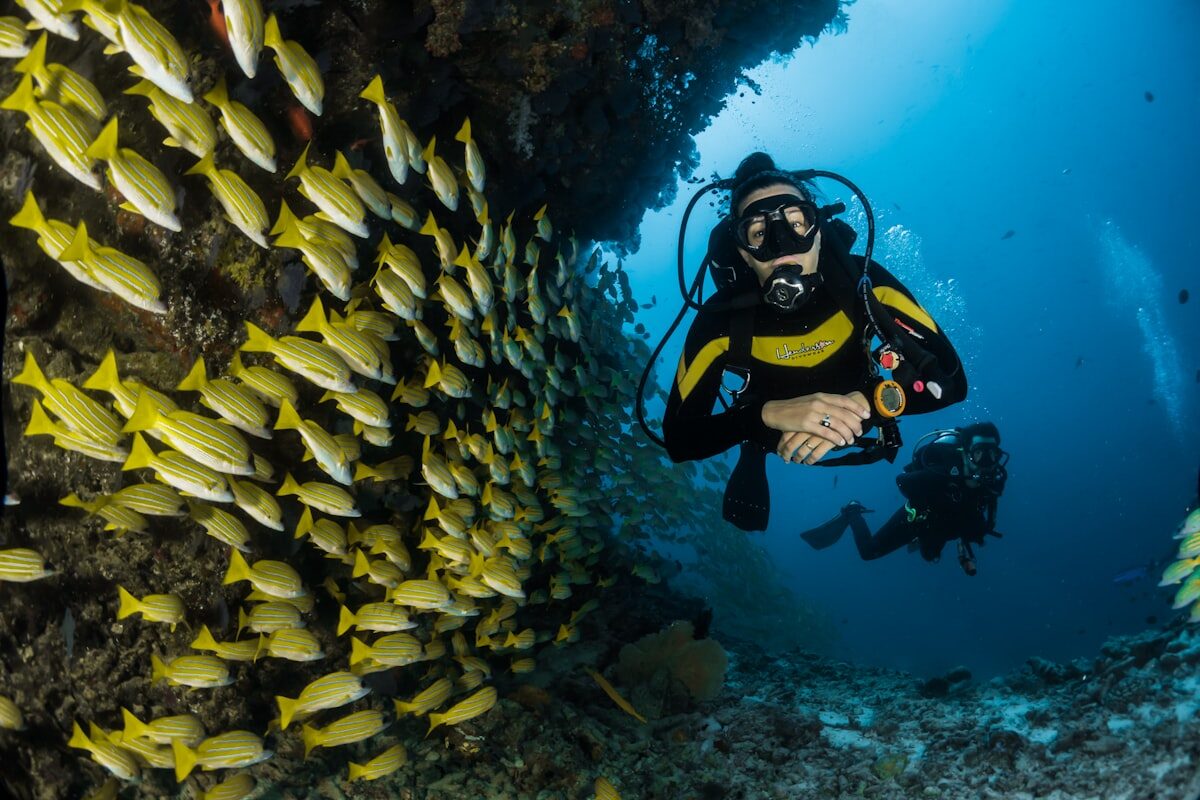
Scuba Diving in Raja Ampat
Raja Ampat is not a bucket list item. It is a reminder that the planet still holds places that do not need filters — if you are willing to earn them.
TL;DR
Raja Ampat is the best dive destination in the world for biodiversity — not because of rankings, but because the Coral Triangle still has secrets. This is not a resort vacation. Currents are strong, sites are remote, and most visitors choose a liveaboard because the best reefs do not have jet bridges. If you are the kind of diver who wants to come home with stories instead of selfies, this is your place.
Who This Guide Is For
Advanced divers who want to maximize their time in the water. Raja Ampat is not a beginner destination. Currents can be strong, sites are remote, and most boats require Advanced Open Water certification or equivalent experience.
Quick Facts
| Question | Answer |
|---|---|
| Best time to dive | October through April |
| Typical trip duration | 7-10 days |
| Difficulty | Hard |
| Typical budget | $2,000-$4,500 USD |
| Certification required | Advanced Open Water recommended |
| Water temperature | 28°C (82°F) |
Before You Go
Checklist
Documents & Permits
- Passport with 6+ months validity
- Indonesian visa on arrival ($35 USD, 30 days, extendable); see Indonesia Immigration
- Dive insurance with technical diving coverage
- DAN insurance or equivalent hyperbaric coverage
- Printed dive log and certification card
Gear
- Dive computer
- Reef hook for current dives
- 7mm wetsuit or 5mm with hood
- Underwater camera (optional)
- Reef-safe sunscreen or rash guard
Apps & Navigation
- Dive site maps offline (Dive Ninja or local operator maps)
- Weather and tide apps
- Emergency contacts saved offline
Health
- Anti-nausea medication for liveaboard
- Seasickness patches (apply 8 hours before boarding)
- Basic first-aid kit with betadine and antibiotic ointment
Getting There
Fly into Sorong (SOQ) from Jakarta (CGK) or Makassar (UPG). Most liveaboards depart from the port in Sorong. If you are land-based, fly to Marinda Airport (RJM) on Waigeo Island, then take a boat transfer to your resort. For official tourism info, see Wonder Indonesia.
| Route | From | To | Time | Cost |
|---|---|---|---|---|
| International | Jakarta (CGK) | Sorong (SOQ) | 5-6 hrs | $150-350 return |
| Domestic | Makassar (UPG) | Sorong (SOQ) | 1.5 hrs | $80-150 return |
| Land-based transfer | Sorong (SOQ) | Marinda (RJM) | 1 hr flight + 1 hr boat | $300-500 total |
Visa note: Most nationalities get a visa on arrival for IDR 500,000 ($35) for 30 days. Extensions cost an additional $35 per 30 days. Check US State Dept Indonesia requirements before booking, as policies change.
Liveaboard vs. Land-Based
The biggest decision is whether to sleep on a boat or on land.
| Factor | Liveaboard | Land-Based Resort |
|---|---|---|
| Cost | $2,000-$4,500/week | $1,500-$3,500/week |
| Access to sites | All sites, including southern sites like Blue Magic | Limited to northern sites near Waigeo |
| Daily transfers | None — dive between sites | 30-90 minutes by boat each way |
| Comfort | Small cabins, shared bathrooms | Private rooms, en-suite bathrooms |
| Best for | Divers who want maximum bottom time | Travelers who prefer comfort and shore diving |
| Seasickness | Possible on smaller boats | Minimal — resort is stable |
| Night diving | Usually included | Usually available |
Cost breakdown: Liveaboard prices typically include all meals, diving, nitrox if requested, and sometimes domestic flights. Land-based prices usually include meals, 2-3 boat dives per day, and airport transfers. As of 2025, most operators price in USD.
Where to Stay
If you choose land-based, the main options are on Waigeo Island or Misool. Waigeo resorts are closer to Sorong and offer access to sites like Manta Sandy and Cape Kri. Misool resorts are more remote, with spectacular soft corals and fewer crowds.
| Area | Best For | Typical Cost per Night | Notes |
|---|---|---|---|
| Waigeo Island | Classic Raja Ampat diving | $300-600 | Close to Sorong, good for first-timers |
| Misool | Soft corals and manta cleaning stations | $400-800 | Remote, ideal for underwater photographers |
| Sorong | Budget base, rest before/after diving | $30-80 | Limited local diving, mostly for logistics |
Liveaboard cabins: Budget shared cabins run $200-350/night. Mid-range private cabins with en-suite bathrooms run $350-600/night. Luxury options with guides and cameras can exceed $1,000/night.
Top Dive Sites
Blue Magic
Currents can be strong. Descend quickly to the reef to avoid the surface current. You will likely see sharks, turtles, and schooling jacks.
| Detail | Note |
|---|---|
| Difficulty | Advanced |
| Current | Strong |
| Typical visibility | 20-30m |
| Best time | Morning, incoming tide |
Manta Sandy
A manta cleaning station where rays gather in numbers. Arrive early for the best chance of encounters.
| Detail | Note |
|---|---|
| Difficulty | Intermediate |
| Current | Moderate |
| Typical visibility | 20-30m |
| Best time | Early morning |
Cape Kri
Holds the world record for fish species counted on a single dive (374). Expect barracuda, snapper, and bumphead parrotfish.
| Detail | Note |
|---|---|
| Difficulty | Advanced |
| Current | Strong |
| Typical visibility | 25-30m |
| Best time | High tide |
Misool
Massive fan corals, swim-throughs, and some of the most colorful soft corals on Earth. Several manta aggregation sites are nearby.
| Detail | Note |
|---|---|
| Difficulty | Intermediate to Advanced |
| Current | Moderate |
| Typical visibility | 20-25m |
| Best time | Morning |
Day-by-Day Itinerary (7-Day Liveaboard Example)
Most Raja Ampat liveaboards follow a similar route, starting from Sorong and heading north to Waigeo before crossing to Misool.
| Day | Dive Sites | Highlights |
|---|---|---|
| 1 | Sorong → Waigeo (2-3 dives) | Check dives, soft coral gardens |
| 2 | Manta Sandy, Blue Magic | Manta cleaning station, current training |
| 3 | Cape Kri, Mike’s Point | World-record fish diversity, WWII wreck |
| 4 | Arborek, Yanbanil | Manta aggregation, macro critters |
| 5 | Cross to Misool (2-3 dives) | Fan corals, swim-throughs |
| 6 | Misool sites | Boo Windows, Fiabacet, soft coral walls |
| 7 | Return to Sorong | Last dive, debrief, fly out |
Plan B: If currents are too strong for Cape Kri or Blue Magic, your guide will swap to protected sites like Arborek or the far side of Misool. Always have a backup plan in Raja Ampat — the conditions dictate the itinerary.
Practical Tips
- Gear: Bring your own dive computer if you have one. A reef hook is useful for current dives. A 7mm wetsuit is recommended despite the 28°C water; thermoclines can be cold at depth.
- Reef safety: Use reef-safe sunscreen or wear a rash guard. Do not touch corals, maintain neutral buoyancy, and never chase marine life.
- Visa: Check Indonesian visa requirements before you fly. Most nationalities get a visa on arrival. As of 2026, the cost is IDR 500,000 (~$32 USD) for 30 days. Verify current rates at embassy or immigration website before booking, as policies change.
- Insurance: Ensure your travel insurance covers technical diving and liveaboard trips. Evacuation from Raja Ampat is difficult and expensive. DAN insurance costs approximately $150-200 for a 2-week trip.
- Cash: Indonesian rupiah (IDR) is the only currency. USD is accepted for liveaboard bookings but not for on-board expenses. Bring IDR 2-3 million ($130-200) for tips and souvenirs.
Before You Go: Last-Minute Checks
- Liveaboard confirmed? Reconfirm embarkation time and port location 48 hours before arrival.
- Flights aligned? Book international flights with flexible return dates in case the liveaboard schedule shifts.
- Dive computer serviced? Check battery and calibration before leaving home.
- Vaccinations up to date? Hepatitis A and typhoid are recommended. Malaria prophylaxis is generally not required for Raja Ampat but check current CDC guidelines.
Insider Tips
Ask your dive guide to run the boat in reverse order on your last few dives. Sites like Cape Kri are far from Sorong, and ending your trip near the airport saves hours of transfer time. If you are land-based, book a resort that offers unlimited shore dives — the house reef can be surprisingly good between boat trips.
Local tip: The best manta encounters at Manta Sandy are between 8 a.m. and 11 a.m. If your liveaboard schedules afternoon dives there, ask the guide if you can do an early morning checkout dive instead.
Etiquette & Culture
- Reef rules: Never touch, kick, or chase marine life. Maintain neutral buoyancy. Use reef-safe sunscreen only.
- Boat etiquette: Remove fins before boarding the tender. Rinse gear with fresh water before storing.
- Local villages: If your dive site includes a village visit, dress modestly and ask permission before taking photos of people.
- Tipping: Liveaboard crew tips are typically $10-20 per diver per day. Resort staff appreciate $5-10 per day. Tips are usually collected at the end of the trip.
Useful Phrases (Indonesian)
| Phrase | Use |
|---|---|
| Terima kasih | Thank you |
| Maaf | Sorry / Excuse me |
| Berapa harga? | How much? |
| Tidak, terima kasih | No, thank you |
| Air putih, please | Plain water, please |
FAQs
Is Raja Ampat suitable for beginners? Not really. Currents are unpredictable, most sites are drift dives, and the nearest recompression chamber is in Sorong. Build experience in Southeast Asia first.
How many dives can I expect per day? Liveaboards typically run 3-4 dives per day, including a night dive. Land-based resorts usually offer 2-3 boat dives plus shore dives.
What is the best time to see mantas? Manta Sandy is most reliable from October through April. Mantas are more active in the morning, so prioritize that site early in the trip.
Do I need a dive computer? Yes. Currents change quickly and depths can shift fast. A computer is essential for safety and decompression management.
Can I combine Raja Ampat with other Indonesian dive destinations? Yes, but travel times are long. Komodo, Bunaken, and Bali are the most common pairings. If you only have one week, stick to Raja Ampat.
Prices and visa requirements last verified: August 2026. Exchange rates approximate.
Related Guides
- Hiking the Torres del Paine W Trek — for land-based adventure after diving
- Three Days in Tokyo — if you are routing through Japan before or after Indonesia
The best trips do not just move you across a map. They change how you see the world. Use this guide to build your own story.
Start Planning Your Story