Okinawa: Japan's Blue Zone at Island Pace
Okinawa runs on island time: Ryukyu castles, Kerama-blue reefs, longevity food. This guide covers Naha, the north coast, the Keramas and 2026's festivals.
TL;DR
Okinawa is not mainland Japan with palm trees. It is the former Ryukyu Kingdom — a chain of islands with its own language, its own food, its own pace, and one of the five Blue Zones on Earth where people routinely live past 100. Mainland travelers notice it first in small ways: shisa lion-dogs on every roof guard against the same evil in different ways, goya (bitter melon) appears at breakfast, and nobody rushes. Expedia named Okinawa No. 2 on its 2026 Destinations of the Year list, with searches up 71% year-on-year, and 2026 is the year to go: October brings the Naha Great Tug-of-War, November brings the Shurijo Castle Reconstruction Festival and the November 23 public reopening of the rebuilt Seiden main hall, lost to fire in 2019. This guide gives you a seven-day route through Naha, the north coast, the Kerama Islands, and the Yaeyama option — built around the October–November window when the typhoons tail off, the sea sits at 27°C, and the crowds never arrive. You will leave understanding why Okinawans greet each other with “ichariba chode”: once we meet, we are siblings.
Who This Guide Is For
Travelers who have done Tokyo and Kyoto and suspect Japan has another register. Snorkelers who want turtles without the Raja Ampat logistics. Food travelers who want a cuisine that mainland Japan does not cook. Anyone recovering from a checklist style of travel — Okinawa rewards you precisely to the degree you slow down, and this guide assumes you are willing to rent a car, get briefly lost in a sugarcane village, and sit longer at an izakaya than you planned.
Quick Facts
| Question | Answer |
|---|---|
| Best time to visit | October–November (warm, dry, post-typhoon calm); sea 27°C in October |
| Language | Japanese; Uchinaguchi (Okinawan) survives in greetings and songs |
| Currency | Japanese Yen (JPY) |
| Time zone | Japan Standard Time (UTC+9) |
| Getting there | Fly to Naha (OKA) via Tokyo or Osaka; no nonstop flights from US/EU |
| Must try | Goya champuru, Okinawa soba, rafute, taco rice, umibudo, awamori |
| Typical daily budget | ¥6,000–¥10,000 budget floor; realistic mid-range ¥12,000–¥23,000 with a rental car |
| Driving | On the LEFT — visitors from right-hand-traffic countries, take the first day slowly |
Before You Go
Documents & Money
- Passport valid for the duration of stay; most nationalities get 90 days visa-free on arrival (verify yours on the MOFA list)
- JESTA is not required for 2026 travel — the law passed May 29, 2026 but enforcement starts no later than March 31, 2029. Any site currently “selling” a JESTA authorization is a scam
- Visit Japan Web (free, official) generates QR codes for immigration and customs — set it up 1–2 days before departure
- Immigration may ask for an onward ticket and proof of funds
- International driving permit required for the rental car — arrange this at home; Japan does not issue them on arrival for most nationalities
- IC card (Suica/ICOCA work on the monorail; OKICA is the local card); many local buses remain cash-only
Gear
- Reef-safe sunscreen — the reefs you are swimming over are the point (¥1,500–¥3,500 on island)
- Rash guard or stinger suit for October swims — box jellyfish (habu-kurage) season runs through October
- Light rain shell — brief showers are routine even in the dry season
- Water shoes for coral-and-limestone entries
- One modest outfit for shrine and utaki visits
Apps / Navigation
- Google Maps offline — the north coast and Yaeyama islands have dead zones
- Visit Japan Web — airport QR codes
- Japan Transit Planner (Jorudan) — for the monorail and highway buses
- Google Translate with Japanese downloaded — English is thinner than in Tokyo
- Typhoon tracking: JMA if traveling in early October
Health
- Tap water is safe across Japan
- Swim only at netted, lifeguard-managed beaches through October — habu-kurage (box jellyfish) stings are the real hazard, and operators cancel boat snorkels when conditions warrant
- Typhoon disruption: Okinawa sees far more flight and ferry cancellations than the mainland — travel insurance with weather-disruption cover is worth it in early October
Getting There
By Air
- Naha Airport (OKA) is the hub; there are no nonstop flights from the US or EU — everyone connects through Tokyo or Osaka
- Tokyo–Naha: round-trip roughly ¥18,000–¥30,000 (aggregator floors near ¥18,000; realistic booking ~¥25,000); LCC one-way ¥6,000–¥9,000 booked 8+ weeks out, ¥15,000–¥22,000 two weeks out
- From the US West Coast: round-trip from ~$770 (fare floor), typically ~$1,100 (12-month average); US-wide average $1,252
- From London: £650–£950 return via Tokyo or Osaka, 8–10 weeks lead time
- Japan’s international tourist departure tax (¥3,000 since July 1, 2026, up from ¥1,000) is already baked into ticket prices
- For official tourism information, see Okinawa Tourism and JNTO.
Airport to City
| Route | Cost | Time |
|---|---|---|
| Yui Rail monorail to Kokusai-dori (Kencho-mae/Makishi) | ¥270 | 12–15 min |
| Yui Rail to Shuri terminus | ¥340 | ~27 min |
| Highway Bus 117 to Churaumi Aquarium | ~¥1,750 | 2h40m–3h |
| Airport limousine bus to Onna resorts | ¥1,530–¥1,730 | 1h10m–1h40m |
- The Yui Rail is Okinawa’s only railway — 19 stations from the airport through Naha to Urasoe and Tedako-Uranishi. Everything north of it needs wheels
- Day pass ~¥800 (paper) / ¥1,000 (mobile QR); pays off at three rides
Onward to the Outer Islands
- Naha–Ishigaki flights: ~1 hour; from roughly ¥10,000–¥15,000 one-way booked ahead (walk-up fares run far higher)
- Ferries exist but are slow; fly unless you have time as a luxury
Where to Stay
| Area | Vibe | Budget/Night | Best For |
|---|---|---|---|
| Naha (Kokusai-dori) | Market streets, izakayas, festival staging ground | Dorm ¥1,800–¥2,500; guesthouse private ¥3,500–¥5,500; business hotels from ¥6,500 to ¥12,000–¥22,000 | Car-free first days, food travelers |
| Onna / Chatan coast | West-coast resort strip, sunsets over the East China Sea | Mid-range ¥12,000–¥22,000; resorts from ¥10,000 to ¥55,000–¥120,000+ | Resort stays, snorkel access |
| Motobu / Nago | Quiet north, aquarium proximity, Bise’s tree-lined lanes | Budget rooms ¥4,500–¥6,000 (supply is thin) | Aquarium mornings, divers |
| Ishigaki / Taketomi | Yaeyama gateway; preserved Ryukyu village island | ¥8,000–¥15,000 | Island extension, stargazing |
- October–November sits between the Obon/Golden Week spikes and Christmas high season — this is when a ¥28,000 Onna room drifts back toward ¥12,000
- Book anything resort-tier early for the November 1–3 Shurijo festival weekend
Where to Eat
| Meal | Recommendation | Area | Cost/Person |
|---|---|---|---|
| Breakfast | Konbini onigiri (¥140–¥180) or a market teishoku | Naha | ¥300–¥800 |
| Lunch | Makishi Public Market: buy on floor 1, they cook it on floor 2 | Naha | ¥1,200–¥1,800 |
| Okinawa soba | Thick wheat noodles in pork broth; soki soba adds braised spare rib | Island-wide | ¥650–¥900 |
| Steak lunch | Old-school Okinawan steakhouses — teppanyaki sets with free-refill rice | Naha | ¥1,000–¥2,500 |
| Dinner | Izakaya: goya champuru, rafute, umibudo, awamori by the glass | Naha | ¥3,500–¥5,000 |
| Street food | Sata andagi (Okinawan doughnut) near the market | Naha | ¥150–¥300 |
| Beach bar | Orion beer at sunset | Anywhere coastal | ¥700 |
- The Okinawan table is a survival cuisine: pork belly simmered soft (rafute), bitter melon stir-fried with egg and spam (goya champuru), taco rice from the base-era fusion decades, and sea grapes (umibudo) that pop like caviar
- Awamori is the island’s indigenous rice distillate — order it on the rocks, not as a shot
Day-by-Day Itinerary
Day 1: Arrival + Naha
- 10:00 — Land at OKA, Yui Rail to Makishi (¥270, 15 min), drop bags
- 12:00 — First Okinawa soba bowl near the market (¥650–¥900)
- 14:00 — Walk Kokusai-dori end to end, then duck into the covered Tsuboya-yachimun-dori pottery street
- 16:00 — Makishi Public Market: island tofu and vegetables below, cooked sets above
- 19:00 — Izakaya dinner: champuru, rafute, first awamori
- 21:00 — Yachimun lane or an early night — jet lag plus island pace
Plan B: If you land in rain, swap the street walks for the Okinawa Prefectural Museum near Omoromachi and do the market at dinner time.
Day 2: Shurijo Castle + South Naha
- 09:00 — Yui Rail to Shuri; walk the Kinjo Stone Road down through the ryukyu-limestone lanes
- 10:30 — Shurijo Castle Park (¥400 admission through November 22, 2026 — the price rises to ¥1,000 when the rebuilt Seiden opens November 23; advance reservation applies to the main hall after that date)
- 13:00 — Lunch in Shuri or back at Makishi
- 15:00 — Awamori distillery tasting (Sake-no-Shuhoku area) or the Okinawa World of Naha’s museum quarter at Omoromachi
- 19:00 — Dinner around Asahibashi or return to Kokusai-dori
Plan B: After November 23, expect Seiden crowds — visit at opening (8:30) or book the first reservation slot and spend midday at Shikina-en garden instead.
Day 3: The North Coast Drive
- 08:00 — Pick up the rental car (compact ¥4,500–¥7,500/day; reserve weeks ahead — October–November inventory sells out)
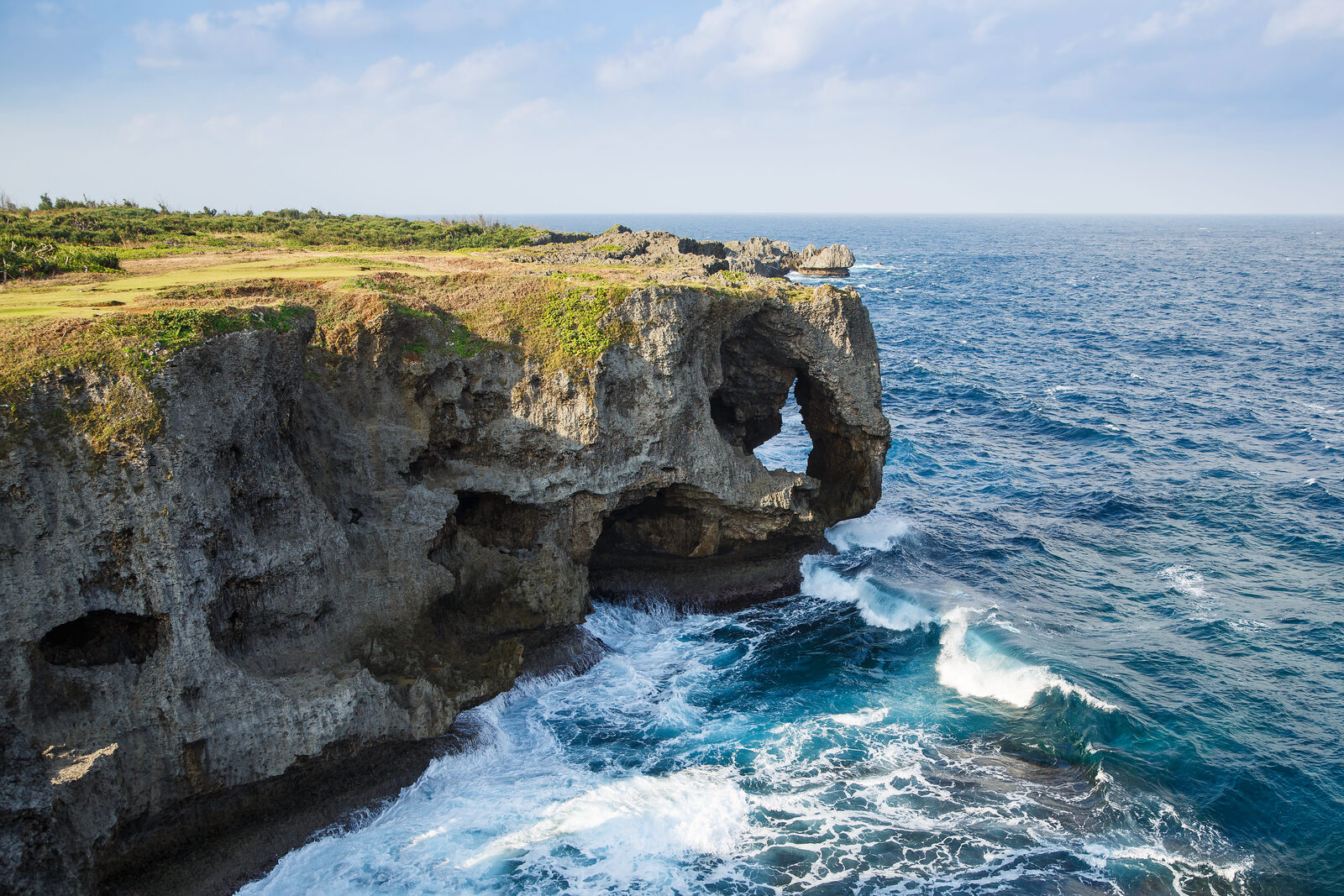
- 09:30 — Cape Manzamo: the elephant-trunk limestone cliff over the East China Sea (free; parking ¥100)
- 11:30 — Onna Village coast stops; lunch at a roadside shokudo
- 14:00 — Kouri Island across the 2km bridge — beach stop, Kouri Ocean Tower optional
- 17:00 — Into Motobu/Nago for the night; sunset at Bise’s fukugi tree tunnels
- 20:00 — Dinner near the aquarium; Yasuda or a local izakaya
Plan B: If the coastal wind is fierce, trade the capes for Nago’s pineapple winery and the Okinawa Fruits Land, and keep Kouri for tomorrow’s return leg.
Day 4: Churaumi, Properly
- 08:30 — Okinawa Churaumi Aquarium at opening (¥2,180 adult; through 17:30 last entry in the 8:30–18:30 window) — the Kuroshio Sea tank’s whale sharks before the tour buses
- 11:00 — Free dolphin lagoon shows and the Emerald Beach walk
- 13:00 — Bise Fukugi tree-road village stroll (flat, shaded, 40 minutes)
- 15:00 — Drive south; optional stop at Nakijin Castle ruins (¥600) for the gusuku sweep
- 19:00 — Back in Naha; izakaya night
Plan B: Rain day — the aquarium is the best bad-weather attraction in Japan, so simply shift Churaumi here and do the coast tomorrow.
Day 5: The Kerama Islands
- 08:00 — Tomari Port, high-speed ferry to Tokashiki (35 min) or Zamami (60 min); return fare ¥2,490–¥3,070
- 09:30 — Aharen Beach (Tokashiki) or Furuzamami Beach (Zamami): “Kerama Blue” water that behaves like a filter
- 10:30 — Guided snorkel with turtle encounters likely (half-day tour from ¥8,800 with gear and transfer) — or rent gear near Maeda Cape on the main island (¥1,500–¥2,500) if you skip the crossing
- 13:00 — Beachfront lunch; afternoon ferry back
- 19:00 — Farewell-to-Naha dinner: steak house, then Orion at a beach or harbor bar
Plan B: Seas too rough or swells up — push the crossing to Day 6, or take the car-free option: the “Have fun in Okinawa” one-day bus pass bundles Churaumi and Okinawa World with transport.
Day 6: Sacred Okinawa + The South
- 09:00 — Drive south to Sefa-utaki, the UNESCO-listed open-air worship site where the Ryukyu kings once prayed (quiet, forested, no structures — the sacredness is the place)
- 11:30 — Okinawa World: Gyokusendo’s 890m walked limestone cave corridor plus Ryukyu village crafts
- 14:00 — Okinawa Peace Memorial Park (Itoman): the island’s war memorial, sobering and beautifully made — the museum is ¥300
- 18:00 — Senaga Island’s Umikaji Terrace for sunset over the approach lights
- 20:00 — Return the car; last-night dinner near the airport or Kokusai-dori
Plan B: If the day goes sideways, drop Okinawa World (the cave is the weather-proof piece — keep it for rain) and give Sefa-utaki and the Memorial the full attention they deserve.
Day 7: Slow Morning + Departure
- 09:00 — Naminoue Shrine above the beach, or last konbini-and-coffee on Kokusai-dori
- 11:00 — Souvenir run: beniimo tarts, awamori minis, Chinsuko cookies
- 13:00 — Fly out — or onward to Ishigaki
The Yaeyama extension (Days 7–9): Fly Naha–Ishigaki (~1h, from ¥10,000–¥15,000 one-way booked ahead), base in Ishigaki City (¥8,000–¥15,000/night), day-trip by ferry to Taketomi for the buffalo-cart lanes and preserved Ryukyu village, and swim at Kabira Bay. Two nights minimum; three if you dive.
Practical Tips
- Rent the car. There is no rail outside Naha, and the Route 58 bus schedule is irregular enough that car-free travelers routinely burn a full day reaching places 45 minutes apart. Break-even versus taxis arrives around 1.5 people; solo travelers spending 2+ days outside Naha still come out ahead
- Book the car early. Rental prices spike and inventory sells out as travel dates approach — this is the most common Okinawa complaint on travel forums
- Get the ETC card with the car. The Naha–Kyoda expressway full run is ¥1,610 cash versus ¥1,040 with ETC; repeated northern trips make the discount meaningful
- Fuel runs ¥178–¥183/liter; a week of sightseeing (400–500km) costs ¥7,000–¥9,000
- Naha parking is ¥200–¥400 per 30 minutes and essentially nonexistent free near Kokusai-dori — leave the car parked and walk
- Many local buses are cash-only; keep ¥1,000 notes
- Drive on the left. Right-hand-drive vehicle, left-hand turns — the first roundabout is the test; take it slow
- Early October still carries typhoon risk (the season tails off mid-month); make early-trip bookings refundable and watch the JMA forecast
- October is the tail of box jellyfish season (June–October) — netted, lifeguard beaches only; November swimming is cleaner and calmer
- Central Okinawa (between Naha and Onna) sits around US military installations — expect aircraft noise near Kadena and Futenma, especially weekday daytime
Before You Go: Last-Minute Checks
- Visit Japan Web QR codes generated (immigration + customs)
- International driving permit in hand (home country, before departure)
- Rental car reserved with ETC card option
- Shurijo Seiden reservation made if visiting after November 23, 2026
- Kerama ferry refundable or weather-flexible (early October)
- Google Maps offline for Naha, the north coast, and the Yaeyamas
- Reef-safe sunscreen and rash guard packed
- Travel insurance covering typhoon disruption (October trips)
- ¥10,000+ in cash for cash-only buses and market stalls
- Hotel booking shows monorail proximity for Days 1–2 (Makishi/Kencho-mae)
Insider Tips
- The cheapest Churaumi ticket in Okinawa is ¥2,000 — the Michi-no-Eki Kyoda roadside station sells discounted adult tickets (cash only), a 8% saving over the ¥2,180 gate price, and it sits right where the expressway exits for the north coast
- Do Shurijo before November 23. The ¥400 entry through November 22 is the value window, and the Shurijo Castle Reconstruction Festival (November 1–3) fills the park with Ryukyu dynasty processions for free
- The main tug-of-war pull is Sunday, October 11 — the festival runs October 10–12, but the 200-meter, 40-tonne rope comes apart for spectators to keep as good-luck charms, so be at Kumoji by mid-morning
- Makishi’s second floor is the move — buy your seafood and vegetables downstairs, pay a modest cooking fee upstairs, and eat like a local family instead of a restaurant customer
- Chase the Blue Zone quietly. Ogimi village on the north coast is the longevity heartland; a chaya lunch there is a pilgrimage, not a tour stop — go midweek, sit long
- Snorkel with operators, not alone, in October. Kerama boat crews read the water conditions daily; turtle encounters are near-routine for them and luck for you
Etiquette & Culture
- Utaki are open-air sacred sites (Sefa-utaki is the most famous): speak quietly, do not climb or sit on the sacred formations, never move offerings, stay out of roped prayer zones, and skip photos of anyone worshipping
- Shisa pairs guard every roof: one with an open mouth to ward off evil, one closed to keep good spirit in — you will start reading them within a day
- Yuimaru is the Okinawan mutual-aid ethic (“help each other”); it is why strangers will help you park — say nifee-deebiru and mean it
- Kachashi — the arm-waving dance at the end of a celebration — is an invitation to join, not a performance to watch
- Tattoos: private onsen baths or private-room sento make it a non-issue on the islands
- Tipping does not exist; a genuine ichariba chode at a market stall is the better currency
- Uchinaguchi is a language, not a dialect of Japanese — locals light up when travelers try even one phrase
Useful Phrases (Uchinaguchi)
| Phrase | Meaning | Pronunciation |
|---|---|---|
| Haisai | Hi / hey | HIGH-sigh |
| Nifee-deebiru | Thank you very much | NEE-fay DEE-bee-roo |
| Churasan | Beautiful! | CHEW-rah-san |
| Mechaa umakaa | So delicious! | meh-CHAH oo-mah-KAH |
| Ganjū? | You well? (greeting) | GAHN-joo |
| Ichariba chode | Once we meet, we are siblings | ee-CHAH-ree-bah CHOH-day |
Good to Know (2026)
- Departure tax tripled: Japan’s international tourist departure tax rose from ¥1,000 to ¥3,000 per departure on July 1, 2026; it is collected inside airfare and applies to nearly all departing passengers
- JESTA is law but not live: the enabling legislation passed May 29, 2026; enforcement begins no later than March 31, 2029 (government targeting fiscal 2028). For October–November 2026 trips, there is nothing to apply for and nothing to pay — ignore third-party sites selling it
- Shurijo Castle’s rebuilt Seiden opens November 23, 2026 (completion ceremony November 22) — admission rises from ¥400 to ¥1,000 that day and the main hall moves to advance reservation
- Churaumi’s world-first: the aquarium opened the first human-care breeding exhibit of Merten’s sea anemones on May 28, 2026
- The 2026 festival double-header: Naha Great Tug-of-War festival October 10–12 (main pull October 11; ~200m rope, ~40 tonnes; Guinness World Record since 1997) and the Shurijo Castle Reconstruction Festival November 1–3
FAQs
Do I need JESTA to visit Okinawa in 2026? No. The law passed in May 2026, but the system is not operational — enforcement starts by March 2029. Bring your passport, use the free Visit Japan Web, and enter normally.
Sources: MOFA Japan · iVisa News (May 29, 2026)
Is October–November really the best time for Okinawa? Yes — average highs of 27.5°C in October and 24°C in November, sea at 27°C falling to 25°C, and typhoon risk that drops sharply after mid-October and is near zero in November. Early October still carries residual typhoon risk; book flexibly.
Sources: JMA · US State Dept Japan
Do I need a rental car? In Naha, no — the Yui Rail covers the airport, Kokusai-dori, and Shuri. For the north coast (Manzamo, Kouri, Churaumi) and the south, yes; buses exist but are infrequent, and car-free travelers routinely lose half a day. Compact cars run ¥4,500–¥7,500/day.
Sources: Rojico Naha Airport transport guide (August 2026) · Okinawa Insider cost breakdown (May 2026)
How many days do I need? Five covers Naha, Shurijo, one north-coast day, and Churaumi. Seven adds the Keramas and the south loop properly. Add 2–3 days for the Ishigaki/Taketomi extension.
Source: RouteAtlas itinerary framework (this guide)
Is Okinawa expensive compared to mainland Japan? The flights and the car add cost; lodging mid-range runs below Tokyo. Budget floors of ¥6,000–¥10,000/day are optimistic once a car enters the picture — a receipt-based March 2026 budget put a realistic solo mid-range trip at ~¥17,800/day excluding international flights. Budget the car and tolls openly and you will not be surprised.
Sources: OneDayAwayTravel budget guide (2026) · Okinawa Insider real-costs report (May 24, 2026)
Can I swim in October? Yes — the sea is 27°C. Swim at netted, lifeguard-managed beaches through the end of October (box jellyfish season is June–October) or take a boat snorkel in the Keramas, where operators monitor conditions daily.
Sources: Nippondex Okinawa beach season planner (2026) · Churaumi Aquarium
Related Guides
- Tokyo Three Days — pair the mainland megacity with the islands; the contrast is the whole point of Japan in one trip
- Kyoto — mainland Japan’s imperial tradition, the perfect counterweight to Ryukyu court culture at Shurijo
- Phuket — if tropical-island pace is the goal, this is the Andaman-side comparison point
The Bottom Line
Okinawa will not perform for you. The turtles surface when they surface, the tug-of-war rope comes apart when 15,000 hands pull it apart, and the 100-year-old in Ogimi will tell you the secret is not a secret. That is the transformation this island offers: a week in a place that measures wealth in yuimaru — the people around you — and longevity in bitter melon and everyday movement. Come in the October–November window, rent the car, drive on the left, and let the pace rewire you. You will leave speaking a word of Uchinaguchi without noticing when you started.
Hero image: Cape Manzamo, Onna — CEphoto, Uwe Aranas / Wikimedia Commons, CC BY-SA 3.0
The best trips do not just move you across a map. They change how you see the world. Use this guide to build your own story.
Start Planning Your Story