Armenia: The Caucasus' Hidden Gem — 8,000 Years of Wine, Cliff-Edge Monasteries, and the World's Friendliest Currency
Armenia: Yerevan's Soviet-cool energy, 8,000-year-old Areni winemaking, cliff-edge Tatev and Geghard monasteries, and Lake Sevan — world's friendliest currency.
TL;DR
Armenia is the Caucasus’ best-kept secret — a landlocked country the size of Belgium where 8,000 years of continuous winemaking meets monasteries perched on cliff edges, where the world’s oldest cathedral sits 30 minutes from a temple older than the Parthenon, and where you can eat a full meal for $5 while watching the sun set behind Mount Ararat. The 2026 numbers are real: 1.042 million tourist visits in H1 2026 (+14.8% YoY), with the country targeting 2.2 million for the year under its 2026-2030 Strategic Plan for Tourism Development. The NYT placed Armenia at #20 on its 52 Places to Go 2026 list (“Wolves, Wine and Thousand-Year-Old Monasteries”). The Armenian dram is so weak against every major currency that a solo traveler can live like a king for $30-40/day. This guide gives you a 10-day route through Yerevan, the UNESCO monasteries of Garni and Geghard, the wine caves of Areni, the cliff-hanging Tatev Monastery and the world’s longest cable car, and the alpine vastness of Lake Sevan and Dilijan National Park. The goal is not to check off ancient stones. The goal is to understand why a country that adopted Christianity as a state religion in 301 AD still feels like one of the most welcoming places on Earth.
Who This Guide Is For
Travelers who have done Georgia and want the Caucasus companion piece — same mountainscapes, same ancient-Christian DNA, same food-and-wine obsession, but quieter, cheaper, and less discovered. Wine travelers who want to stand inside the oldest known winery on Earth (Areni-1, 6,100 BC) and drink qvevri wines that rival Georgia’s for a fraction of the price. History lovers who want the first country to adopt Christianity (301 AD) as a living museum, not a theme park. Solo travelers who want safety, walkable cities, and a currency so favorable that a $20 bill lasts three days. Nature lovers who want Dilijan National Park’s “Armenian Switzerland” forests and Lake Sevan’s 1,900 km² of blue without the Swiss price tag. Anyone who reads “visa-free for 180 days” and “8,000 years of winemaking” in the same sentence and thinks that sounds exactly right. This guide assumes you are comfortable with a mix of marshrutkas, rental cars, and the occasional arranged transfer, and that you believe monasteries are better without gift shops.
Quick Facts
| Question | Answer |
|---|---|
| Best time to visit | May–June and September–October (ideal); July–August hot but manageable; winter snowblocks mountain passes |
| Typical duration | 10 days |
| Difficulty | Easy (paved roads, marshrutkas connect all sites, well-marked trails) |
| Typical daily budget | $25–$80 USD (see Where to Stay) |
| Visa | Visa-free for US, UK, EU, Canada, Australia, NZ, Japan, South Korea (up to 180 days); see GOV.UK entry requirements |
| Currency | Armenian dram (AMD) — ~1 USD = 400 AMD |
| Language | Armenian (unique alphabet); Russian widely understood; English common in Yerevan tourist areas |
| Getting there | Fly into Yerevan (EVN) from most European hubs, Moscow, Tbilisi, or Tehran |
Before You Go
Checklist
Documents & Money
- Passport with 6+ months validity (visa-free entry for 180 days for US, UK, EU, CA, AU, NZ, JP, KR)
- Travel insurance (medical evacuation recommended; see US State Department advisory for current status)
- AMD cash for markets, marshrutkas, and rural stops (ATMs in Yerevan and major towns; withdraw AMD 50,000–100,000 at airport)
- Credit card with no foreign transaction fees (widely accepted in Yerevan hotels and restaurants)
- USD or EUR cash for exchange if you need extra (black-market rates on the street are better than banks)
Apps to Download
- Google Maps offline for Yerevan and main routes
- Yandex Go or GG for taxis (Yandex is dominant; fixed prices, no haggling)
- Armenian Railways app if you plan the Yerevan–Gyumri train
- Windy for mountain weather (Dilijan and Tatev can have sudden changes)
Gear
- Comfortable walking shoes (Yerevan’s Cascade is 500+ steps; monastery floors are uneven stone)
- Daypack for Dilijan hiking and Tatev cable car
- Swimwear for Lake Sevan (water is cold but the beaches are popular in summer)
- Modest clothing for monasteries (covered shoulders and knees; women carry a scarf)
- Reusable water bottle (tap water is safe in Yerevan; in rural areas ask locally)
- Sunscreen and a hat (Armenia has 300+ days of sunshine per year)
Health
- No mandatory vaccines; routine vaccines recommended
- Basic first-aid kit with blister treatment
- Altitude awareness: Lake Sevan is 1,900m; Tatev is 1,500m; no serious acclimatization needed but drink extra water
Getting There
Zvartnots International Airport (EVN) sits 12 km west of Yerevan city center, with direct flights from Paris, Moscow, Tbilisi, Tehran, Warsaw, Vienna, and seasonal routes from Western Europe. From the US, the easiest route is through Paris, Vienna, or Moscow. There are no direct flights from North America or Asia (beyond the Middle East) in 2026.
| Route | From | To | Time | Cost |
|---|---|---|---|---|
| International | CDG → EVN | Direct (Air France, FlyOne) | 4 hrs | €200–€450 return |
| International | VIE → EVN | Direct (Austrian Airlines, Ryanair) | 3.5 hrs | €150–€350 return |
| Regional | TBS → EVN | Direct (Air Armenia, FlyOne) | 45 min | $80–$150 return |
| Land | Tbilisi → Yerevan | Bus or marshrutka | 5–6 hrs | $15–$30 |
| Airport → Yerevan center | EVN | Bus 201 or taxi | 30 min | AMD 1,000 ($2.50) by bus |
Visa note: Armenia offers visa-free entry for 180 days for citizens of the US, UK, EU, Canada, Australia, New Zealand, Japan, and South Korea. The GOV.UK rates Armenia low-risk for tourist travel. The US State Department maintains a Level 2 advisory — exercise increased caution near the borders with Azerbaijan and Turkey, but tourist areas are safe.
Where to Stay
Yerevan’s accommodation market is the best value in the South Caucasus. You can stay in a Soviet-era boutique hotel with a rooftop terrace overlooking Mount Ararat for the price of a hostel bunk in Tbilisi. The 2026 landscape is shifting: EU-funded renovations are turning old Vernissage-area buildings into design hotels, and the Kond neighborhood has emerged as the city’s creative district.
| Type | Where | Price Range per Night | What You Get |
|---|---|---|---|
| Hostel | Yerevan center | AMD 8,000–15,000 ($20–$40) | Dorm bed, shared bathroom, often breakfast |
| Budget guesthouse | Yerevan, Dilijan | AMD 20,000–40,000 ($50–$100) | Private room, private bathroom, local breakfast |
| Mid-range hotel | Yerevan, Sevan | AMD 50,000–100,000 ($125–$250) | Private bathroom, Wi-Fi, central location |
| Luxury | Yerevan | AMD 150,000+ ($375+) | Rooftop Ararat views, spa, fine dining |
Booking tip: Yerevan is walkable and compact — stay in the Kentron district (Republic Square, Cascade, Opera) for maximum convenience. The northern neighborhoods (Arabkir, Davtashen) are quieter and cheaper but 20–30 minutes from the center by marshrutka. Lake Sevan has a cluster of Soviet-era sanatoriums and a few new boutique properties; book in July–August if you want a lakeside room.
Where to Eat
Armenian food is the world’s most underrated cuisine: fresh produce from volcanic soil, herbs that grow wild on every mountainside, and a grilling culture that makes the kebab look like a warm-up act. The national dish is khorovats — marinated pork or lamb grilled over vine cuttings (the smoke is the secret ingredient). Dolma is grape leaves stuffed with spiced lamb and rice, served cold with matsoni (yogurt). Lavash is the UNESCO-listed flatbread that appears at every meal. In Sevan, the trout is the star. In Dilijan, the honey and mountain herbs define the flavor.
| Meal | Recommendation | Where | Approx. Cost |
|---|---|---|---|
| Breakfast | Lavash + ful medames + coffee | Yerevan café | AMD 3,000–6,000 ($7.50–$15) |
| Lunch | Khorovats platter with lavash and pickles | Local grill house | AMD 4,000–8,000 ($10–$20) |
| Dinner | Dolma + matsoni + village salad | Traditional restaurant | AMD 5,000–10,000 ($12.50–$25) |
| Drink | Armenian wine (Areni red) or kilikia beer | Wine bar or café | AMD 2,000–4,000 ($5–$10) |
Etiquette: Tipping is not mandatory but appreciated — 10% in restaurants. If invited to a home or a village feast, accept; refusing food is considered impolite. Remove shoes when entering a home.
Day-by-Day Itinerary
This itinerary is designed around the best weather window (May–October) and assumes a base in Yerevan with two overnight pillars in Dilijan and Lake Sevan.
Day 1: Arrival in Yerevan — The Pink City
| Time | Activity | Location | Notes |
|---|---|---|---|
| 10:00 | Land at EVN, take bus 201 or taxi to center | Yerevan | Bus 201 goes to Republic Square; 30 min |
| 12:00 | Check in to hotel | Kentron district | Republic Square or Cascade area recommended |
| 13:30 | Lunch at a Yerevan grill house | Yerevan | First khorovats; try the sour plum juice (tandzi) |
| 15:30 | Walk Republic Square → Northern Avenue → Cascade | Yerevan | Republic Square is the pink granite heart; Cascade is 500 steps up |
| 19:30 | Dinner in the Old Yerevan area | Yerevan | Try a traditional khorovats restaurant with live folk music |
Plan B: If you arrive on a Sunday when the Cascade museum is closed, spend the afternoon at the Matenadaran (the ancient manuscript museum) or do a Yerevan Brandy Company tour with tasting.
Day 2: Yerevan Deep Dive — Cascade, Opera, and the Ararat View
| Time | Activity | Location | Notes |
|---|---|---|---|
| 08:30 | Coffee and lavash breakfast | Yerevan café | Ful medames with herbs and spices |
| 10:00 | Cascade complex + Cafesjian Museum | Cascade | 500 steps; contemporary art and sculptures; free entry to outdoor levels |
| 13:00 | Lunch at a Northern Avenue restaurant | Yerevan | Modern Armenian cuisine with a view |
| 15:00 | Matenadaran (ancient manuscripts) | Matenadaran | 17,000+ manuscripts; the world’s largest collection; AMD 1,000 entry |
| 17:00 | Walk to Opera House and Swan Lake | Yerevan | The Opera House is the social hub; Swan Lake free year-round |
| 19:30 | Dinner and wine at a Yerevan wine bar | Yerevan | Armenian reds from Areni; try the house wine |
Plan B: If the Cascade is under renovation, substitute the History Museum of Armenia at Republic Square or do a Yerevan Brandy Company tour (AMD 5,000, 90 min, includes tastings).
Day 3: Garni Temple and Geghard Monastery — Ancient and Sacred
| Time | Activity | Location | Notes |
|---|---|---|---|
| 08:00 | Marshrutka or taxi to Garni | Garni | 1 hr by marshrutka from Yerevan center; AMD 2,000 ($5) |
| 09:30 | Garni Temple | Garni | 1st-century AD pagan temple; the only standing Greco-Roman colonnaded building in the former Soviet Union |
| 11:30 | Walk to the Symphony of Stones (optional) | Garni Gorge | Natural basalt columns; 20 min downhill from the temple |
| 13:00 | Lunch at a Garni guesthouse | Garni | Village food: khorovats, dolma, and fresh herbs |
| 15:00 | Taxi or marshrutka to Geghard Monastery | Geghard | 20 min from Garni; UNESCO World Heritage |
| 16:00 | Explore Geghard Monastery | Geghard | Partially carved from the mountain; the upper chapel is inside a cave |
| 18:00 | Return to Yerevan | Yerevan | 1 hr by marshrutka or taxi |
Plan B: If Garni is closed for restoration (check ahead), spend extra time at Geghard and hike to the Azat Valley viewpoints. If the weather is bad, substitute the Echmiadzin Cathedral (the world’s oldest cathedral, 301 AD, 30 min from Yerevan).
Day 4: Khor Virap, Mount Ararat, and Areni Wine Region
| Time | Activity | Location | Notes |
|---|---|---|---|
| 08:00 | Marshrutka or taxi to Khor Virap | Khor Virap | 1.5 hrs by marshrutka; AMD 3,000 ($7.50) |
| 09:30 | Khor Virap Monastery | Khor Virap | 17th-century monastery on a low hill; the closest you can get to Mount Ararat on the Armenian side |
| 11:30 | Taxi to Areni Wine Region | Areni | 1 hr by taxi; the road winds through volcanic hills |
| 13:00 | Lunch and wine tasting at Areni Winery | Areni | The oldest known winery in the world (Areni-1 cave, 6,100 BC) is nearby |
| 15:00 | Visit Areni-1 Cave Winery site | Areni | 6,100-year-old winemaking installation; AMD 1,000 entry |
| 17:00 | Return to Yerevan via Noravank | Noravank | 13th-century monastery in a narrow gorge with red cliffs; 30 min from Areni |
| 19:30 | Dinner in Yerevan | Yerevan | Farewell to the wine region; try Areni red with khorovats |
Plan B: If Khor Virap is too crowded, visit Echmiadzin Cathedral instead (the spiritual center of Armenian Christianity). If Areni is inaccessible due to road conditions, substitute a Yerevan wine bar crawl — Armenia’s urban wine scene is exceptional.
Day 5: Yerevan → Lake Sevan — The Blue Lung of Armenia
| Time | Activity | Location | Notes |
|---|---|---|---|
| 08:00 | Marshrutka or taxi to Lake Sevan | Lake Sevan | 1.5 hrs by marshrutka; AMD 2,000 ($5) |
| 10:00 | Sevanavank Monastery | Lake Sevan | 9th-century monastery on a peninsula; views across the 1,900 km² lake |
| 12:30 | Lunch at a Sevan trout restaurant | Lake Sevan | Sevan trout (ishkhan) grilled with herbs; AMD 8,000–12,000 ($20–$30) |
| 14:30 | Beach time or hike to Hayravank | Lake Sevan | Hayravank Monastery is 30 min away on the western shore |
| 17:00 | Check in to hotel or sanatorium | Lake Sevan | Soviet-era sanatoriums with lake views are the authentic experience |
| 19:30 | Dinner with lake view | Lake Sevan | Fresh fish, local wine, and the sunset over the water |
Plan B: If Lake Sevan is too cold for swimming (it is alpine and chilly even in summer), substitute a Dilijan day trip — the “Armenian Switzerland” is 1 hr south and offers forest hiking, Parz Lake, and the Goshavank monastery.
Day 6: Dilijan National Park — Armenia’s Green Lung
| Time | Activity | Location | Notes |
|---|---|---|---|
| 08:00 | Taxi or marshrutka to Dilijan | Dilijan | 1 hr from Lake Sevan |
| 10:00 | Parz Lake | Dilijan | Crystal-clear mountain lake; rent a rowboat (AMD 5,000/hr) |
| 12:00 | Lunch at a Dilijan restaurant | Dilijan | Local honey, herbs, and grilled trout |
| 14:00 | Hike the Dilijan National Park trails | Dilijan | The most accessible trail is the Jukhtak Vank cave monastery loop (2 hrs) |
| 17:00 | Goshavank Monastery | Dilijan | 12th-century monastery complex in a forest glade; the khachkars (cross-stones) are extraordinary |
| 19:00 | Return to Yerevan or stay in Dilijan | Yerevan / Dilijan | Dilijan has a growing boutique hotel scene; staying is worth it for the silence |
Plan B: If Dilijan is rainy, spend the day in Gyumri (Armenia’s second city, 2 hrs north by train) — the Kumayri historic district is a beautifully preserved 19th-century Ottoman-Armenian quarter with craft workshops and a thriving café scene.
Day 7: Tatev Monastery and the Wings of Tatev
| Time | Activity | Location | Notes |
|---|---|---|---|
| 07:00 | Taxi or arranged transfer to Tatev | Tatev | 3 hrs by road from Yerevan; the Wings of Tatev cable car is the highlight |
| 10:00 | Wings of Tatev cable car | Tatev | World’s longest reversible cable car (5.7 km); crosses the Vorotan Gorge |
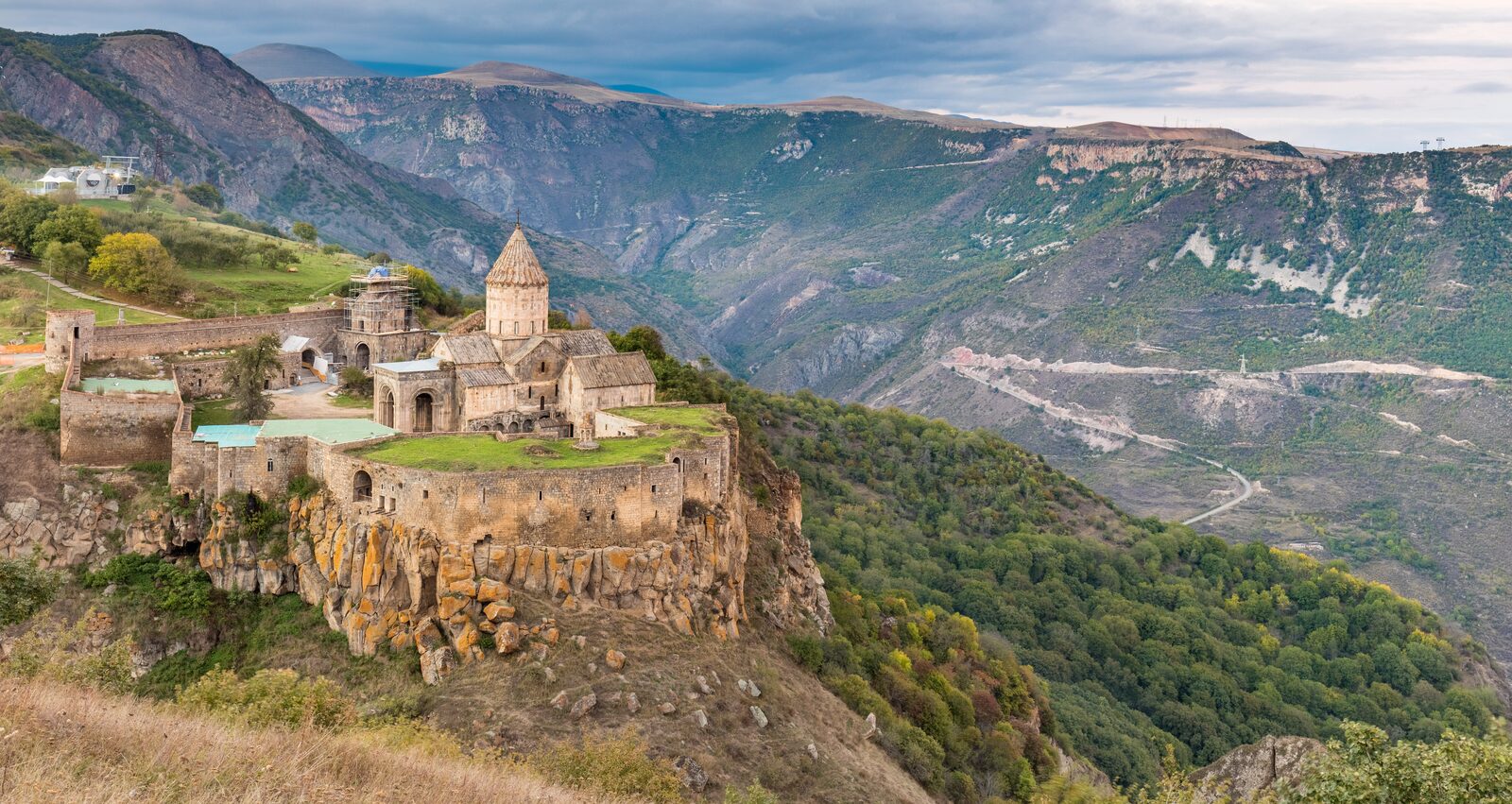
| 11:00 | Tatev Monastery | Tatev | 9th-century monastery on a basalt plateau; the restored church and the drum (gavit) are stunning |
| 13:30 | Lunch at the Tatev restaurant | Tatev | Simple Armenian food with views of the gorge |
| 15:00 | Return via cable car and explore the gorge viewpoint | Tatev | The cable car ride itself is the attraction; 15 min each way, 3,000m above the gorge at the highest point |
| 17:00 | Return to Yerevan | Yerevan | 3 hrs by road; stop at the Noraduz Cemetery (khachkars, some 1,000 years old) on the way back |
Plan B: If the cable car is closed for maintenance, the monastery is still accessible by a 40-min hike from the village — the walk is steep but the views are better. If weather cancels the cable car entirely, substitute a Shushi day trip from Stepanakert (requires separate planning due to border status).
Day 8: Yerevan → Mount Ararat Views and the Vernissage
| Time | Activity | Location | Notes |
|---|---|---|---|
| 08:00 | Marshrutka or taxi to Khor Virap viewpoint | Khor Virap | Return for the Mount Ararat panorama in morning light |
| 10:00 | Return to Yerevan via Artaxata | Artaxata | Ancient Armenian capital; the ruins are atmospheric |
| 12:00 | Lunch at a Yerevan khorovats restaurant | Yerevan | The best khorovats in the city is at Mast’ or Vernissage-side grill houses |
| 14:00 | Vernissage (open-air market) | Yerevan | Soviet-era flea market; carpets, kilims, khachkars, Soviet memorabilia, and street food |
| 17:00 | Yerevan Brandy Company tour | Yerevan | AMD 5,000, 90 min, 3 brandies; the 25-year-old is exceptional |
| 19:30 | Farewell dinner in Yerevan | Yerevan | Book a table at a rooftop restaurant with Mount Ararat views if clear |
Plan B: If the Vernissage is closed (it operates only on weekends), substitute the Yerevan Cascade for a second visit with different lighting, or do a Yerevan street art tour in the Kond district.
Day 9: Free Day — Deep Yerevan or Lake Sevan Extension
| Time | Activity | Location | Notes |
|---|---|---|---|
| 09:00 | Slow breakfast | Yerevan | Lavash, cheese, olives, and Armenian coffee |
| 10:30 | Option A: Kond district walking tour | Yerevan | The oldest neighborhood; wooden balconies, street art, hidden courtyards |
| 10:30 | Option B: Return to Lake Sevan | Lake Sevan | One last swim and a long lakeside lunch |
| 13:00 | Lunch at a Yerevan lavash bakery | Yerevan | Some bakeries are open-fronted and serve hot lavash with herbs for AMD 500 |
| 15:00 | Shopping for souvenirs | Yerevan | Buy Areni wine, dried fruit, or a small khachkar replica |
| 17:00 | Final walk along Hrazdan River | Yerevan | The river gorge cuts through the city; the green paths are peaceful |
| 19:30 | Final dinner | Yerevan | Try the seafood khorovats at a restaurant near the river |
Plan B: If you are tired, skip the Kond tour and spend the afternoon at the Cafesjian Center for the Arts or do a second wine bar crawl — Armenia’s urban wine scene deserves more time.
Day 10: Departure Day
| Time | Activity | Location | Notes |
|---|---|---|---|
| 08:00 | Slow breakfast | Yerevan café | Last lavash and sour plum juice |
| 09:30 | Last-minute souvenir shopping | Yerevan Vernissage | Buy wine, spices, or a handwoven rug if budget allows |
| 11:00 | Transfer to EVN | Yerevan Airport | Allow 1+ hour before departure |
| 13:00 | Fly EVN → home | Yerevan | Or connect via Tbilisi or Istanbul |
Plan B: If your flight is late, spend the afternoon at the Yerevan History Museum or do a slow walk through Victory Park on the hill above the city.
Practical Tips
- Marshrutkas are the cheapest and most authentic transport. They run set routes, cost AMD 200–500 ($0.50–$1.25) for any intra-city or inter-city leg, and are faster than waiting for a taxi. They only leave when full, so be patient.
- Taxis are cheap and safe. Yandex Go gives fixed prices with no haggling. A cross-town trip costs AMD 1,500–3,000 ($4–$7.50). Always use the app; do not hail random taxis on the street.
- The dram is your friend. 1 USD ≈ 400 AMD, 1 EUR ≈ 430 AMD (2026 rates). You will feel rich on arrival. The only risk is accidentally tipping AMD 10,000 ($25) because it looks like small change.
- Mount Ararat is visible from Yerevan on clear days. It is actually in Turkey, but the view from the city (especially from the Cascade or the Ararat wine district) is the defining image of Armenia. Do not mention the political status unless invited.
- Armenia is extremely safe. Violent crime is rare. The main risks are petty theft in crowded markets and aggressive stray dogs in rural areas (they are usually harmless but carry sticks just in case).
- The border with Azerbaijan is tense. Do not approach the Line of Contact or the border with Nakhchivan. The US State Department’s Level 2 advisory is specifically about these border regions; tourist areas are safe.
Before You Go: Last-Minute Checks
- Marshrutka route from EVN to Yerevan center confirmed (bus 201 or pre-arranged transfer)
- Garni + Geghard day trip organized (marshrutka from Yerevan center at 08:00 or private taxi)
- Tatev cable car tickets booked online in advance (wings.am; AMD 10,000 round-trip)
- Wine tasting at Areni winery reserved (most wineries require advance notice)
- Cash withdrawn in AMD at EVN ATM (AMD 50,000–100,000 for the first few days)
- Offline maps downloaded for Yerevan, Garni-Geghard, and Tatev
- Modest clothing packed for monasteries (covered shoulders and knees)
- Power adapter (Type C/F, 230V; same as Europe)
Insider Tips
- Visit Khor Virap at sunrise. The monastery is flat and open, and the morning light on Mount Ararat is worth the 5 a.m. alarm. You will have the site almost entirely to yourself.
- Eat at the Yerevan Vernissage on weekends. Saturday and Sunday mornings are when the flea market is alive. The street food stalls (khorovats on skewers, fresh lavash) are the best cheap meal in the city.
- Take the slow marshrutka from Yerevan to Dilijan. The road winds through the Hrazdan Gorge and takes 2.5 hours instead of the 1.5-hour highway — the views are worth the extra time.
- Skip the Yerevan Cascade museum if you do not like contemporary art. The outdoor sculpture garden and the view from the top are free. The paid museum inside is niche.
- Buy wine at a local supermarket, not at the airport. Armenian supermarket wines (Areni, Voskevaz, Zorah) cost AMD 3,000–8,000 ($7.50–$20) and are better than most $30 bottles you will find in Western wine shops.
- Learn three Armenian phrases. “Barev” (hello), “Shnorhakalutyun” (thank you), and “Haile” (yes) will earn you smiles. The Armenian alphabet is unique — do not expect Russian or English to help in rural areas.
Etiquette & Culture
- Armenians are famously hospitable. If a local invites you to their home or a family feast, accept. Refusing food or drink is considered impolite. Expect multiple toasts with wine or brandy.
- Remove shoes when entering a home. This is standard practice. You will be offered slippers or socks.
- Church etiquette. When visiting monasteries, dress modestly (covered shoulders and knees for both men and women). Women may be given a headscarf at the entrance. Photography is usually allowed but ask inside the churches.
- Tipping. 10% in restaurants is appreciated. Round up taxi fares. Hotel porters expect AMD 500–1,000 per bag.
- Politeness. Older Armenians may seem formal initially. A handshake and direct eye contact are standard greetings. Titles are used in formal settings.
- Armenian coffee is strong. It is served in small cups and is unfiltered. It is polite to drink at least one cup when offered.
Useful Phrases (Armenian)
| Phrase | Pronunciation | Context |
|---|---|---|
| Barev | bah-REV | Hello / Hi |
| Barev dzez | bah-REV dzess | Hello (formal) |
| Shnorhakalutyun | shnoh-rha-ka-loo-tyoon | Thank you |
| Haile / Che | HY-leh / CHEH | Yes / No |
| Inch ka? | inch GHA? | How are you? |
| Es ka? | ess GHA? | How much does it cost? |
| Kezi | keh-ZEE | Please |
| Nra | nrah | There is / There is not |
| Hajogh | ha-JOHG | Sorry / Excuse me |
| La joch | la JOHCH | Goodbye |
Good to know (2026)
- NYT 52 Places to Go 2026 (#20): “Wolves, Wine and Thousand-Year-Old Monasteries” — Armenia’s first appearance on the list, driven by the 2026-2030 Strategic Plan for Tourism Development and the 1.042 million tourist visits recorded in H1 2026 (+14.8% YoY).
- Tourism targets: The government is targeting 2.2 million tourist arrivals for 2026 and has a 2026-2030 Strategic Plan for Tourism Development focused on diversifying beyond Yerevan into regions like Tavush (Dilijan) and Vayots Dzor (Areni).
- Visa-free entry: US, UK, EU, Canada, Australia, New Zealand, Japan, and South Korea citizens enjoy visa-free stays up to 180 days. The GOV.UK rates Armenia low-risk for tourist travel.
- Best time: May–June and September–October are ideal. July–August is hot (30–35°C) but manageable with early starts. Winter (December–February) closes mountain passes and makes Tatev difficult, but Yerevan is mild and the skiing in Tsakhkadzor is good.
- Ancient winemaking: The Areni-1 cave winery (6,100 BC) is the oldest known winery in the world. Armenia’s 8,000-year-old winemaking tradition uses the same grape varieties today as it did in the Neolithic.
- Currency advantage: 1 USD ≈ 400 AMD. A solo traveler can eat well for AMD 10,000–15,000 ($25–$37.50) per day. The dram has been Armenia’s most stable currency in the South Caucasus for a decade.
FAQs
Do I need a visa for Armenia? No. Armenia offers visa-free entry for up to 180 days for citizens of the US, UK, EU, Canada, Australia, New Zealand, Japan, and South Korea. Check GOV.UK entry requirements for the latest rules. Sources: GOV.UK · Armenian Ministry of Foreign Affairs
What is the best time to visit? May–June and September–October are ideal. July–August is hot but manageable with early starts and lake swims. Winter is atmospheric but snowblocks mountain passes; Yerevan and Tsakhkadzor skiing remain accessible. Sources: Armenia Tourism Committee · NYT 52 Places to Go 2026
Is Armenia safe for solo travelers? Yes. Armenia is one of the safest countries in the South Caucasus. Violent crime is rare. The main risks are petty theft in crowded markets and stray dogs in rural areas. The US State Department rates Armenia Level 2: Exercise Increased Caution — the caution is focused on the borders with Azerbaijan and Turkey, not on tourist areas. Sources: US State Department · GOV.UK
Do I need a car? A rental car is useful for the Garni-Geghard-Tatev circuit and the Lake Sevan-Dilijan loop, but marshrutkas connect all major sites for under $2. If you have limited time, hire a driver for 2–3 days (AMD 20,000–30,000/day, $50–$75) and use marshrutkas for the rest. Sources: Armenia Tourism Committee · local transport forums
Is Armenia expensive? No. Armenia is one of the cheapest destinations in Europe/West Asia. You can eat a full meal for $5–$10, stay in a private room for $25–$50/night, and travel between cities for $2–$5. The weak dram means Western travelers feel very wealthy. Sources: TripAdvisor · Lonely Planet · Numbeo Yerevan
Can I see Mount Ararat? Yes, from Yerevan and Khor Virap on clear days. The mountain is in Turkey, but the view is the most iconic image of Armenia. The best viewpoints are the Cascade in Yerevan and the hill at Khor Virap Monastery. Sources: Armenia Tourism Committee · local guides
What is the currency and how do I pay? Armenian dram (AMD). 1 USD ≈ 400 AMD, 1 EUR ≈ 430 AMD. ATMs are widely available in Yerevan and most towns. Credit cards are accepted in hotels and restaurants, but cash is essential for markets, marshrutkas, and rural stops. Always decline Dynamic Currency Conversion (DCC) at ATMs. Sources: Central Bank of Armenia
Related Guides
- Tbilisi: The Complete 2026 Guide to Georgia’s Wine-Soaked, Sulfur-Bath Capital — for the Caucasus companion piece: same ancient-Christian culture, same wine obsession, different Soviet architecture
- Romania: The Balkans’ Best-Kept Secret — Where Medieval Castles Meet Wild Carpathians — for underrated Eastern European culture, medieval monasteries, and unfiltered authenticity at Balkan prices
- Oman: The Desert That Teaches You What Silence Means — for another under-the-radar Middle Eastern destination with deep history, dramatic landscapes, and incredible hospitality
The Bottom Line
Armenia is the only country where you can stand inside a 6,100-year-old winery at breakfast, climb a 1st-century pagan temple at lunch, explore a cave monastery in the afternoon, and watch the sun set behind Mount Ararat for dinner — all for less than $40. It is not perfect: the roads are rough, the English is patchy outside Yerevan, and the political situation with Azerbaijan is a real tension. But that is exactly why it is worth visiting now. The window for this kind of unfiltered, hyper-affordable, ancient-but-not-reconstructed Caucasus travel is closing. Yerevan is already on Airbnb’s radar. Tatev’s cable car is getting longer queues. The wine bars in Yerevan are starting to appear in Western “underrated destinations” lists.
Go before the Areni caves get a ticket booth and the monasteries get a gift shop.
Because the Armenian dram does not care about your itinerary. It only cares that you showed up.
The best trips do not just move you across a map. They change how you see the world. Use this guide to build your own story.
Start Planning Your Story