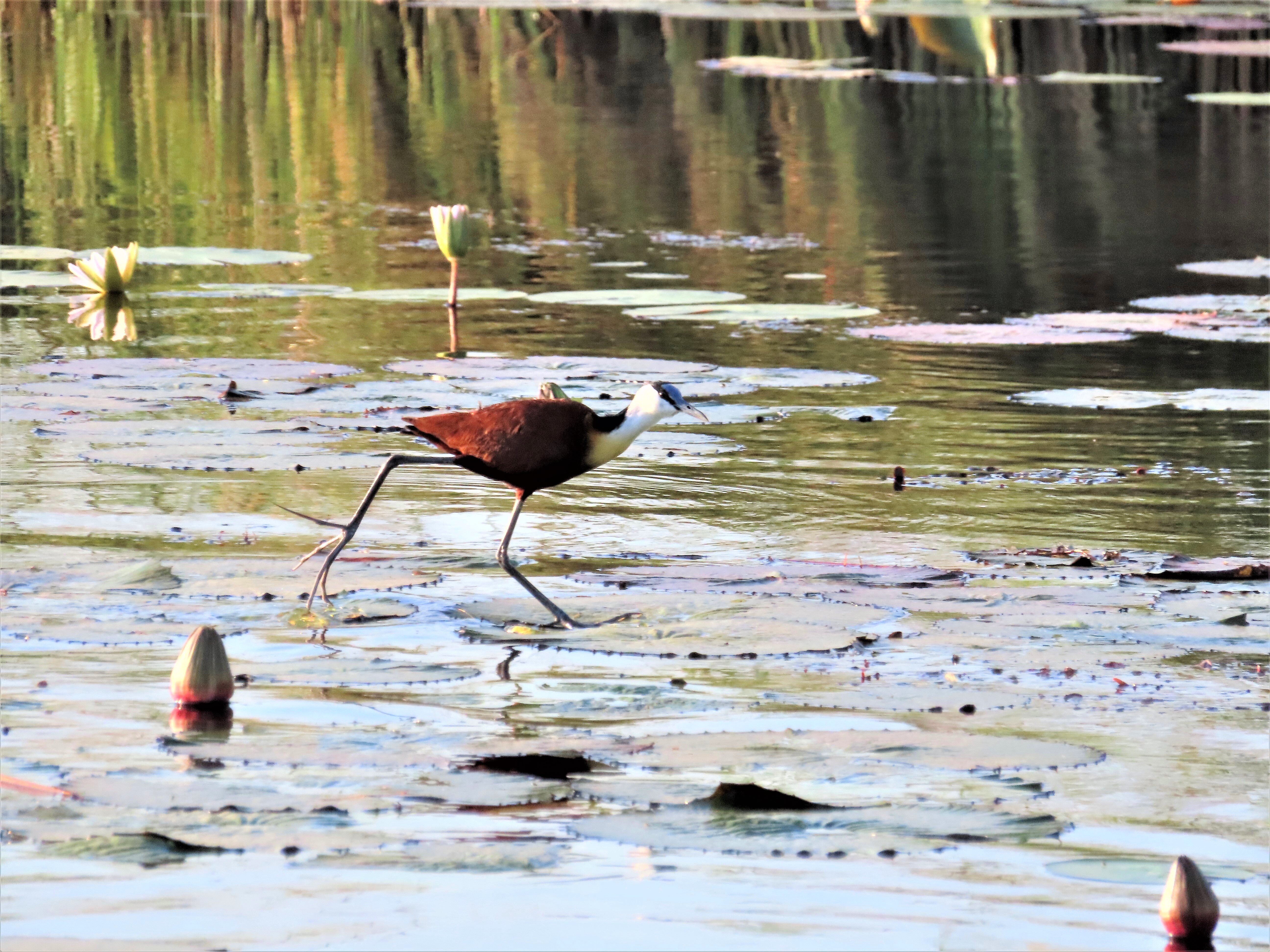
Botswana: The Okavango Delta — Where the Desert Teaches You What Water Means
Botswana: Africa's last true wilderness. Visa-free entry, the Okavango Delta flood, Chobe's elephants, and a 10-day safari through Moremi and the Kalahari.
TL;DR
Botswana is Africa’s last true wilderness. It is also one of the most expensive safari destinations on the continent by deliberate policy: the government chose high-value, low-volume tourism to protect the Okavango Delta, and the price tag reflects that. What you get for the money is a flood pulse that turns the Kalahari into a maze of channels, 130,000 elephants along the Chobe River, mokoro glides through papyrus where fish eagles call overhead, and nights so silent you can hear your own heartbeat. This guide gives you a 10-day route through Moremi, Chobe, and the Makgadikgadi salt pans that balances water-based safari, desert wilderness, and the kind of space where you can drive for two hours without seeing another vehicle. The goal is not to check off the Big Five. The goal is to understand why Botswana spends billions protecting a desert that only occasionally floods — and to leave with the sense that you witnessed something rare.
Who This Guide Is For
Travelers who have done Kenya or Tanzania and want something that still feels like discovery. Safari purists who want the Okavango Delta not as a checkbox but as a masterclass in wetland ecology. Solo travelers who want a safe, well-run African country without the party infrastructure of South Africa or the crowds of the Serengeti. Couples looking for a “coolcation” alternative — Botswana’s May–October weather stays 20–28°C while Europe sweats through heatwaves. Anyone who reads “high-value, low-volume” and thinks that sounds exactly right. This guide assumes you are comfortable with flexible schedules, cash-heavy logistics outside the camps, and the idea that a $400 safari camp is the budget version of what most people think of as luxury.
Quick Facts
| Question | Answer |
|---|---|
| Best time to visit | May–October (dry season); July–September peak for Delta flood and wildlife concentration |
| Typical duration | 10 days |
| Difficulty | Moderate (self-drive requires serious 4x4; fly-in camps handle logistics) |
| Typical daily budget | $85–$650+ USD (wide range; see Where to Stay) |
| Visa | Visa-free for 90 days for most nationalities (US, UK, EU, CA, AU); see GOV.UK entry requirements |
| Currency | Botswana pula (BWP) — ~13.5 BWP = 1 USD |
| Language | English and Setswana; English is the language of tourism |
| Getting there | Fly into Maun (MUB) from Johannesburg, Cape Town, or Gaborone; charter flights connect to Delta camps |
Before You Go
Checklist
Documents & Money
- Passport with 6+ months validity and 2+ blank pages; see Travel.State.Gov for current requirements
- No visa required for stays up to 90 days for most Western nationalities; confirm at Botswana eVisa if your country is not visa-exempt
- Proof of accommodation (lodge confirmations) — immigration sometimes asks
- Return or onward ticket
- Travel insurance with medical evacuation coverage (essential — remote areas have limited facilities)
- Cash: withdraw BWP 500–1,000 at Maun or Gaborone airport before heading into the Delta
- Yellow fever certificate only if arriving from an endemic country
Apps to Download
- Maps.me offline (Google Maps is unreliable outside towns)
- Windy or Mountain Weather for flash-flood alerts in the Delta (Nov–Mar)
- WhatsApp for lodge and camp coordination
- Safari guide app or printed field guides for bird and mammal ID
Gear
- Neutral-colored clothing (khaki, olive, brown) — bright colors distract wildlife
- Wide-brimmed hat and SPF 50+ (the sun is intense even in winter)
- Binoculars (8x42 is ideal; rent in Maun if you do not own a pair)
- Headlamp for night drives and camp paths
- Reusable water bottle with filter (tap water is safe in towns but camps provide bottled)
- Insect repellent with DEET (malaria is present in the north year-round)
- Camera with telephoto lens (200mm minimum for birds and leopards)
- Power bank (electricity is 230V, UK-style three-pin plugs)
Health
- Malaria prophylaxis (Malarone or doxycycline) for all northern safari areas; consult a travel clinic 4–6 weeks before departure
- Hepatitis A, typhoid, and routine vaccines recommended
- Rabies vaccine if you will be handling animals or spending extended time in rural areas
- Basic first-aid kit with blister treatment and rehydration salts
Getting There
Most international visitors fly into Sir Seretse Khama International Airport (GBE) in Gaborone or Maun Airport (MUB) directly from Johannesburg (JNB), Cape Town (CPT), or Gaborone. Maun is the gateway to the Okavango Delta. From the US and Europe, expect one stop in Johannesburg or Addis Ababa; round-trip fares to Maun typically run $1,200–$2,200 depending on season.
| Route | From | To | Time | Cost |
|---|---|---|---|---|
| International | JNB → MUB | Direct (SA Airlink, Air Botswana) | 1.5 hrs | $300–$600 return |
| International | CPT → MUB | Direct (Air Botswana) | 2 hrs | $400–$700 return |
| Domestic | Maun (MUB) → Kasane (BBK) | Charter (Mack Air, Wilderness Air) | 1.5 hrs | $250–$450 one way |
| Airport → Maun center | MUB | Maun | 15 min | BWP 150–250 ($11–$18) by taxi |
Visa note: Most nationalities receive a 90-day visa-free entry stamp on arrival. Passport must be valid 6 months beyond your departure date with at least 2 blank pages. The US State Department maintains a Level 2 advisory — the same tier as much of Western Europe — for opportunistic crime in urban areas, not targeted tourist crime.
Where to Stay
Botswana’s accommodation follows a strict tier system. Budget self-drive camping is the only way to spend under $100/day. Everything else — from mid-range lodges to fly-in camps — bundles meals, guides, activities, and park fees into a package. The 2026 landscape is shifting: Singita Elela opens in the Okavango Delta in December 2026, the brand’s first Botswana property, with eight circular camps on stilts inside a 175,000-hectare private concession. Air Botswana reopened modernized airport lounges in 2026, improving connections to Maun and Kasane.
| Type | Where | Price Range per Night | What You Get |
|---|---|---|---|
| Self-drive camping | Public campsites in Moremi, Chobe, Kalahari | $15–$40/person | Shared ablutions, firewood, game walks |
| Budget guesthouse | Maun, Kasane | $30–$60 | Private room, shared bathroom, basic Wi-Fi |
| Mid-range lodge | Okavango Delta, Chobe | $200–$450 | Private bathroom, guided drives, all meals |
| Fly-in luxury camp | Okavango Delta, Linyanti | $600–$1,500+ | All-inclusive, private guide, charter flights |
| Ultra-luxury | Singita Elela (Dec 2026), Mombo, Xigera | $1,500–$3,000+ | Villa suites, helicopter flights, private concessions |
Booking tip: The dry season (July–September) sells out 8–12 months in advance at flagship Delta camps. Book lodges and charter flights as early as possible. The shoulder months (May, October) offer better availability and 25–40% lower rates while still delivering excellent game viewing.
Where to Eat
Botswana’s food culture is meat-heavy, maize-based, and deeply communal. The national dish is seswaa — slow-cooked, hand-shredded beef with pap (maize porridge). Madombi are sweet doughnuts served with tea. In safari camps, the food is often the surprise: fresh bread baked in camp ovens, homemade porridge before dawn drives, and bush braais under the stars. In towns, look for braai (barbecue) stalls and local “fat cakes” — deep-fried dough balls that are the country’s best road-trip snack.
| Meal | Recommendation | Where | Approx. Cost |
|---|---|---|---|
| Breakfast | Pap with sugar and milk, or fat cakes | Camp or roadside stall | BWP 10–30 ($0.75–$2) |
| Lunch | Seswaa with pap and moroho (greens) | Local eating house | BWP 25–50 ($2–$4) |
| Dinner | Braai platter with pap, coleslaw, and chakalaka | Campfire or town braai | BWP 40–80 ($3–$6) |
| Drink | Castle Lager or St Louis Special Export | Local shebeen | BWP 12–18 ($0.90–$1.30) |
Etiquette: If a camp staff member or local invites you to a braai, accept. Botswana hospitality is generous and refusing food is considered impolite. Tipping is customary: BWP 50–100 per guide per day, and 10% at restaurants.
Day-by-Day Itinerary
This itinerary is designed around the best weather window (May–October) and assumes a mix of fly-in safari and self-drive for the Kalahari section. Base yourself in Maun for arrival and departure, with two overnight pillars in the Delta/Moremi and Chobe circuits.
Day 1: Arrival in Maun — Gateway to the Delta
| Time | Activity | Location | Notes |
|---|---|---|---|
| 10:00 | Land at MUB, collect luggage | Maun Airport | Pick up any pre-booked supplies |
| 11:30 | Transfer to Okavango Delta camp | Xakanaxa / Third Bridge | 45 min flight or 2.5 hr 4x4 transfer |
| 13:30 | Lunch and orientation | Camp lodge | First seswaa; settle into island rhythms |
| 15:00 | Afternoon game drive or mokoro | Xakanaxa Lagoon | Guide briefing, first wildlife encounter |
| 19:00 | Dinner under the stars | Camp | Bush braai; ask about tonight’s lion sightings |
Plan B: If your charter flight is delayed by weather (common in the green season), spend the afternoon in Maun visiting the Nhabe Museum or take a day mokoro trip from Maun into the Delta’s northeastern channels — it is a good preview of what is coming.
Day 2: Okavango Delta — Mokoro and Island Game Drives
| Time | Activity | Location | Notes |
|---|---|---|---|
| 06:00 | Wake for coffee and rusks | Camp | Dawn is when the cats are active |
| 07:00 | Morning game drive | Moremi Game Reserve | Open 4x4; leopard and wild dog territory |
| 11:00 | Return to camp for brunch | Camp | Eggs, toast, fruit, and strong tea |
| 13:00 | Siesta or reading | Camp | The heat is real; rest is part of the safari |
| 15:30 | Mokoro (dugout canoe) trip | Xakanaxa channels | Poled by a local guide; glides silently |
| 18:30 | Sundowner on a palm island | Delta channel | Gin and tonic, peanuts, sunset light |
| 20:00 | Dinner and night drive | Camp | Night drives spotlight genets and civets |
Plan B: If the Delta floodwaters are low and mokoro channels are shallow, swap for a motorboat cruise on the lagoon. The boat covers more water and gives you a different perspective on the heronries and hippo pods.
Day 3: Moremi Game Reserve — Full Day on Foot and Wheel
| Time | Activity | Location | Notes |
|---|---|---|---|
| 05:30 | Wake for coffee | Camp | Listen for fish eagles |
| 06:00 | Guided walk with armed tracker | Moremi mainland | 3–4 hours; tracks, plants, and bird calls |
| 10:00 | Brunch back at camp | Camp | Full English or local pap |
| 11:30 | Full-day game drive | Khwai / North Gate | Picnic lunch in the bush; leopard country |
| 17:00 | Return to camp | Camp | Hot shower before dinner |
| 19:30 | Dinner and star talk | Camp | Southern Cross visible; guides name the constellations |
Plan B: If you are not comfortable with walking safaris, extend the drive time and do a second afternoon vehicle excursion. Moremi’s roads are excellent in the dry season and cover huge distances.
Day 4: Delta → Chobe National Park — The Elephant Highway
| Time | Activity | Location | Notes |
|---|---|---|---|
| 07:00 | Early breakfast and checkout | Delta camp | Last mokoro if you have time |
| 08:00 | Charter flight to Kasane | MUB → BBK | 1.5 hrs; views over the Delta from the air |
| 10:00 | Transfer to Chobe camp | Chobe River front | 30 min from Kasane Airport |
| 12:30 | Lunch and settle in | Chobe lodge | Request a river-view room |
| 15:00 | Afternoon game drive | Chobe National Park | Elephant herds along the river |
| 19:00 | Dinner on the deck | Chobe River | Listen for hippo grunts below |
Plan B: If charter flights are full, drive from Maun to Kasane via the A3 (6–7 hours on paved road). It is a long but scenic drive through the Kalahari. Stop at Ghanzi for lunch and a cultural visit to a San community.
Day 5: Chobe National Park — River Cruise and Land Safari
| Time | Activity | Location | Notes |
|---|---|---|---|
| 06:30 | Wake for coffee | Chobe lodge | River mist is magical at dawn |
| 07:30 | Morning game drive | Chobe National Park | Open 4x4; buffalo, lion, and impala |
| 11:30 | Return for brunch | Chobe lodge | Fresh fruit and eggs |
| 13:00 | Afternoon rest | Chobe lodge | Siesta during peak heat |
| 15:30 | Chobe River sunset cruise | Chobe River | Elephants crossing, hippos, crocs; 3 hours |
| 19:30 | Dinner and campfire | Chobe lodge | Bush stories from the guides |
Plan B: If the river cruise is canceled due to high winds, swap for a Savuti Marsh game drive (2 hours north). Savuti is one of the best places in Africa to see lion and hyena interactions around drying waterholes.
Day 6: Chobe → Makgadikgadi Pans — The Salt Pan Experience
| Time | Activity | Location | Notes |
|---|---|---|---|
| 08:00 | Breakfast and checkout | Chobe | Stock up on water and snacks |
| 09:00 | Drive to Makgadikgadi Pans | Nxai Pan National Park | 3–4 hours; road turns to sand after Gweta |
| 12:30 | Lunch at camp or picnic | Nxai Pan | Arrive in time for a hot meal |
| 14:00 | Rest and afternoon activity | Nxai Pan | Short game drive or nature walk |
| 17:30 | Sundowner on the pan | Nxai Pan | Endless white salt, sunset colors |
| 19:30 | Dinner and campfire | Nxai Pan camp | One of the most remote camps in Southern Africa |
Plan B: If the road conditions are bad after rain, stay an extra night in Chobe and fly from Kasane to Maun instead. The pans are best in the dry season (May–October); in the green season, some tracks become impassable.
Day 7: Makgadikgadi Pans — Sunrise Quad Bike and Baobabs
| Time | Activity | Location | Notes |
|---|---|---|---|
| 05:30 | Wake for coffee | Nxai Pan camp | The pans are magical at first light |
| 06:30 | Quad bike or game drive | Makgadikgadi Pans | Meerkats, brown hyena, and vast salt flats |
| 10:00 | Return for brunch | Camp | Pancakes and honey from the region |
| 13:00 | Afternoon rest | Camp | Read, nap, or photograph the baobabs |
| 15:30 | Guided walk to Baine’s Baobabs | Baine’s Baobabs | 2–3 hours; ancient trees on a white pan |
| 19:00 | Dinner and star talk | Camp | The pans have zero light pollution |
Plan B: If quad biking is unavailable or you prefer not to ride, do a guided nature walk with a San tracker. The San have lived in the Kalahari for 20,000 years and their tracking skills are extraordinary.
Day 8: Makgadikgadi → Maun — Return to Civilization
| Time | Activity | Location | Notes |
|---|---|---|---|
| 07:00 | Breakfast and checkout | Nxai Pan | Last morning in the pans |
| 08:00 | Drive to Maun | Maun | 3–4 hours; stop at Giant Aardvark statue in Gweta |
| 12:00 | Lunch in Maun | Maun | Try the fish at a local restaurant |
| 14:00 | Check in to hotel | Maun | Request a room with a river view if possible |
| 15:30 | Optional: Maun river cruise | Thamalakane River | Sunset boat trip; good for birders |
| 19:00 | Farewell dinner | Maun | Celebrate the week; try zebra or warthog if you are adventurous |
Plan B: If you are tired from the drive, skip the river cruise and do a slow afternoon at the Nhabe Museum or a craft shop in Maun. The Curios Craft Shop on the main road sells locally made baskets and jewelry.
Day 9: Maun — Rest, Shopping, and Culture
| Time | Activity | Location | Notes |
|---|---|---|---|
| 09:00 | Slow breakfast | Maun hotel | Pap and tea, or eggs and toast |
| 10:30 | Visit a local craft cooperative | Maun | Buy baskets, wood carvings, and jewelry direct |
| 12:30 | Lunch at a local braai | Maun | Seswaa and pap; the real deal |
| 14:30 | Optional: day trip to Tsodilo Hills | Tsodilo Hills | 4 hours north; UNESCO rock art; return by dusk |
| 19:00 | Last dinner in Maun | Maun | Try the local special: chicken pelvic (mephato) |
Plan B: If Tsodilo Hills feels too far for a day trip, spend the afternoon at the Maun Bird Park or do a shopping run for souvenirs. The Gabarone supermarket has everything you need for the journey home.
Day 10: Departure Day
| Time | Activity | Location | Notes |
|---|---|---|---|
| 08:00 | Slow breakfast | Maun café | Last fat cakes and coffee |
| 09:30 | Last-minute souvenir shopping | Maun craft market | Bargain respectfully; cash only |
| 11:00 | Transfer to MUB | Maun Airport | Allow 2+ hours before international departure |
| 13:00 | Fly MUB → JNB or home | Maun | Or connect via Gaborone |
Plan B: If your international flight is late, spend the afternoon at the Thamalakane River Lodge pool or take a short boat trip on the river. The birdlife is excellent even from the lodge deck.
Practical Tips
- Self-drive only if you have real 4x4 experience. Sand tracks, river crossings, and long distances between fuel stops make self-driving genuinely demanding. Travel with two spare tires, recovery gear, more fuel and water than you think you need, and a plan communicated to someone who knows your route. Most travelers use a mix of charter flights and guided drives.
- Charter flights are the secret weapon. Light aircraft (Cessna 208 Caravan) connect Maun, Kasane, and the Delta camps in 1–2 hours. The strict luggage limit is 20 kg per person total — including cabin baggage, camera gear, and the bag itself — in soft-sided form only. Overweight bags are stored in Maun until your return flight.
- Malaria is real. It is endemic across northern Botswana, including the Okavango Delta, Chobe, and Moremi, year-round but especially November through March. Take prophylaxis, apply DEET at dusk, and sleep under mosquito nets (all camps provide them).
- Cash is king outside the camps. ATMs in Maun and Kasane accept international cards, but rural camps and some lodges are cash-only for tips and extras. Withdraw BWP 500–1,000 before heading into the Delta. US dollars are accepted at most safari camps and lodges.
- The Delta flood arrives during the dry season. This is counterintuitive: the flood peaks June–August, fed by rains in the Angolan highlands. Mokoro trips are best during this window when the channels are full and deep.
- No visa required for most nationalities. US, UK, EU, Canada, Australia, New Zealand, and many others enter visa-free for 90 days. The US State Department rates Botswana Level 2 — the same tier as much of Western Europe.
Before You Go: Last-Minute Checks
- Charter flights booked (Maun → Kasane or direct to Delta camp) with flexible dates
- Lodges confirmed for Delta and Chobe (dry season sells out 8–12 months ahead)
- Malaria prophylaxis picked up and started on schedule
- Offline maps downloaded for Maun, Moremi, and Chobe
- Travel insurance covers medical evacuation (essential for remote areas)
- Soft-sided luggage under 20 kg for charter flights
- Cash withdrawn in BWP at Maun airport before departure
- Power bank and universal adapter (230V, UK-style three-pin)
Insider Tips
- Book Delta camps for the flood, not the dry ground. June–August means the highest water levels, the best mokoro conditions, and the most dramatic island scenery. September–October is hotter but offers the best predator sightings as animals concentrate at shrinking water sources.
- Singita Elela opens December 2026. If you want to be among the first guests at the brand’s first Botswana property, start the conversation early. Eight circular camps on stilts in a 175,000-hectare concession means near-zero vehicle density.
- Carry small BWP denominations. A 500 pula note is impossible to break in a village canteen or at a craft stall. Hoard 1s, 2s, and 5s.
- The best game viewing is at first light and last light. Midday heat sends animals into the shade. Plan your drives around dawn and dusk, and use the middle of the day for rest, reading, or a swimming pool.
- Ask your camp to arrange the San walk. Many northern camps partner with San communities for guided tracking experiences. It is one of the most culturally rich and humbling activities in Botswana — and the proceeds go directly to the community.
- Self-drive the Kalahari, fly the Delta. The contrast is the point: the Makgadikgadi Pans feel like another planet after three days on the water. Budget travelers can do both by renting a 4x4 in Maun for the Kalahari leg and flying between the Delta and Chobe.
Etiquette & Culture
- Botho is the Setswana concept of humanity — “a person is a person through other people.” If a local invites you to share food or tea, accept. Refusing is impolite.
- Right-hand rule. Pass items, shake hands, and eat with your right hand. The left hand is traditionally used for hygiene.
- Photography. Ask before photographing people, especially in rural areas. Some communities expect a small tip for photos.
- Dress. In camps and safari vehicles, neutral-colored clothing is practical and respectful. In towns, casual Western wear is fine.
- Religion. Christianity is the dominant religion, but traditional San beliefs persist in the Kalahari. Be respectful when visiting cultural villages or rock art sites.
- Tipping. A daily tip of BWP 50–100 per guide and BWP 20–30 per camp staff is standard. In restaurants, 10% is customary.
Useful Phrases (Setswana)
| Phrase | Pronunciation | Context |
|---|---|---|
| Dumela | doo-MAY-lah | Hello (standard greeting) |
| Dumela rra / Dumela mma | doo-MAY-lah rrah / doo-MAY-lah mmah | Hello (to a man / to a woman) |
| Ke a leboga | kay ah leh-BO-gah | Thank you |
| Tswee tswee | TSWAY TSWAY | Please / Excuse me |
| O kae? | oh-KAH-eh? | How are you? |
| Ke tsogile | kay TSO-ghee-lay | I am fine / I am well |
| Go tsamaya sentle | goh TSAH-my-yah SEN-tlee | Go well / Goodbye |
Good to know (2026)
- Safety advisory: The US State Department rates Botswana Level 2: Exercise Increased Caution. Concerns are opportunistic crime in urban areas, not targeted tourist crime. Safari areas are extremely safe.
- New luxury lodge: Singita Elela opens in the Okavango Delta on 11 December 2026, the brand’s first property in Botswana. Eight circular camps on stilts inside a 175,000-hectare concession; see Singita’s official announcement.
- Air Botswana lounges: Modernized lounges reopened in 2026 at domestic hubs, improving the connection experience for travelers continuing to Maun and Kasane.
- Best time: May–October delivers the best game viewing and coolest temperatures. The Okavango flood peaks July–August, making mokoro trips exceptional. November–March is green season: dramatic skies, newborn animals, and 30–50% lower rates.
- Visa update: Most nationalities receive visa-free entry for 90 days on arrival. Confirm current requirements at GOV.UK or Botswana eVisa if your nationality is not visa-exempt.
FAQs
Do I need a visa for Botswana? Most Western nationalities (US, UK, EU, Canada, Australia, New Zealand, South Africa) do not need a visa and receive a 90-day entry stamp on arrival. Citizens of India, China, and some other countries must apply in advance through a Botswana embassy. Overstay fines are BWP 200 per day. Sources: US State Department · GOV.UK · GOV.bw
What is the best time to visit? May to October (dry season) is ideal. June–August is peak: the Okavango flood is at its highest, wildlife concentrates at water sources, and temperatures are 20–28°C. The green season (November–March) offers dramatic skies, newborn animals, and 30–50% lower prices, but some camps close and roads become difficult. Sources: Atlas Guide · Pack Lightly · Lonely Planet
Is Botswana safe for solo travelers? Yes. Botswana is one of the safest countries in Africa, with a stable democracy and low violent crime. Safari areas are extremely safe, and the main risks relate to wildlife encounters and remote driving. The US State Department’s Level 2 advisory is for opportunistic crime in cities like Gaborone, not for tourists in safari camps. Sources: US State Department · Pack Lightly · Global Peace Index
Do I need a 4WD? Yes, if you self-drive. The Kalahari tracks, river crossings, and distances between fuel stops demand a proper 4x4. If you are sticking to the Delta and Chobe circuits, charter flights and camp transfers handle all logistics. Rental 4x4s in Maun run BWP 1,200–1,800 per day (~$90–$135). Sources: Atlas Guide · Pack Lightly · safari operator forums
Is Botswana expensive? Yes, by deliberate policy. The government limits visitor numbers to protect wilderness areas. Budget self-drive camping is the only way to spend under $100/day. Mid-range mobile safaris run $300–600 per person per day. Fly-in luxury camps in the Delta start at $600 and can exceed $3,000 per night fully inclusive. Sources: Pack Lightly · Atlas Guide · Africa Unpacked
Can I see the Big Five? Yes. Lion, leopard, elephant, buffalo, and rhino are all present, though rhino sightings are rare and require specific concessions. Chobe is famous for its elephant herds (50,000+ along the river in peak dry season). Moremi and the Delta offer the best leopard and wild dog sightings. The Makgadikgadi Pans are famous for meerkats and brown hyena. Sources: Lonely Planet · Africa Unpacked · safari operator reports
Do I need malaria prophylaxis? Yes, for all northern safari areas (Okavango Delta, Chobe, Moremi, Makgadikgadi). Malaria is endemic year-round but especially November through March. Consult your doctor 4–6 weeks before travel; Malarone or doxycycline are the standard options. Sources: CDC · Pack Lightly · US State Department
Related Guides
- Madagascar: The Eighth Continent — Where Lemurs Outnumber People — for travelers who want another destination where 90% of the wildlife exists nowhere else on Earth
- Oman: The Desert That Teaches You What Silence Means — for desert landscapes, cultural depth, and the kind of silence you can hear
- Costa Rica: Pura Vida — How to Slow Down and Actually Arrive — for rainforest wildlife and healing at a slower pace with better infrastructure
The Bottom Line
Botswana is the last place on Earth where you can still be a pioneer without sacrificing safety. The infrastructure is good enough, the camps are comfortable enough, and the wildlife is extraordinary enough — but the crowds have not arrived yet. The window for this kind of travel is closing, not because Botswana is becoming unsafe or overpriced, but because social media has already discovered it. The luxury buses are coming.
Go before the Delta gets a ticket booth and the elephants get a queue.
Because the flood does not care about your itinerary. It only cares that you showed up.
The best trips do not just move you across a map. They change how you see the world. Use this guide to build your own story.
Start Planning Your Story