Cape Verde (Sal): The Atlantic's Wind-Swept Escape - Where Desert Dunes Meet Turquoise Waters
Sal is Cape Verde's most accessible island - 350 days of sun, lemon sharks, a volcanic salt crater, and the only swimmable beach. A 7-day guide to Santa Maria.
TL;DR
Sal is the gateway to Cape Verde — a sun-baked island of salt flats, turquoise lagoons, and lemon sharks that swim in knee-deep water. With direct flights from Europe, a 20-minute taxi to the beach, and the only swimmable beach on the island (Santa Maria), Sal delivers the lowest-friction tropical escape in the Atlantic. This guide gives you a 7-day route covering the salt crater at Pedra de Lume, the blue eye at Buracona, Shark Bay’s lemon sharks, and turtle nesting nights (July–October). The goal isn’t to conquer the island. It’s to let the trade winds set the pace, float in water so salty you can read a book, and understand why Cabo Verdeans call it morabeza — a hospitality so warm it feels like coming home.
Who This Guide Is For
Travelers who want a tropical beach break without the 14-hour flight to the Maldives. Europeans looking for winter sun at 5–6 hours flight time. Water sports enthusiasts — December to April brings consistent 15–25 knot trade winds, making Sal a world-class kitesurfing destination. Wildlife watchers who want to see loggerhead turtles nest (July–October, second only to Boa Vista globally) and lemon sharks in a natural nursery. Digital nomads who need reliable Wi-Fi, year-round sunshine, and a 30-day visa-free entry for EU/UK/US passports. This guide assumes you are comfortable with a cash-friendly economy (euros accepted everywhere, escudos preferred for tips), limited public transport outside Santa Maria, and the understanding that “island time” is not a joke — it’s the operating system.
Quick Facts
| Question | Answer |
|---|---|
| Best time to visit | November–June (dry season, consistent winds); July–October for turtle nesting |
| Typical duration | 5–7 days (Sal is small; 10 days is a stretch for a single island) |
| Difficulty | Easy — flat terrain, short transfers, resort infrastructure |
| Typical daily budget | €50–€150 (mid-range); all-inclusive resorts €200–€400+/night |
| Visa | Visa-free 30 days for EU/UK/US + 61 nationalities; EASE pre-registration + TSA (€31) mandatory 5+ days before arrival; 96 nationalities require advance visa since Jan 1 2026 |
| Currency | Cape Verdean escudo (CVE), euro-pegged (~110 CVE = €1); euros widely accepted |
| Language | Portuguese (official), Kriolu (widely spoken), English in tourist areas |
| Getting there | Direct flights to Amílcar Cabral (SID) from London, Lisbon, Manchester, Paris, Frankfurt, Amsterdam; connect via Lisbon from elsewhere |
Before You Go
Checklist
Documents & Permits
- Passport with 6+ months validity and 1 blank page
- EASE pre-registration at ease.gov.cv at least 5 days before arrival — mandatory for ALL air arrivals regardless of nationality
- TSA (Airport Security Tax) payment: 3,400 CVE (~€31) paid during EASE registration; from July 1 2026, double TSA (6,800 CVE / ~€62) charged at border if no valid pre-registration proof
- Visa check: EU/UK/US + 61 nationalities visa-free 30 days; 96 nationalities require advance visa (no visa on arrival since Jan 1 2026) — check current list at ease.gov.cv
- Return/onward ticket (may be requested at border)
- Proof of accommodation for immigration
- Travel insurance with medical evacuation (no hyperbaric chamber on islands; see Travel.State.Gov)
Apps to Download
- Maps.me offline (Google Maps unreliable outside Santa Maria/Espargos)
- WhatsApp for guide/operator coordination
- Currency converter (CVE rates)
- Wind forecast app (Windy, Windguru) if kitesurfing
Gear
- Reef-safe sunscreen (Santa Maria beach faces a marine reserve)
- Windbreaker (trade winds are constant Nov–Jun)
- Water shoes (rocky entries at Buracona, Shark Bay, salt crater)
- Dark clothing + headlamp with red filter (turtle night tours — no flash, no lights)
- Power adapter (Type C/F, 230V)
Health
- Hepatitis A, typhoid, routine vaccines recommended
- Malaria risk is low on Sal but present on Santiago/Santo Antão — consult clinic if island-hopping
- Basic first-aid + rehydration salts (pharmacies in Espargos/Santa Maria)
- Yellow fever certificate if arriving from endemic West African country
Getting There
Most international visitors arrive at Amílcar Cabral International Airport (SID) near Espargos. Direct flights operate from London Gatwick/Manchester (TUI, easyJet, Ryanair), Lisbon (TAP Air Portugal, Cabo Verde Airlines), Paris (Transavia), Frankfurt (Condor, Discover), Amsterdam (TUI, Corendon), and other European hubs. Flight time from Europe: 5–6 hours. From the US: connect via Lisbon (TAP) or European hub; round-trip typically $700–$1,400.
Inter-island flights now operated by CVsky (first flight 28 March 2026, took over from Cabo Verde Airlines). Domestic hops: Sal ↔ São Vicente (50 min), Sal ↔ Boa Vista (20 min), Sal ↔ Santiago (55 min). Ferries link some islands but are weather-dependent and slow.
| Route | From | To | Time | Cost |
|---|---|---|---|---|
| International | London (LGW) | Sal (SID) | ~5.5 hrs | £300–£700 return |
| International | Lisbon (LIS) | Sal (SID) | ~4 hrs | €150–€350 return |
| International | Paris (ORY) | Sal (SID) | ~5.5 hrs | €200–€450 return |
| Domestic | Sal (SID) | São Vicente (VXE) | ~50 min | from €60 one way |
| Domestic | Sal (SID) | Boa Vista (BVC) | ~20 min | from €40 one way |
| Airport → Santa Maria | SID | Santa Maria | 15–20 min | €10–15 taxi; €1–2 aluguer |
Critical 2026 rule: Complete EASE pre-registration and pay the 3,400 CVE TSA at least 5 days before departure. From July 1 2026, arriving without proof = double TSA (6,800 CVE / ~€62) at border. Keep the EASE confirmation email — it’s your proof at immigration.
Where to Stay
Sal’s accommodation clusters in Santa Maria (south tip, main beach, restaurants, nightlife) and Espargos (inland capital, local markets, cheaper). The north (Kite Beach, Algodoeiro) has wind-focused resorts.
| Type | Where | Price Range | What You Get |
|---|---|---|---|
| Budget guesthouse / hostel | Santa Maria, Espargos | €20–50/night | Private/shared room, fan, basic Wi-Fi |
| Mid-range hotel | Santa Maria, Santa Maria Beach | €80–180/night | Pool, beachfront, restaurant, Wi-Fi, AC |
| All-inclusive resort | Santa Maria, Kite Beach, Algodoeiro | €200–400+/night | Beachfront, multiple pools, activities, kids clubs |
| Luxury adults-only | Santa Maria (Riu Palace, Melia), Kite Beach | €300–600+/night | Premium dining, spa, butler, exclusive beach |
| Apartment / villa | Santa Maria, Palmeira | €60–150/night | Kitchen, space for families/groups, self-catering |
Booking tip: Peak season (Dec–Mar, Jul–Aug) sells out 3–6 months ahead at beachfront resorts. Shoulder (Apr–May, Sep–Nov) offers 20–30% savings and better availability. Turtle season (Jul–Oct) books turtle-tour operators early — reserve the night tour when booking accommodation.
Where to Eat
Cape Verdean food is a Creole-Portuguese-African fusion centered on cachupa (slow-cooked corn, beans, fish/meat stew — the national dish), fresh grilled fish, and tropical fruit. Cachupa rica adds chorizo, pork, and vegetables. Pastel com diabo dentro (spicy tuna pastry) is the iconic street snack.
| Meal | Recommendation | Where | Approx. Cost |
|---|---|---|---|
| Breakfast | Pastel com diabo dentro + coffee | Santa Maria bakery | 50–150 CVE (€0.50–1.50) |
| Lunch | Grilled fish (dourado, garoupa) + rice + salad | Beachfront Santa Maria | 800–2,000 CVE (€7–18) |
| Dinner | Cachupa rica + grogue (local rum) | Santa Maria main strip | 1,500–3,500 CVE (€14–32) |
| Snack | Fresh mango/papaya + queijo de cabra | Market / beach vendor | 50–200 CVE (€0.50–2) |
Etiquette: Meals are social and unhurried. If invited to share cachupa with locals, accept — refusing is impolite. Tip 10% in restaurants (escudos preferred). Lunchtime is 12:30–2:00 PM; dinner starts ~8:00 PM.
Day-by-Day Itinerary
Day 1: Arrival in Santa Maria — The Beach That Sold the Island
Land at SID, collect bags, show EASE confirmation at immigration, taxi 15–20 min to Santa Maria (agree €10–15 before loading bags). Check in, walk the Santa Maria Beach promenade — 8 km of white sand, turquoise water, sheltered swimming. The pier at the west end is the sunset anchor.
| Time | Activity | Location | Notes/Tips |
|---|---|---|---|
| 2:00 PM | Land SID, immigration | Amílcar Cabral Airport | Have EASE email ready (phone screenshot OK) |
| 2:30 PM | Taxi to Santa Maria | SID → Santa Maria | Agree fare before bags in car; €10–15 |
| 3:00 PM | Check in, beach walk | Santa Maria Beach | West toward pier for best light |
| 5:30 PM | Sunset at the pier | Santa Maria Pier | Fishermen unloading catch; golden hour |
| 7:30 PM | Dinner at Restaurante Maria | Rua 1 de Junho | Lobster spaghetti, local vibe; book ahead |
Plan B: Late arrival? Skip the walk, dinner at hotel, early night. The beach isn’t going anywhere.
Day 2: Santa Maria Beach + Town — Find Your Rhythm
Santa Maria is the only swimmable beach on Sal — the east/north coasts are wind-blasted and rocky. Spend the day here: swim, rent a paddleboard, walk to the Salinas de Santa Maria (old saltworks at the east end of town), browse the artisan market at Praça Central.
| Time | Activity | Location | Notes/Tips |
|---|---|---|---|
| 8:00 AM | Breakfast at hotel / bakery | Santa Maria | Try bolo de cuscuz (corn cake) |
| 9:30 AM | Beach time — swim, float, read | Santa Maria Beach | Water 24–27°C year-round |
| 12:30 PM | Lunch at Tam Tam or similar | Beachfront | Grilled fish, toes in sand |
| 2:00 PM | Salinas de Santa Maria | East end of town | Old salt pans, flamingos (seasonal), photo spot |
| 4:00 PM | Artisan market + coffee | Praça Central | Hand-woven panos, lava-lava fabric, pottery |
| 7:30 PM | Dinner + morna live music | B.Leza or similar | Morna = Cape Verdean blues; Cesária Évora’s genre |
Plan B: Wind too strong? The beach is sheltered — swim anyway. Or book a spa treatment at your resort.
Day 3: Full-Island Highlights Tour — Salt Crater, Blue Eye, Shark Bay
Book the Sal Island Full-Day Highlights Tour (pickup included, ~€60–80 pp, 8 hours). Covers all major sights in one efficient loop. Highly recommended over self-drive — signage is minimal, some tracks need 4WD.
| Time | Activity | Location | Notes/Tips |
|---|---|---|---|
| 8:30 AM | Hotel pickup | Santa Maria | Confirm pickup time night before |
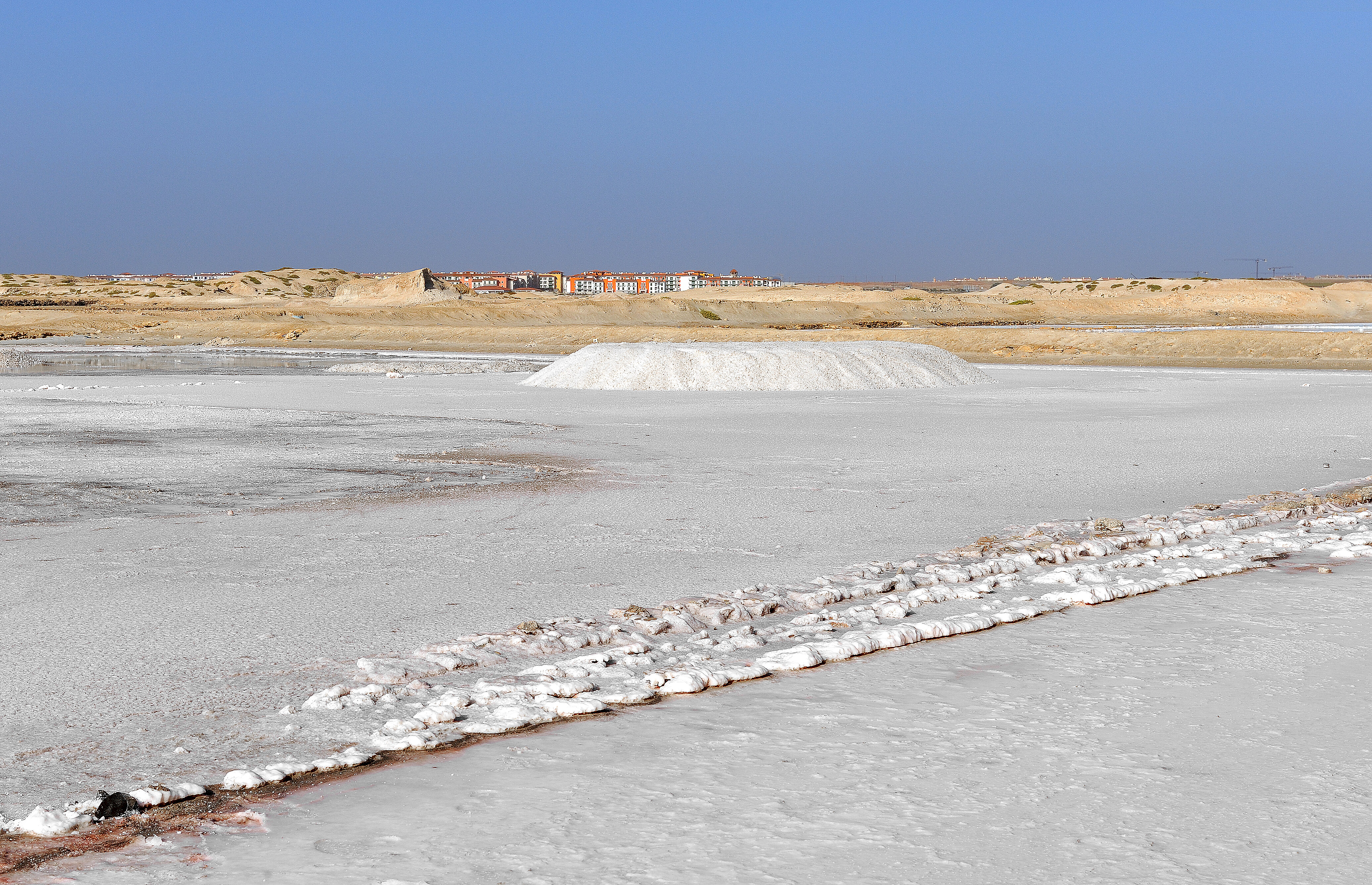
| 9:30 AM | Pedra de Lume — salt crater | East coast, inside extinct volcano | Float in brine — water 27× saltier than sea; you cannot sink. Ruins of 1804–1984 salt mine. Bring swimwear + towel. |
| 11:30 AM | Buracona / Blue Eye | Northwest coast | Tidal rock pool; Blue Eye effect at mid-tide (sunlight through underwater cave = electric blue glow). Check tide tables — best 2 hrs either side of low tide. Rocky, slippery — water shoes essential. |
| 1:00 PM | Lunch in Palmeira | Fishing village | Fresh catch, simple prep, harbor views |
| 2:30 PM | Shark Bay (Baía da Parda) | East coast | Juvenile lemon sharks in knee-deep water. Stand still, they circle. Guides explain nursery ecology. No feeding, no touching. |
| 4:00 PM | Miragem / Espargos quick stop | North coast / capital | Optical illusion “lake” on road; Espargos market if time |
| 5:30 PM | Return to Santa Maria | Santa Maria | Sunset beach drink |
Plan B: Self-drive with 4WD rental (€50–70/day) — but you miss the guide’s tide timing for Blue Eye and shark ecology context.
Day 4: Water Day — Snorkel, Catamaran, or Kitesurf Lesson
Pick your adventure. Santa Maria operators run half-day trips from the pier.
| Option | What | Duration | Cost | Best For |
|---|---|---|---|---|
| Catamaran cruise | Coastal sail, snorkel stop, drinks, lunch | 4–5 hrs | €50–70 | Couples, families, relaxed vibe |
| Snorkel Murdeira Bay | Protected bay, tropical fish, occasional turtle | 2–3 hrs | €35–50 | First-time snorkelers, photographers |
| Kitesurf beginner lesson | 3-day course (2 hrs/day) | 6 hrs total | €250–350 | Active travelers, Dec–Apr wind |
| Scuba dive | 2-tank boat dive (shark cave, wreck) | Half day | €90–120 | Certified divers only |
Recommendation: Catamaran if it’s your first Sal day on water — covers coastline, includes lunch, low effort. Book kitesurf lessons in advance Dec–Apr (schools fill up).
| Time | Activity | Location | Notes/Tips |
|---|---|---|---|
| 9:00 AM | Depart pier | Santa Maria Pier | Bring reef-safe sunscreen, hat, water |
| 1:00 PM | Lunch on board / beach | Varies | Usually included in catamaran |
| 3:00 PM | Return, free afternoon | Santa Maria | Nap, market, gelato |
| 7:30 PM | Dinner at Chez Loutcha | Santa Maria | Local favorite, cachupa rica, BYOB vibe |
Day 5: Turtle Night Tour (Jul–Oct) OR Island Hop to São Vicente
July–October only: Book the loggerhead turtle nesting night tour with a licensed operator (Project Biodiversity partners). This is Sal’s signature wildlife experience — one of the world’s most important loggerhead nesting sites.
| Time | Activity | Location | Notes/Tips |
|---|---|---|---|
| 8:00 PM | Pickup from hotel | Santa Maria | Dark clothing, headlamp with RED filter only |
| 8:30 PM | Drive to nesting beach | Southeast coast | Licensed guide only; unlicensed = illegal |
| 9:00 PM–12:00 AM | Turtle watch | Beach | No flash, no lights, no touching, no smoking, no drinking. Guide tracks nesting female, explains process. 100 eggs laid, buried, return to sea. |
| 12:30 AM | Return to hotel | Santa Maria | Exhausted but moved |
Critical rules: Only Project Biodiversity partner operators. Flash disorients turtles — banned. Touching/lighting/smoking near turtles = illegal. Report violations to Project Biodiversity.
Non-turtle season / alternative: Day trip to São Vicente (50 min flight, CVsky). Mindelo = cultural capital, live music, Monte Cara hike, Cesária Évora museum. Fly morning, return evening.
Day 6: Slow Day — Kite Beach, Murdeira, or Quad Circuit
Your pace. Options:
- Kite Beach / Algodoeiro: Watch kitesurfers (Dec–Apr), lunch at resort, shallow flat water
- Murdeira Bay: Snorkel from shore, turtle sightings common, calm water
- Quad bike island circuit: Santa Maria → Palmeira (fishing village) → Espargos market → Buracona (different tide) → Santa Maria. ~3 hrs, €40–60 rental.
- Spa / pool / read a book: Zero guilt. You’re on island time.
| Time | Activity | Location | Notes/Tips |
|---|---|---|---|
| Flexible | Your choice | Varies | No wrong answer today |
| 7:30 PM | Farewell dinner | Odjo d’Agua or similar | Oceanfront, catch of the day, grogue sunset |
Day 7: Final Morning & Departure
| Time | Activity | Location | Notes/Tips |
|---|---|---|---|
| 7:00 AM | Final swim / coffee | Santa Maria Beach | Last turquoise fix |
| 9:00 AM | Brunch / checkout | Hotel | Store bags if flight is late |
| 11:00 AM | Souvenirs / market | Praça Central | Pano fabric, grogue, coffee, shell jewelry |
| 1:00 PM | Taxi to SID | Santa Maria → Airport | Pre-book or hotel arranges; 15–20 min |
| 2:00 PM | Depart Sal | Amílcar Cabral Airport | EASE confirmation already done — smooth exit |
Practical Tips
- Cash is king: ATMs in Espargos and Santa Maria (often empty on weekends). Bring €200–300 cash, exchange to escudos for small vendors/taxis/tips. Euros accepted everywhere at ~110 CVE/€1 (official peg).
- Taxis: No meters. Agree fare before entering. Santa Maria ↔ Espargos ~€10–15; Santa Maria ↔ airport ~€10–15; within Santa Maria ~€3–5.
- Aluguers: Shared minibuses (white Toyota Hiace) run Santa Maria–Espargos–airport corridor for ~100–150 CVE (€1). Cheap, slow, crowded, not luggage-friendly.
- Car rental: 4WD recommended for north coast (Buracona, Pedra de Lume tracks). €50–70/day. International driving permit + home license.
- Internet: 4G good in Santa Maria/Espargos. Most hotels/resorts have decent Wi-Fi. Buy local CV Movel or Unitel T+ SIM (€5–10 + data) if working.
- Time zone: CVT (UTC-1) — no DST. Winter: 2 hrs behind UK; Summer: 1 hr behind UK.
- Safety: Sal is low crime. Petty theft on beach (don’t leave valuables). Strong currents at non-Santa Maria beaches — heed flags. No hyperbaric chamber in country — dive insurance essential.
- Language: Portuguese basics go far. Kriolu (Creole) is the heart language. English common in tourism.
Before You Go: Last-Minute Checks
- EASE pre-registration completed + TSA paid (5+ days before) — screenshot confirmation email
- Visa status confirmed for your nationality (96 nationalities need advance visa since Jan 1 2026)
- Travel insurance with medevac (no decompression chamber in Cape Verde)
- Accommodation confirmation (printed or digital for immigration)
- Return/onward ticket accessible
- Euros cash (€200–300) + bank card for ATMs
- Reef-safe sunscreen, water shoes, windbreaker packed
- Turtle tour booked (if Jul–Oct) — licensed operator only
- Kitesurf lessons booked (if Dec–Apr) — schools fill early
- Offline maps (Maps.me) + WhatsApp for operator contacts
Insider Tips
- Blue Eye timing is everything — check tide tables (Windy app or ask guide). The electric blue glow only appears ~2 hours either side of low tide. High tide = just a rocky pool.
- Shark Bay at low tide — more sharks visible in shallower water. Guides know the daily sweet spot.
- EASE registration — do it on a desktop, not phone. The form is finicky. Save the PDF confirmation, not just email.
- Grogue (local rum) — buy at Espargos market (€5–8/bottle), not tourist shops (€15+). The real stuff is clear, strong, sugarcane-based.
- Pano fabric — the hand-woven cotton strips (panos) are Cape Verde’s textile heritage. Buy a lava-lava (sarong) or table runner at Praça Central market — better price/quality than beach vendors.
- Morabeza Living blog (morabezaliving.cv) — excellent 2026-first-timer guide by a Santiago-based expat; Tarrafal-focused but entry requirements + inter-island tips are gold.
- Domestic flights (CVsky) — book 2+ weeks ahead. Schedule changes. Morning flights more reliable. 15 kg checked bag limit strict.
- July–October turtle tours — book the smallest group operator (max 8–10). Large groups (20+) disturb nesting females. Ask group size before booking.
Etiquette & Culture
- Morabeza — the Cape Verdean hospitality code. Greet everyone: “Bon dia” (morning), “Boa tard” (afternoon), “Boa noit” (evening). Smile. Ask “Tudo bem?” — the answer is always “Tudo bem.”
- Meals are sacred — never rush. If invited to a home, eat what’s served. Leave a little on the plate = satisfied.
- Music is life — morna (melancholic), coladeira (upbeat), funaná (accordion-driven dance). Live music in Santa Maria most nights. Don’t talk over the singer.
- Religion — predominantly Catholic. Churches are active community centers. Dress modestly if visiting (shoulders/knees covered).
- Tipping — 10% restaurants, €1–2 hotel staff, €5–10 guides/drivers (escudos preferred). Round up taxi fares.
- Photography — ask before photographing people. No photos of military/police/government buildings. Turtle tours: no flash, ever.
Useful Phrases (Kriolu / Portuguese)
| English | Kriolu | Portuguese | Pronunciation |
|---|---|---|---|
| Hello / Good morning | Bon dia | Bom dia | bon DEE-ah |
| How are you? | Tudo bem? | Tudo bem? | TOO-doo BEM |
| Thank you | Obrigad’ | Obrigado/a | ob-ree-GAHD |
| Please | Pur favor | Por favor | poor fah-VOR |
| Yes / No | Sin / Nau | Sim / Não | SEEN / NOW |
| How much? | Kantu? | Quanto? | KAN-too |
| Delicious | Sabi | Delicioso | sah-BEE / day-lee-see-OH-zo |
| The bill, please | A conta, pur favor | A conta, por favor | ah KON-tah |
| Where is…? | Undi ka…? | Onde fica…? | OON-dee KAH / ON-jee FEE-kah |
| I don’t understand | N’entiend | Não entendo | en-tee-END / now en-TEN-doo |
| Cheers! | Saúde! | Saúde! | sah-OO-jee |
FAQs
Q: Do I need a visa for Cape Verde? EU, UK, US, and ~61 nationalities: visa-free 30 days. But you MUST complete EASE pre-registration + pay TSA (€31) at least 5 days before arrival. 96 nationalities require advance visa (no visa on arrival since Jan 1 2026). Check ease.gov.cv for the current list.
Q: What is the EASE pre-registration? Cape Verde’s mandatory online entry system. Every air arrival (including visa-free) registers at ease.gov.cv, pays the Airport Security Tax (TSA), receives email confirmation valid 1 year. From July 1 2026: no proof = double TSA (€62) at border.
Q: Is Sal good for a week? Yes — 5–7 days is the sweet spot. 10 days on a single small island can feel long unless you’re kitesurfing or doing turtle tours. Many add São Vicente (50 min flight) for culture.
Q: When is the best time for kitesurfing? December–April. Consistent 15–25 knot NE trade winds (Harmattan). Kite Beach and Algodoeiro are the main spots. Schools book out — reserve early.
Q: Can I see turtles? July–October: loggerhead nesting nights (Sal = #2 globally after Boa Vista). Book licensed Project Biodiversity partner operator. No flash, no lights, dark clothes, red-filter headlamp only.
Q: Is the water swimmable everywhere? No. Santa Maria Beach (south) is the only sheltered, swimmable beach. East/north coasts: strong winds, waves, currents, rocky entries — for kitesurfers/windsurfers only.
Q: Can I use euros? Yes, everywhere at ~110 CVE/€1. Small vendors, taxis, tips prefer escudos. ATMs in Espargos/Santa Maria (Visa/Mastercard).
Q: Is Sal safe? Low crime. Petty theft on beaches — don’t leave valuables. Medical care basic; serious issues need medevac (insurance essential). Strong currents outside Santa Maria.
Related Guides
- Madagascar — Wildlife, baobabs, and the world’s most unique biodiversity hotspot
- Botswana — Okavango Delta, Chobe, and the ultimate African safari
- Solo Travel Guide — Safety, prefillable planner, first-solo playbook
- September Travel Destinations — Shoulder season picks including Cape Verde
The best trips do not just move you across a map. They change how you see the world. Use this guide to build your own story.
Start Planning Your Story