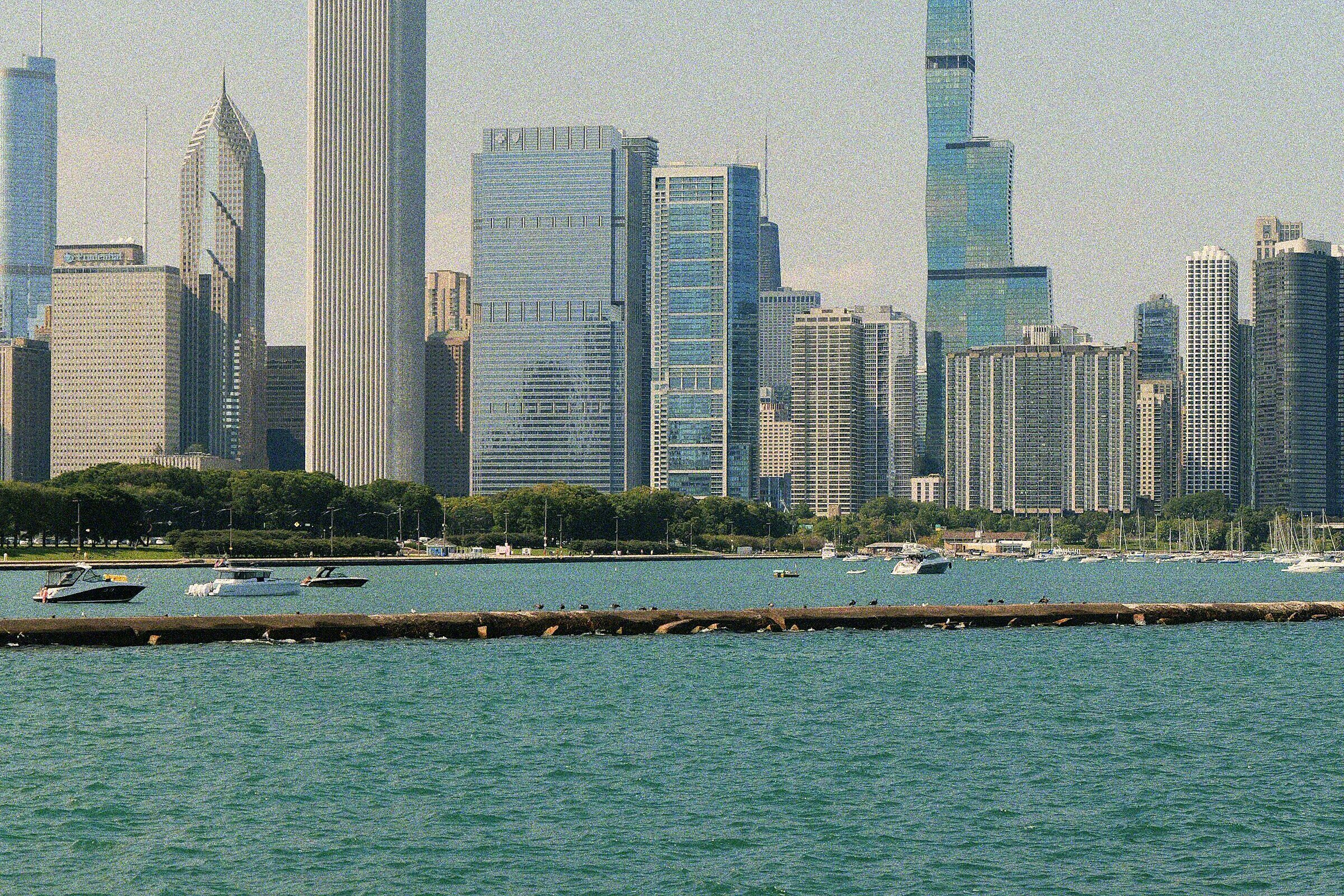
Chicago: The Complete 2026 Guide to the Lakefront, the Architecture, and the Food That Earned Its Reputation
Chicago is the #3 trending destination in 2026 — the only U.S. city in the global top 3. Obama Presidential Center, Lollapalooza, 21 Michelin stars.
Chicago: The Complete 2026 Guide to the Lakefront, the Architecture, and the Food That Earned Its Reputation
TL;DR
Chicago is the cultural anchor of the American Midwest and the #3 trending destination in the world for 2026 — the only U.S. city in the global top 3. A year that brings the Obama Presidential Center opening on Juneteenth, the Chicago Architecture Biennial finale, Lollapalooza with Charli XCX and Lorde, and the most Michelin-starred restaurants in the region (21 stars led by Smyth’s three). The skyline invented the skyscraper, the lakefront rivals any ocean city’s, and the food — deep-dish, Italian beef, Chicago dogs — is the most distinctly American regional cuisine that has spread least. Plan 3 days for the city proper, 4 if you add a day trip to Milwaukee or Indiana Dunes. The 2026 caveats: the ESTA fee rose to $40.27 and proposed social-media screening may take effect, and Chicago’s reputation for crime lags the reality — the city is safer in 2026 than in decades (homicides down 50% since 2021, violent crime down 9.4% year-on-year). This guide covers the neighborhoods, the architecture river cruise, the food debates, and the day trips that make a Chicago trip feel like the center of something.
Who This Guide Is For
First-timers who want the Lake Michigan skyline, Millennium Park’s “Bean,” and at least one architectural river cruise. Foodies chasing the deep-dish vs Italian beef debate and the world-class tasting menus at Smyth, Alinea, and Kasama. Architecture pilgrims planning a Frank Lloyd Wright day trip to Oak Park. Music and festival travelers timing a visit for Lollapalooza, the Blues Festival (June 4–7), or the Jazz Festival (September 3–6). Anyone who has read about Chicago’s #3 Tripadvisor ranking in 2026 and wants to see it before the crowds fully arrive.
This guide assumes you are comfortable walking 10–15 km per day, willing to book one architecture cruise and one fine-dining reservation in advance, and ready to base yourself in the Loop, River North, or West Loop for maximum walkability.
Quick Facts
| Question | Answer |
|---|---|
| Best time to go | May–June and September–October (warm, fewer crowds, fall foliage) |
| Typical duration | 3 days for the city; 4 with a day trip to Milwaukee or Indiana Dunes |
| Difficulty | Easy (city) to Moderate (Frank Lloyd Wright day trip) |
| Typical daily budget | USD $150–250 (mid-range), $80–120 (budget), $400+ (fine dining) |
| Currency | USD; 1 USD ≈ 0.86 EUR (Sep 2026) |
| Visa | US citizens need no visa; UK/EU/AU/JP/KR need ESTA ($40.27) |
| Tipping | 20% floor at sit-down restaurants; 22–25% in fine dining; never tip under 15% |
| Best for | Architecture, food, museums, lakefront, jazz/blues, day trips, urban walkability |
| Avoid | South Shore, parts of West Side (Austin, Garfield Park), Englewood; Lollapalooza weekend pricing |
Before You Go
Checklist
Documents & Money
- Passport (US citizens need no visa; 6 months validity the safe rule for everyone else)
- ESTA approval ($40.27) for 42 visa-waiver countries; apply at least 72 hours before departure at ESTA
- Credit card with no foreign transaction fee (most US-issued cards work fine domestically)
- USD cash for tips, small businesses, and street vendors
- Phone with offline Google Maps (Chicago’s grid is unforgiving if you miss a turn)
Apps to Download
- Ventra for CTA transit (buses + ‘L’ trains; tap-to-pay with contactless card also works)
- Uber and Lyft for rideshare (both have Chicago-specific surge patterns)
- Google Maps with transit layer enabled (the ‘L’ is the fastest way downtown from O’Hare)
- OpenTable for restaurant reservations (most Chicago fine dining books out 30+ days)
- Choose Chicago for events and seasonal updates
- Architecture.org for CAC river cruise tickets
- Resy for hot-ticket restaurants (Smyth releases Tock on the 1st of each month)
Gear
- Comfortable walking shoes (concrete grid; you’ll cover 15–20 km)
- Layers — May and September can swing 20°F between morning and afternoon
- Rain jacket (May–June thunderstorms are sudden)
- In winter: thermal base layer, windproof shell, insulated boots, hat, gloves, neck gaiter (Jan lows hit 21°F; wind chills -20°F)
- Reusable water bottle (Chicago tap water is excellent; refill at hotels and Millennium Park)
Getting There
O’Hare International (ORD) is the main hub, 17 miles northwest of downtown. United (Terminal 1) and American (Terminal 3) dominate. CTA Blue Line runs 24/7 from Terminal 2 to the Loop in 40–45 minutes for $5 (tap-to-pay with contactless bank card or Ventra). During 2026, expect modified Blue Line schedules on weekends through October for construction. Rideshare is $40–$70 to downtown depending on traffic.
Midway (MDW) is smaller, single-terminal, served mostly by Southwest. CTA Orange Line connects directly to downtown in 20–25 minutes for $2.50. CTA announced 24-hour Orange Line service launching in 2026.
| Option | Cost | Time | Notes |
|---|---|---|---|
| CTA Blue Line (ORD) | $5 | 40–45 min | 24/7, modified weekend schedules through Oct 2026 |
| CTA Orange Line (MDW) | $2.50 | 20–25 min | 24-hour service launching 2026 |
| Rideshare ORD | $40–70 | 30–60 min | Use Uber/Lyft; avoid unmarked “taxi” drivers at arrivals |
| Rideshare MDW | $25–45 | 20–40 min | Pickup outside Door 4 (lower level) |
| Rental car | $40–80/day | varies | Only necessary for day trips or rural Illinois |
Where to Stay
The Loop — the central business district. Walking distance to Millennium Park, the Art Institute, and the riverwalk. Hyatt Regency completed a $200M renovation in April 2026. Less residential at night, but the architecture and transit access are unmatched.
River North — the dining and gallery district. The Magnificent Mile’s southern anchor, with most of the city’s best restaurants within a 10-minute walk. Safety index 8.7/10. Most popular choice for first-time visitors.
West Loop / Fulton Market — the foodie and tech hub. Randolph Street (“Restaurant Row”) has 5+ Michelin stars within a 5-block radius (Alinea, Smyth, Ever, Oriole, Girl & the Goat). Quieter at night than River North but livelier during dinner hours.
Lincoln Park — the leafy, residential north. DePaul University neighborhood, Lincoln Park Zoo (free), North Avenue Beach. Best for families and longer stays. The Brown Line connects to the Loop in 15 minutes.
Wicker Park / Bucktown — the hipster north-northwest. Independent coffee shops, vintage stores, and a younger crowd. Cheaper than River North, 15 minutes by Blue Line to downtown.
| Budget | Nightly cost (USD) | What you get |
|---|---|---|
| Budget | $80–140 | Boutique motel or chain, often outside the core |
| Mid-range | $160–280 | Hotel in Loop/River North, 4-star chain or boutique |
| Splurge | $350–700 | The Langham, Peninsula, or restored 1920s tower hotel |
What to Eat
Chicago’s food scene is the most distinctly American regional cuisine — and the most underrated. The defining dishes are deep-dish pizza, Italian beef, and Chicago-style hot dogs, but the 21 Michelin stars (Smyth at 3, Alinea/Ever/Kasama/Oriole at 2) put the fine-dining tier in the same league as New York and San Francisco.
The Classics
- Deep-dish pizza: Created 1943 at Pizzeria Uno. Top spots: Lou Malnati’s (the local favorite; butter crust), Pequod’s (caramelized cheese crust, the deep-dish convert’s choice), Giordano’s (stuffed pizza — even thicker), Pizzeria Uno (the original). Tip 18–20% as at any sit-down.
- Chicago-style hot dog: Vienna beef on a poppyseed bun with neon green relish, onions, tomato, pickle spear, sport peppers, celery salt. Never put ketchup on it. Try at Portillo’s (chain, fast), Gene’s (stand), or Superdawg (drive-in, since 1948).
- Italian beef: Thin-shaved roast beef on Italian roll, dipped in au jus. Toppings: hot giardiniera or sweet peppers. Order “dry” (lightly dipped), “wet” (well-dipped), or “dipped” (fully submerged). Top spots: Al’s Beef (the original, Little Italy), Portillo’s, Johnnie’s Beef (suburbs).
- Other staples: Garrett’s popcorn (cheese + caramel “Chicago mix”), Maxwell Street Polish (grilled sausage with onions), chocolate brownie (invented in Chicago, 1893), Rainbow Cone (rainbow-sliced ice cream), Jibarito (plantain sandwich, Puerto Rican Chicago).
2026 viral moments: the hashtag #chicago has accumulated 912M+ views across 785 videos, with the top video (May 2026) hitting 48.4M views. The “Concrete Beach” phenomenon — Chicagoans lounging on the Oak Street Beach seawall — generated 40M+ X/Twitter views in July 2026 and became a national meme. #chicagoskyline posts routinely cross 1M views; the 2026 #1 spot is Millennium Park’s Cloud Gate (“The Bean”), followed by the Skydeck Ledge and North Avenue Beach. The food creator scene is led by @zo2marc (390K followers) and @callmecandace.tv (690K).
New 2026 openings to know: F1 Arcade opened in River North (Aug 2026) for the racing-sim crowd; Little Betty Smokehouse opened in Hyde Park (Sept 2026); Buona Beef launched a walk-up “Beef Stand” in Wicker Park (Sept 2026) for the Italian-beef-at-2am crowd; Nan Xiang Xiao Long Bao opened its first Midwest location (Aug 2026). On the architecture side, the 72-story 400 Lake Shore Drive North Tower (SOM, 857 ft) topped out in July 2026 — delivery spring 2027 — and the Hyatt Regency Chicago completed a $200M renovation in April 2026 (all 2,019 rooms).
Where to Eat (Mid-Range to Splurge)
- Smyth (3 Michelin stars, West Loop) — only 3-star in Chicago. $420 tasting menu; book Tock on the 1st of each month.
- Alinea (2 stars, Lincoln Park) — Grant Achatz’s flagship. ~$395 tasting menu; reservations open 60 days out.
- Ever (2 stars, West Loop) — Curtis Duffy, hyper-seasonal tasting menu. $325.
- Kasama (2 stars, Fulton Market) — world’s first 2-star Filipino restaurant. Brunch is more accessible.
- Oriole (2 stars, West Loop) — Noah Sandoval. $245 tasting menu.
- Girl & the Goat (1 star, West Loop) — Stephanie Izard, the Top Chef winner’s flagship. Mid-range, book 30 days out.
- Alinea Group’s Roister, Next, Aviary — sister concepts for different price points.
- Avec (West Loop) — Mediterranean small plates, the late-night classic. $30–50/person.
- Au Cheval (West Loop) — the diner-style burger often called America’s best. 1-hour wait.
- Monteverde (West Loop) — Sarah Gruenberg’s Italian. Hand-rolled pastas, $50–80/person.
Architecture Cruise: the must-do. The Chicago Architecture Center River Cruise aboard the First Lady ($57+ adult, 90 minutes, March–November) is voted the #1 boat tour in the US. Docent-narrated, covers 130 years of architecture from the 1871 fire to today. Book at architecture.org well in advance. Wendella also runs a year-round 90-minute Original Architecture Tour for ~$44.
Day-by-Day Itinerary
Day 1: The Loop and Millennium Park
Morning: Start at Millennium Park — the city’s front yard. Cloud Gate (“The Bean”) by Anish Kapoor is the obligatory photo, but the Crown Fountain, Lurie Garden, and Jay Pritzker Pavilion (Frank Gehry’s bandshell) reward a longer look. Walk east to the Art Institute of Chicago — one of the oldest and largest art museums in the country; the modern wing and the Impressionist galleries alone justify the $35 admission. Allow 2–3 hours.
Afternoon: Walk south through Grant Park to The Field Museum (Sue the T-Rex), Shedd Aquarium, and Adler Planetarium on the Museum Campus. The lakefront here is the best skyline view in the city. If you prefer architecture, walk the Chicago Riverwalk (1.25 miles of restaurants, kayak rentals, and public art on the south bank of the main stem).
Evening: Dinner in River North — try Aviary for cocktails, Bavette’s Bar & Boeuf for the steakhouse experience, or Ema for Mediterranean small plates. Walk the Magnificent Mile along Michigan Avenue after dark; the historic towers are lit, and the window-shopping is excellent.
Day 2: Architecture and the Lake
Morning: Take the Chicago Architecture Center River Cruise ($57, 90 min, departs 112 E. Wacker). This is the single best introduction to the city’s architectural history. The docents are licensed guides; the boats have open-air top decks (April–October). After: walk to the Chicago Architecture Center at 111 E. Wacker for the “Chicago: Crossroads of America” exhibition (skyscraper models, building history, urban planning context).
Afternoon: Lunch in the Loop, then head to Millennium Park again for the BP Pedestrian Bridge and The Ledge at the Willis Tower Skydeck (Skydeck glass boxes, 1,353 feet up; $40 for adults). Alternative: 360 Chicago in the former John Hancock building (significantly less crowded, better views east to the lake). Then walk or take the CTA Red Line north to Lincoln Park for a quieter evening.
Evening: Deep-dish at Lou Malnati’s (Lincoln Park or River North) — order the Malnati Chicago Classic (sausage, exclusive blend of mozzarella, vine-ripened tomato). After: drinks at The Violet Hour (West Loop, unmarked speakeasy) or The Aviary (Grant Achatz’s cocktail bar; book well in advance).
Day 3: West Loop and Hyde Park
Morning: Walk the Chicago Riverwalk from Lake Street to Lake Michigan (1.5 miles each way) to see the bridges and the riverfront architecture up close. Then west to Fulton Market for coffee and pastries at Sawada Coffee or Dark Matter Coffee (the roastery is in West Loop).
Afternoon: Lunch at Kasama (Filipino brunch; try the ube French toast or the longanisa sausage). After lunch, take the CTA Green Line south to Hyde Park — the Obama Presidential Center opens June 2026 in Jackson Park (free admission), and the Robie House (Frank Lloyd Wright, 1910) is across the park. The campus is the architectural anchor of the Obama legacy. After: walk the University of Chicago campus and the DuSable Museum of African American History.
Evening: Dinner in West Loop’s Restaurant Row (Randolph Street between Halsted and Ogden). 5+ Michelin stars within a 5-block radius. Try Girl & the Goat (Top Chef winner Stephanie Izard) or Alinea if you booked months in advance. After: late-night cocktails at The Drifter (Downtown, a 100-year-old German tavern with tarot-card drink menu) or Fulton Market Kitchen.
Day 4 (Optional): Day Trip to Oak Park, Frank Lloyd Wright, or Milwaukee
Oak Park, IL — the world’s largest concentration of Frank Lloyd Wright buildings. 20-minute CTA Green Line ride. The Frank Lloyd Wright Home and Studio (875 N. Wood; $20) is where Wright developed Prairie style. Across the street, Unity Temple (875 Lake St; $18–40) is Wright’s first public commission and a UNESCO World Heritage candidate. Both require advance tickets; the Wright Plus Housewalk (May 16, 2026) is the once-a-year access to private Oak Park residences — it sells out within hours.
Milwaukee, WI — 1.5 hours north on Amtrak Hiawatha or I-94. The Milwaukee Art Museum (Santiago Calatrava’s Quadracci Pavilion) is a must-see. The Historic Third Ward has the best dining and the Lakefront Brewery for the beer tour. Lake Michigan itself is the draw — the lakefront rivals Chicago’s.
Indiana Dunes National Park — 1 hour east on the South Shore Line. The closest major beach escape from Chicago. 15 miles of Lake Michigan shoreline, dunes up to 200 feet, and a 2026 reopening of the Paul H. Douglas Center. Good for hiking and birdwatching; less developed than the Lake Michigan beaches to the north.
Skip
- Going to Navy Pier for the architecture — the pier itself is fine for the Ferris wheel and the lakefront views, but the architecture is generic. Spend the time on the river cruise instead.
- Tipping under 20% in sit-down restaurants — Chicago’s tipped minimum wage is $8.40/hr; servers depend on tips to reach a living wage. 20% is the floor, 22–25% in fine dining, 25%+ for extraordinary service.
- Driving downtown — parking is $40–$60/day, traffic is brutal, and the ‘L’ is faster from anywhere in the central area. Rent a car only for day trips.
- Eating deep-dish on your first night — it’s heavy, and you’ll be too tired to appreciate it. Save it for Day 2 or 3 when you can nap afterward.
- Putting ketchup on a Chicago dog — this is the one rule the city enforces socially. There will be a sign.
- Visiting in late December or January without serious cold gear — average January low is 21°F; wind chills can hit -20°F. If you’re not used to it, choose May–October.
- Paying unmarked “taxi” drivers at O’Hare — they quote $200+ for what should be a $40–60 rideshare. Use Uber/Lyft or the Blue Line.
- Skipping the architecture cruise — it’s the single best introduction to the city and arguably to American architecture as a whole.
What $200 a Day Actually Buys
Mid-range day: 4-star hotel in River North ($180), breakfast at Eggy’s ($20), architecture cruise ($57), lunch at Girl & the Goat ($75), afternoon Art Institute ($35), coffee and pastry ($10), dinner at Bavette’s ($90), cocktails at The Violet Hour ($40), rideshare back to hotel ($15). Roughly $520 for two people, or $260 per person. Drop the architecture cruise to a free walk and you can do a Chicago day for $180 per person. Skip the fine-dining dinner for a deep-dish lunch and Italian beef dinner and you’re at $130. Chicago rewards planning, but a careful day at $130 is still better than most cities’ $300 days.
One Thing You Can’t Skip
The Chicago Architecture Center River Cruise. The docents don’t just point at buildings — they tell the 130-year story of how Chicago invented the skyscraper after the 1871 fire, taught the world how to build upward, and turned structural engineering into an art form. You’ll see the Wrigley Building, the Tribune Tower, Marina City (the “corn cobs”), the Sears (Willis) Tower, the John Hancock, and 50+ other landmarks from a perspective no walking tour can match. The 90-minute cruise is the single activity that makes Chicago make sense as a city. Book at architecture.org at least 2 weeks in advance, more in summer. Arrive 30 minutes early for the boarding queue. And sit on the upper deck if the weather allows.
Useful Phrases
Chicago English is American English, but the local dialect has its quirks — the “Chicago accent” (the “North Side” vowel shift) is real, and there’s a local vocabulary worth knowing.
| English | Local term | Notes |
|---|---|---|
| I’ll have a Chicago-style hot dog | “Drag it through the garden” | Adds all the toppings |
| Italian beef, please | “Beef, wet, hot” | Wet = dipped in jus; hot = with giardiniera |
| Pizza | “Pie” or “pizza pie” | Local term for deep-dish |
| Soft drink | “Pop” | Midwest standard |
| The elevated train | “The ‘L’” | Pronounced “el” |
| A large pizza to go | “A large carryout” | Not “takeout” |
| OK, see you later | “Yeah, okay” | Chicago goodbyes are curt |
| That sucks | “That’s weak” | Chicago slang |
FAQs
Is Chicago safe in 2026? Yes, for normal tourism. Chicago is safer in 2026 than in decades — homicides hit a 50-year low in 2025, violent crime is down 9.4% year-on-year, and the tourist areas (Loop, River North, West Loop, Lincoln Park, Magnificent Mile) are well-patrolled and safe day and night. Avoid South Shore, parts of the West Side (Austin, Garfield Park), Englewood, and South Chicago — these have higher violent crime and few tourist attractions. The reputation lags the reality by about 5 years.
Do I need a visa for Chicago? US citizens need no visa. Citizens of 42 visa-waiver countries (including UK, EU, Australia, Japan, South Korea, Israel) need an approved ESTA, which costs $40.27 in 2026 (up from $21 previously). Apply at esta.cbp.dhs.gov at least 72 hours before departure. ESTA is valid for 2 years.
How many days do I need in Chicago? Three full days covers the city highlights. Four days lets you add a day trip to Oak Park (Frank Lloyd Wright), Milwaukee, or Indiana Dunes. Five days lets you add a quieter day in Lincoln Park or Hyde Park.
Is Chicago affordable? Moderate by US standards. A comfortable mid-range day (boutique hotel, restaurant meals, one museum, one architecture cruise) costs $200–250 per person. The same day in New York or San Francisco would cost $50–100 more. Chicago is one of the few major US cities where a family of four can have an excellent trip for under $400/day.
When is the best time to visit? May–June and September–October. May has the Wright Plus Housewalk; June has the Blues Festival; September has the Jazz Festival and the start of fall foliage. UNESCO International Jazz Day lands in Chicago on April 30, 2026 (the first time in the city; Herbie Hancock headlining) — a major music draw for spring travelers. July–August is hot (84°F, 70% humidity) and Lollapalooza-priced. December–February is brutally cold (21°F average low; -20°F wind chill) but the architecture is striking in snow and the Christmas markets are world-class.
What about the architecture? Chicago is the birthplace of the skyscraper. The 1871 fire destroyed 17,500 buildings; the rebuilding is what taught the world how to build upward. The Chicago School (Louis Sullivan, Daniel Burnham, William Le Baron Jenney) invented the steel-frame skyscraper in the 1880s–90s. The Second Chicago School (Mies van der Rohe, Helmut Jahn) defined Modernism from the 1950s–80s. Today the skyline is the architectural encyclopedia of the United States.
What is the Obama Presidential Center? Opening June 19–21, 2026 in Jackson Park. A $850M campus designed by Tod Williams Billie Tsien Architects, with a museum tower, a forum building, a Chicago Public Library branch, and a public garden by Michael Van Valkenburgh. The campus anchors the South Side and is connected to the Museum of Science and Industry and the lakefront by a new pedestrian corridor. Free admission.
Can I visit in winter? Yes, but plan for it. January lows hit 21°F; wind chills can drop to -20°F. Pack thermal base layers, a windproof/waterproof shell, insulated boots, hat, gloves, and a neck gaiter. The CTA and indoor attractions (Art Institute, Field Museum, Shedd Aquarium) are all warm. The Christkindlmarkt in Daley Plaza (mid-November through December 24) is one of the best Christmas markets in the US. Architecture in snow is striking.
Related Guides
- Tbilisi, Georgia — another architecture-and-food-focused 2026 trending destination at the other end of the price spectrum.
- Lisbon, Portugal — a comparable mid-range European capital with strong food, wine, and day-trip culture.
- Bangkok, Thailand — the original cheap-but-rich food capital; the comparison highlights Chicago’s position as America’s mid-range cultural anchor.
The best trips do not just move you across a map. They change how you see the world. Use this guide to build your own story.
Start Planning Your Story