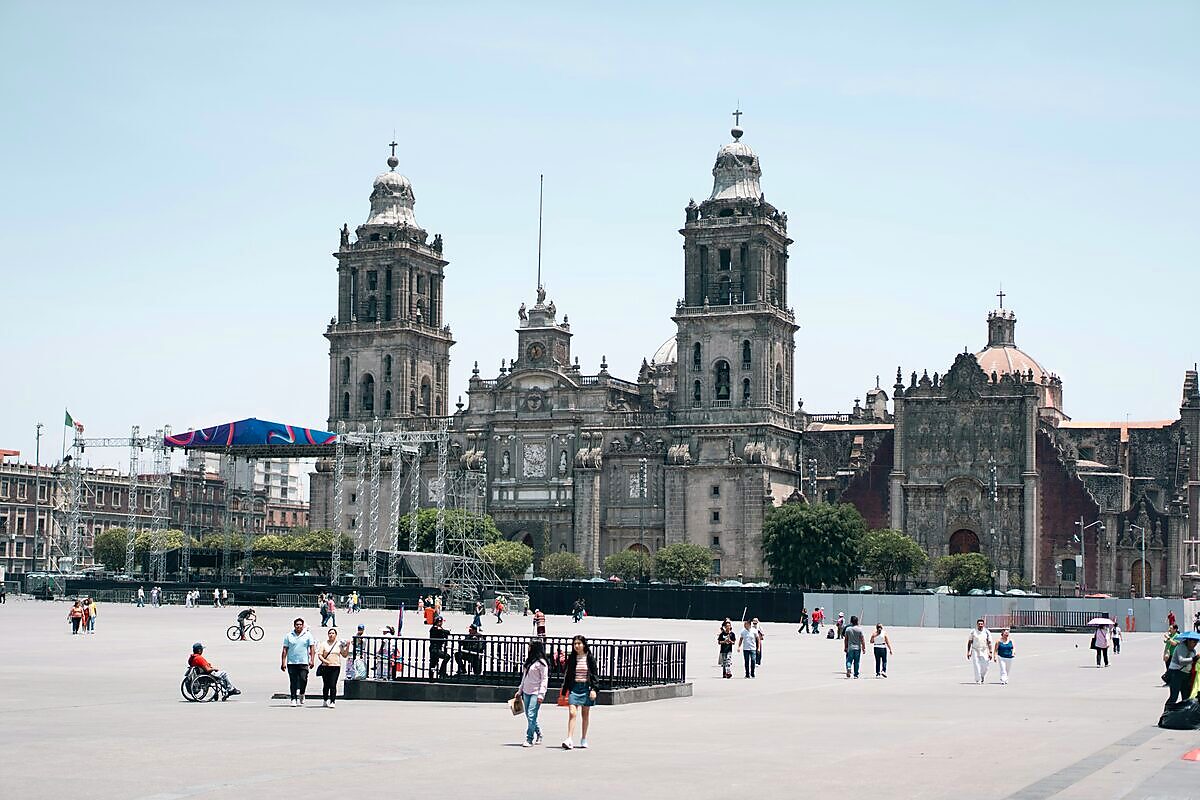
Mexico City: The Complete Guide to Street Food, Murals, and Pyramids
Mexico City guide: Roma Norte and Condesa, street tacos, Teotihuacán, and museums — a 4–5 day itinerary with 2026 prices, metro fares, and the safety reality.
Mexico City: The Complete Guide to Street Food, Murals, and Pyramids
TL;DR
Mexico City is the best-value great capital on earth: al pastor tacos for 15–35 pesos, a 5-peso metro, and Aztec temples next to world-class museums. Base yourself in Roma Norte or Condesa, alternate street-food days with museum days, and take one day trip to Teotihuacán. Four to five days is the sweet spot. Two things catch first-timers out in 2026: INAH museums (Teotihuacán, Anthropology, Templo Mayor) now cost 210 pesos for foreign visitors and are no longer free on Sundays, and the city has two airports — check which one your ticket uses before booking transfers.
Who This Guide Is For
- Food-first travelers chasing one of the world’s great street-food scenes on a budget
- First-time visitors with 4–5 days who want food, museums, and one pyramid day
- Museum lovers (the 2026 INAH price change makes planning your museum days worth real money)
- Digital nomads and slow travelers (the site’s verified nomad budget: $1,342/month in Roma/Condesa — Wanderleveling nomad cost-of-living post, Aug 16, 2026)
- Anyone timing a trip around Día de Muertos — with a 2026-specific warning about Formula 1
Quick Facts
| Fact | Detail |
|---|---|
| Best time | Nov–May dry season; best months Mar–Apr (jacaranda bloom), Feb (cheapest); Oct–Nov for Día de Muertos |
| Time zone | CST (UTC−6) |
| Currency | Mexican Peso (MXN) |
| Language | Spanish; basic English in tourist areas |
| Visa | US/CA/EU passport holders get a 180-day tourist permit (FMM) on arrival |
| Exchange rate | 1 USD ≈ 17.0 MXN (16.98 reference rate, Sept 1, 2026 — Excélsior) |
| Altitude | 2,240 m (7,350 ft) — pace yourself on day one |
Before You Go
Documents/Permits
- Most Western passports get a 180-day tourist permit (FMM) on arrival — keep the stub
- 2026 fee change: the FMM tourist fee rose 20% to 983 MXN effective Jan 1, 2026 (Diario Oficial via evisa-card.com). It has historically been included/free on air arrival — verify what your fare includes at check-in
- Teotihuacán and INAH sites: no pre-booking needed (online portal exists: ventadeboletosenlinea.inah.gob.mx)
- Frida Kahlo Museum: online-only tickets — book 2–4 weeks ahead (boletos.museofridakahlo.org.mx)
Gear
- Comfortable walking shoes — Centro’s streets are uneven and days run long
- Compact umbrella (June–Oct afternoon storms are brief but daily)
- Reusable bottle + purification: tap water is not drinkable; buy garrafones (refill jugs) or bottled water
- Sunscreen and lip balm — at 2,240 m UV is strong even when it’s cool
- Layers: mornings ~10°C, afternoons ~24°C in dry season
- Day bag that zips and worn in front on the Metro (phone snatching is a documented risk)
Apps/Navigation
- Uber / DiDi / Cabify — the only ways to ride. Never hail street taxis (express-kidnapping risk, see Practical Tips)
- Google Maps — download the offline CDMX map; transit directions cover Metro and Metrobús
- WhatsApp — infrastructure in Mexico: tours, hosts, and restaurants live on it
- XE — MXN conversion (mental math: divide pesos by 17)
- Google Translate — offline Spanish pack for markets
Health
- Altitude 2,240 m: mild for most, but go easy on day one and hydrate
- Traveler’s diarrhea is common and usually self-limiting: eat at high-turnover stalls, skip raw garnishes at quiet places, carry hand sanitizer (MexicoCityTrip food-safety guide, 2026)
- Ice at established restaurants and hotels is purified; be cautious at street stalls
- Pharmacies (Farmacias del Ahorro, Similares) are everywhere
Getting There
Two Airports — Check Your Ticket
| Airport | Distance | Budget transfer | Notes |
|---|---|---|---|
| MEX (Benito Juárez) | 5 km east of center | Metrobús L4, 30 MXN (~$1.70), 40–60 min | Most international flights; Uber/DiDi 180–320 MXN ($10–18); authorized sitio taxi 280–420 MXN by zone (Roma/Condesa 340) |
| NLU (AIFA / Felipe Ángeles) | 50 km north | Tren Suburbano from Buenavista, 45 MXN promo fare (110 MXN full), ~40 min | Growing budget-airline hub — 6 new domestic routes added July 2026; taxi to center 700–1,100 MXN ($40–62) |
For official tourism information, see Visit Mexico. For flight and airport updates, see AIFA.
Sources: AirConnect fares verified May 2026; MXC.com.mx AIFA train fares, May 22, 2026; Reporte Ágora, Jul 27, 2026. Uber pickup at MEX is from the elevated walkway zone (T1) or Hangar zone (T2) — drivers cannot collect curbside (Migaku, May 20, 2026).
Flights
Fares swing wildly by season (World Cup weeks in June–July spiked; September is post-tournament low season). The site’s budget calculator uses a ~$350 round-trip baseline from North American hubs — use the calculator below for a live estimate.
Getting Around the City
- Metro: flat 5 MXN per ride, any distance — frozen for 2026 by mayoral decree (Infobae, Dec 14, 2025). Buy the rechargeable MI card (15 MXN) at any ticket window; paper tickets are gone. Hours 5:00–24:00 Mon–Fri, 6:00–24:00 Sat, 7:00–24:00 Sun
- Metrobús (BRT): 6 MXN, MI card only; free transfers between Metrobús lines within 2 hours (Metro↔Metrobús transfers are not free)
- Tren Ligero to Xochimilco: 3 MXN from Tasqueña
- Uber/DiDi: 60–130 MXN ($3.50–7) for typical 10–20 min hops like Roma→Condesa
- Women-only cars: first two Metro cars on weekdays 06:00–09:00 and 18:00–21:00 — enforced
- 2026 status: Line 1 (Pink) is rebuilt and runs end-to-end; Line 2 and Line 7’s Auditorio station have fully reopened (Line 2 completed Aug 31, 2026 — Heraldo de México)
Where to Stay
| Area | Vibe | Typical nightly (double) | Best For |
|---|---|---|---|
| Roma Norte | Walkable, artsy, best restaurant density | $60–150 (hotel avg $65–100) | First-timers, foodies |
| Condesa | Parks, calmer nights, café terraces | $70–180 (hotel avg $70–110) | Couples, nomads |
| Centro Histórico | Intense, historic, cheap | $25–100 (hostels from ~$20) | History-first, tight budgets |
| Coyoacán | Colonial village, quiet | $40–130 | 5+ day stays, Frida fans |
| Juárez / Zona Rosa | Nightlife, LGBTQ+ scene, cheaper | Under Roma rates | Night owls, midweek budget |
| Polanco | Upscale, safest-feeling | $200–600+ | Luxury |
| Value picks: San Rafael, Narvarte, Del Valle | Local, less touristy | 20–30% cheaper than Roma | Longer stays, nomads |
Sources: MexicoTravelAndLeisure neighborhoods guide, Jun 6, 2026; TravelTipNow, Jul 6, 2026; GetLostInMexicoCity, Mar 24, 2026. Hostel dorms run $12–25/night (Hostelworld live listings Aug 2026: €12.54–17.24). Airbnb 1-bed in Roma: $50–80/night; note CDMX caps short-term rentals at 180 nights/year per host (StayWork CDMX, Aug 9, 2026).
2026 timing note: World Cup demand fell short (~60% of foreign fans were day-trippers), and host-city hotel rates dropped after the July 19 final. September 2026 is a buyer’s market for rooms (best.so, 2026; NomadLawyer, 2026).
Where to Eat
Street food is the point. Eat where the line is — turnover is your safety filter.
| Meal | What | Price (2026) | Notes |
|---|---|---|---|
| Breakfast | Tacos de canasta + atole | 10–15 MXN | Morning basket-taco carts |
| Breakfast | Tamales | 20–30 MXN | With atolito from the same stand |
| Lunch | Comida corrida (market set lunch) | 80–120 MXN | Soup, main, drink, dessert — best value sit-down meal in the city |
| Lunch | Market stalls (Mercado de Coyoacán tostadas, Medellín tlayudas) | 60–80 MXN | Market lunch baseline |
| Street | Tacos al pastor | 15–35 MXN | Typical is ~22–23 MXN; Roma’s famous stands top the range (El Economista, Aug 2025; Columna Digital, 2026) |
| Street | Quesadillas | 35–55 MXN (blue-corn Roma 60–90) | In CDMX they do NOT include cheese — order “con queso” |
| Street | Elote/esquites, tlacoyos/memelas | 30–50 MXN | |
| Snack | Tortas | 65–100 MXN | |
| Drink | Aguas frescas | 15–25 MXN | |
| Dinner | Full taco-stand meal (4–5 tacos + drink) | 120–200 MXN | |
| Dinner | Sit-down restaurant | 200–500+ MXN |
Sources: MexicoCityTrip street-food guide 2026, cross-checked with TravelTipNow (Jul 6, 2026) and Spendsanity (Aug 2026). A full day of street/market food runs 200–350 MXN ($12–20).
Markets to know: Mercado de San Juan (gourmet), La Merced (enormous, eat at the comedores), Mercado Medellín (Roma Sur, Oaxacan), Mercado de Coyoacán (tostadas), Mercado de Jamaica (flowers + birria). Mercado Roma is good but not budget.
New in 2026: spring openings in Roma/Condesa include Bartola (Italian-Mexican) and La Pezciosa (Baja fish tacos) (CDMX365, 2026). Roma Norte taco stands and mezcal bars keep going viral on TikTok.
Day-by-Day Itinerary
Option 1: The 5-Day Classic
Day 1: Centro Histórico — the founding layers
- Morning: Zócalo, Catedral Metropolitana (free), Palacio Nacional’s Diego Rivera murals (free)
- Midday: Templo Mayor ruins + museum (210 MXN, Tue–Sun 9:00–17:00)
- Lunch: Comida corrida in a Centro market (80–120 MXN)
- Afternoon: Walk west along Madero to Palacio de Bellas Artes — museum 90 MXN, the lobby murals are viewable free, and Sundays are free for everyone
- Evening: Rooftop drink facing the Palacio; metro back (5 MXN)
- Plan B (rainy season): the afternoon storms pass in 1–2 hours — duck into a café or the Museo del Templo Mayor’s covered halls until it clears
Day 2: Chapultepec + Polanco — museum day
- Morning: Museo Nacional de Antropología at opening (210 MXN, Tue–Sun 9:00–18:00, closed Mon) — give it 3 hours; the Mexica hall alone justifies the 2026 price hike
- Lunch: Polanco or a park café
- Afternoon: Chapultepec Castle (210 MXN) or, free alternative, the lakes and forests of Chapultepec itself
- Late afternoon: Museo Soumaya in Polanco (free, daily 10:30–19:00) — the downtown skyline on the walk back is a bonus
- Plan B: if you blew your museum budget, Soumaya + the free Sunday rule below changes the math — see Insider Tips
Day 3: Coyoacán + Xochimilco — colonial slow day
- Morning: Metro L2→Tasqueña then Tren Ligero (3 MXN) to Xochimilco; trajinera boat is 750 MXN/hour per boat (holds up to ~20 — split with 4+ people and it’s ~$10–15/person for 2 hours)
- Afternoon: Back to Coyoacán — plazas, Mercado de Coyoacán tostadas, Casa Azul if you booked ahead (Frida Kahlo Museum 320 MXN, online-only, closed Mon, book 2–4 weeks out)
- Evening: Coyoacán’s plaza comes alive — cazuelas and live music
- Plan B: no Frida tickets? Museo de Arte Moderno or the Leon Trotsky house nearby
Day 4: Teotihuacán — pyramid day trip
- Morning: Metro L5 to Autobuses del Norte, bus to the ruins (60–80 MXN each way, 1–1.5 hrs)
- Midday: Pyramids of the Sun and Moon, Avenue of the Dead (210 MXN entry, daily 8:00–17:00, last entry 16:30) — total DIY day runs ~600–700 MXN ($30–40)
- Alternative: guided tours run $45–65 with hotel pickup — roughly double the DIY cost for transport + context
- Evening: Back by late afternoon; recovery dinner in Roma
- Plan B: if a storm system sits on the valley, swap Day 4 and Day 5 — the pyramids in cloud and drizzle are half the experience
Day 5: Roma Norte + Condesa — the viral food crawl
- Morning: Coffee + pan dulce in Roma; the TikTok-viral taco stands and mezcal bars cluster here
- Midday: Mercado Medellín for tlayudas, or the Roma quesadilla stands (blue corn, “con queso”)
- Afternoon: MUNAL or Museo Tamayo — the two museums most-featured in 2026 creator TikToks (Triply, accessed Sept 2026)
- Evening: Mezcaleria crawl in Roma Norte; last taco count
- Plan B: museums closed Mondays — make Monday your market-and-parks day instead
Option 2: The 4-Day Express
Drop Day 5 and fold Roma/Condesa into evenings. Keep the Teotihuacán day — it’s the trip’s crescendo.
Seasonal Variants
- Late Oct (Oct 30–Nov 2, 2026): Día de Muertos collides with the F1 Grand Prix this year — the parade runs the Oct 31–Nov 1 weekend along Reforma (most 2026 listings show it on Sat Oct 31; some show Sat + Sun — confirm locally), the holiday is Sun Nov 1 + Mon Nov 2, and race-day demand stacks on top. Rooms in Roma/Condesa/Centro surge 40–100% and sell out months ahead — book 6–8 weeks minimum (MexicoCityTrip DdM guide, 2026; DAZN race calendar, 2026)
- Sept 15–16: Independence Day — Grito at the Zócalo (Intocable performs in 2026, Crónica, Aug 31) and the Sept 16 military parade. Expect Zócalo-area metro closures on the night of the 15th
- Nov 20–22, 2026: Corona Capital festival (Autódromo Hermanos Rodríguez)
Practical Tips
Money & Budget
- Budget: $35–55/day — hostel dorm $12–25, street food $10–18, transit $1–2, activities $5–12 (TripBudgetCalculator, TravelTipNow, Machupicchu.org, all 2026)
- Mid-range: $80–120/day — boutique double, restaurant mix, occasional Uber
- Splurge: $200–400/day — design hotels, tasting menus, private tours
- Cash vs card: markets, stalls, and the Metro need cash or the MI card — carry small bills
- Tipping: customary at restaurants with table service; round up at markets
- 2026 budget change: INAH site entry effectively doubled for foreign visitors (90–95 → 210 MXN) on Jan 1, 2026 (El Sol de México, Dec 30, 2025) — two INAH entries now cost ~$25 combined (420 MXN) versus ~$11 (190 MXN) before the reform
Connectivity
- SIM: Telcel prepaid 100–200 MXN ($5–10) for 3–10 GB/30 days at any OXXO — airport kiosks charge a 20–50% premium for identical plans (MexicoTravelAndLeisure, May 27, 2026)
- eSIM: Airalo ~$5 (1 GB) to ~$13–15 (10 GB); Holafly unlimited ~$27–35 (7 days) — buy before you fly
- Wi-Fi: solid and free in cafés/hotels; ~60 Mbps citywide, 100+ Mbps in Roma/Condesa (site’s verified nomad post, Aug 16, 2026)
- Coworking day passes: 250–500 MXN ($15–30) (StayWork CDMX, May 5, 2026)
Safety Reality
- US State Dept: Mexico is Level 2 “Exercise Increased Caution” (reissued May 29, 2026); Mexico City state advisory is Level 2 — the tourist core is well-patrolled
- Real risks are urban, not cartel: pickpocketing on the Metro, phone snatching, and express kidnapping via unlicensed street taxis — use Uber/DiDi/sitio only, never unmarked cabs
- Keep phones off the table and out of back pockets; ATMs inside banks or OXXO
- Areas to avoid at night (and as a base): Tepito, Doctores, La Merced, Iztapalapa (GetLostInMexicoCity, Mar 24, 2026)
- Solo female travelers: common and viable in the core; use women-only Metro cars in peaks, watch drinks, Uber after dark
- Emergencies: 911; US Embassy +52-55-5080-2000; enroll in STEP (step.state.gov)
Weather & Seasons
- Dry (Nov–May): ~10–24°C, sunny. March–April = jacarandas in bloom; February = cheapest rooms
- Rainy (Jun–Oct): warm mornings ~25°C, near-daily afternoon storms of 1–2 hours that clear by evening; September is the wettest stretch
- Spike windows: Día de Muertos (Oct 31–Nov 2, 2026, with F1 overlap), Christmas–New Year. Low-season discounts of 30–45% run June–Aug and Jan–Feb (Machupicchu.org, 2026)
Before You Go: Last-Minute Checks
- Passport + FMM plan (180 days on arrival; confirm the 983 MXN fee status at check-in)
- Which airport — MEX or NLU — and a transfer plan for it
- Accommodation booked (Roma/Condesa for first-timers; refundable rates in rainy season)
- Frida Kahlo tickets bought online (2–4 weeks ahead, closed Mondays)
- MI transit card on arrival (15 MXN, any Metro window)
- OXXO SIM/eSIM sorted (Telcel 100–200 MXN at OXXO, not the airport)
- Cash in small bills for markets and stalls
- If Oct 30–Nov 2: everything booked 6–8+ weeks out (Día de Muertos + F1)
- Reusable bottle + purification plan (tap water is not drinkable)
- Offline Google Maps + WhatsApp set up before landing
Insider Tips
- Free Sundays are for residents now. As of Jan 1, 2026, INAH’s free-Sunday policy applies only to Mexican citizens and residents with ID — foreign tourists pay the full 210 MXN on Sundays at Anthropology, Chapultepec Castle, Templo Mayor, and Teotihuacán. Palacio de Bellas Artes still free for everyone on Sundays (MNA official site, accessed Aug 20, 2026).
- Quesadillas here don’t come with cheese. In the capital, “quesadilla” means the folded tortilla — say “con queso” or go without (MexicoCityTrip, 2026).
- The MI card is the whole transit system. 15 MXN once, works on Metro and Metrobús, top-ups in 99-peso increments. Balance expires after 300 days unused.
- Mondays are museum-closed days. Nearly every INAH museum (and Frida’s Casa Azul) shuts Mondays — schedule markets, parks, and Xochimilco for Monday.
- The pastor tax is real but small. A decade of taco inflation has outpaced CPI (El Economista, Aug 2025) — the famous Roma stands charge toward the 35 MXN top of the range, and it’s still under $2.50.
- Xochimilco math: the 750 MXN/hour is per boat, not per person. Split with five people and it’s roughly $9 each per hour — the priciest activity in this guide becomes a group bargain.
- Uber pickup at MEX is not at the curb — follow signs to the elevated walkway (T1) or Hangar zone (T2). It feels wrong the first time; it’s the rule.
- Post-World Cup is the deal window. Rates dropped after the July 19 final, September is the softest room market of the year, and the rebuilt Line 1 plus fully reopened Line 2 make cheap transit better than ever.
- Check your airport twice. Budget carriers increasingly use NLU/AIFA 50 km north — six new domestic routes were added in July 2026. The 45 MXN suburban train from Buenavista (promo fare) is the fix.
- The stadium has a new name. Estadio Azteca is now marketed as Estadio Banorte — if you’re seeing a match or touring, search both (Rutas México, 2026).
Etiquette & Culture
In Mexico City, greetings are the social glue.
- Say “buenos días/tardes” entering shops, elevators, and taxis — skipping it reads as rude
- Tipping is expected at sit-down restaurants; round up at market stalls
- Ask before photographing people, street performers, and market vendors
- Mezcal is sipped slowly, not slammed
- The Zócalo hosts frequent demonstrations: observe from distance, don’t photograph federal police up close
- The comida corrida set lunch is the midday institution (80–120 MXN); save sit-down dinners for after the afternoon rush
- Support the ecosystem: eat at market comedores, tip the taco maker, buy from family-run shops
Useful Phrases
| English | Spanish | Pronunciation | When to Use |
|---|---|---|---|
| Good morning/afternoon | Buenos días / buenas tardes | bweh-nos dee-as / tar-des | Entering any shop or stall |
| With cheese, please | Con queso, por favor | kohn keh-so | Ordering quesadillas (essential) |
| One pastor taco, please | Un taco de pastor, por favor | oon tah-ko deh pas-tor | Taco stands |
| How much is it? | ¿Cuánto cuesta? | kwan-toh kwes-tah | Markets |
| The bill, please | La cuenta, por favor | lah kwen-tah | Restaurants |
| Where’s the metro? | ¿Dónde está el metro? | dohn-deh es-tah el meh-tro | Navigation |
| Is it open? | ¿Está abierto? | es-tah ah-bye-rto | Museums, stalls |
| Bathroom | Baño | bah-nyo | Asking anywhere |
| Cheers / to your health | Salud | sah-lood | Mezcalerías |
| No, thank you | No, gracias | noh grah-syas | Declining vendors politely |
FAQs
Q: Is Mexico City safe for solo travelers? A: In the tourist core (Roma, Condesa, Centro by day, Coyoacán, Polanco), yes — with big-city discipline. The documented risks are petty: phone snatching and Metro pickpocketing. The serious risk is unlicensed street taxis — use ride apps exclusively. Mexico City state is US State Dept Level 2 (May 29, 2026), the same level as many European capitals’ countries.
Q: How many days do I need? A: Four to five. Days 1–3 cover Centro, Chapultepec’s museums, and Coyoacán/Xochimilco; day 4 is Teotihuacán; day 5 is the Roma/Condesa food crawl. Under 4 days and you’re skipping either the pyramids or the museums.
Q: Will the altitude hit me? A: 2,240 m is moderate. Most visitors feel nothing worse than breathlessness on stairs; pace day one, hydrate, and go easy on the mezcal the first night.
Q: Can I drink the tap water? A: No — even locals drink purified water. Hotels provide garrafones or bottled water; ice at established venues is purified; be cautious at street stalls.
Q: Is Día de Muertos worth the crowds? A: It’s the city at its most spectacular — but in 2026 the parade (Sat Oct 31) collides with the F1 Grand Prix, so expect the heaviest demand in years. Rooms surge 40–100%; book 6–8 weeks ahead minimum and expect Metro delays of 30–45 min on Nov 1–2 evenings.
Q: MEX or NLU — does the airport matter? A: Enormously. MEX is 5 km from Centro (30 MXN bus); NLU is 50 km north (700–1,100 MXN taxi, or the 45–110 MXN suburban train from Buenavista). Budget airlines love NLU — price the transfer before celebrating the fare.
Q: How much does a day cost? A: Budget $35–55 (hostel, street food, Metro), mid-range $80–120 (boutique double, restaurant mix), splurge $200–400. Street food remains the bargain: a full day of tacos and markets runs $12–20.
Q: Do I need to book attractions ahead? A: Only the Frida Kahlo Museum (online-only, sells out, closed Mondays) and hotels around Oct 31–Nov 2. INAH sites like Teotihuacán and Anthropology sell tickets at the gate and online.
Related Guides
The best trips do not just move you across a map. They change how you see the world. Use this guide to build your own story.
Start Planning Your Story