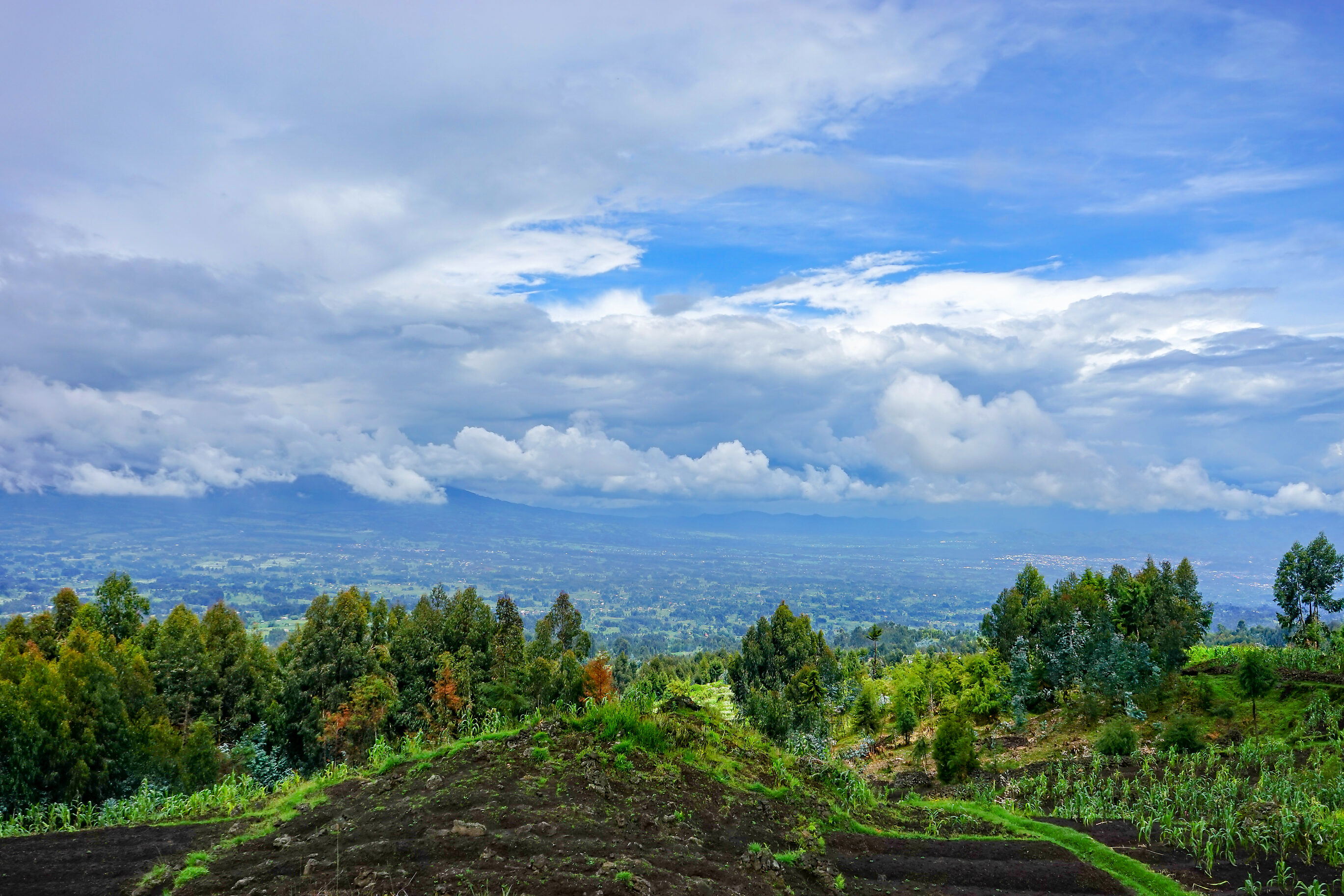
Rwanda: Gorilla Trekking in Volcanoes National Park — The 7-Day Journey to Meet Mountain Gorillas
Track endangered mountain gorillas in Rwanda's misty Virunga volcanoes. A 7-day guide covering permits, trekking logistics, and the hour with a silverback.
TL;DR
Rwanda delivers the world’s most accessible mountain gorilla encounter — a 90-minute flight from Nairobi, a 2.5-hour drive from Kigali, and you’re standing in the bamboo forest watching a silverback feed his family. Volcanoes National Park protects ~380 of the ~1,060 remaining mountain gorillas. The experience: one hour, seven meters, no barriers. This guide covers the $1,500 permit (book 6–12 months ahead), the 2–6 hour trek through 2,500–4,000m elevation, Kigali’s genocide memorial and food scene, golden monkey tracking as a Day 2 option, and the community visits that fund conservation. The goal isn’t a photo — it’s the silence when a 200kg silverback makes eye contact and you understand why Dian Fossey never left.
Who This Guide Is For
Travelers who want the definitive African wildlife experience without the multi-country logistics of a safari circuit. Photographers seeking the intimate, low-light gorilla portrait that defines a career. Conservation-minded visitors who want their tourism dollar to directly fund anti-poaching patrols and community development (10% of permit revenue goes to local projects). Fit hikers comfortable with 2–6 hours at altitude on muddy, steep trails — porters available and recommended. This guide assumes you can plan 6+ months ahead for permits, budget $3,000–6,000+ for the week, and accept that gorilla trekking is a privilege, not a guarantee — though success rates exceed 98%.
Quick Facts
| Question | Answer |
|---|---|
| Best time to visit | June–September (long dry season), December–February (short dry season); trekking year-round but trails muddier in rains |
| Typical duration | 5–7 days (1 gorilla trek + buffer + Kigali); 3 days minimum if time-pressed |
| Difficulty | Moderate — altitude (2,500–4,000m), steep muddy trails, 2–6 hr trek; porters essential for most |
| Typical daily budget | $300–800+ (mid-range); gorilla permit $1,500 dominates cost; luxury lodges $1,000–2,500/night |
| Visa | Visa-free 30 days for all African Union citizens; $50 single-entry for most others on arrival or online; East Africa Tourist Visa ($100) covers Rwanda + Kenya + Uganda |
| Currency | Rwandan franc (RWF); USD widely accepted for large payments (permits, lodges); cards in Kigali |
| Language | Kinyarwanda (national), English (official), French (widely spoken), Swahili (increasing) |
| Getting there | Kigali (KGL) — direct from Brussels, London, Dubai, Doha, Istanbul, Nairobi, Addis Ababa, Johannesburg, Mumbai; connect from Europe/US via hubs |
Before You Go
Checklist
Documents & Permits
- Gorilla permit: $1,500 — book via Rwanda Development Board (RDB) at rdb.rw or licensed tour operator 6–12 months ahead; non-refundable, non-transferable, name-locked
- Passport with 6+ months validity and 2 blank pages
- Visa: $50 single-entry on arrival for most nationalities; apply online at migration.gov.rw for faster entry; East Africa Tourist Visa ($100) if combining Kenya/Uganda
- Yellow fever certificate (mandatory for entry from endemic countries; recommended regardless)
- Travel insurance with medical evacuation (nearest hyperbaric chamber: Nairobi; gorilla trekking excluded from some policies — verify coverage)
- Return/onward ticket (may be requested)
Apps to Download
- Maps.me offline (Google Maps works in Kigali, spotty in Musanze)
- WhatsApp for operator/lodge coordination
- Currency converter (RWF rates)
- iNaturalist or eBird for wildlife logging
Gear
- Hiking boots (broken in, waterproof, ankle support — critical)
- Gaiters (rent from lodge/operator or buy — mud is knee-deep)
- Waterproof jacket + pants (rain is daily, even in dry season)
- Layering system: merino base, fleece mid, insulated jacket for 2,500m+ mornings
- Gardening gloves (thorn protection for bamboo; lodge often provides)
- Daypack (20–30L) + rain cover
- 2L water bladder/bottles + electrolytes
- Headlamp + extra batteries (pre-dawn starts)
- Camera: fast lens (f/2.8 or wider), high ISO capability (forest is dark), silent shutter; no flash ever
- Power adapter (Type C/E/G, 230V)
- Binoculars (8×42 or 10×42) for golden monkeys/birds
Health
- Yellow fever vaccine (certificate checked on arrival)
- Hepatitis A, typhoid, routine vaccines
- Malaria prophylaxis (Kigali/Musanze low risk but present; consult travel clinic)
- Altitude awareness: Musanze 1,850m, treks 2,500–4,000m — hydrate, ascend slowly, consider acetazolamide if sensitive
- Basic first-aid + blister kit (Compeed)
- COVID-19: check current entry requirements at rwandair.com or migration.gov.rw
Getting There
Most visitors arrive at Kigali International Airport (KGL), 10 km from city center. Direct flights from Brussels (Brussels Airlines), London (RwandAir), Dubai (RwandAir), Doha (Qatar Airways), Istanbul (Turkish Airlines), Nairobi (RwandAir, Kenya Airways), Addis Ababa (Ethiopian), Johannesburg (RwandAir), Mumbai (RwandAir). From US: connect via Europe/Dubai/Doha; round-trip $1,200–2,500. Flight times: London ~8 hrs, Dubai ~5.5 hrs, Nairobi ~1.5 hrs.
| Route | From | To | Time | Cost |
|---|---|---|---|---|
| International | London (LHR) | Kigali (KGL) | ~8 hrs | £600–£1,200 return |
| International | Brussels (BRU) | Kigali (KGL) | ~8 hrs | €550–€1,100 return |
| International | Dubai (DXB) | Kigali (KGL) | ~5.5 hrs | $600–$1,300 return |
| International | Nairobi (NBO) | Kigali (KGL) | ~1.5 hrs | $150–$350 return |
| Domestic | Kigali (KGL) | Musanze (volcanoes) | 2.5 hr drive | $80–150 private transfer |
| Domestic | Kigali | Akagera NP (east) | 2.5 hr drive | $100–180 private transfer |
| Domestic | Kigali | Nyungwe NP (southwest) | 5–6 hr drive | $200–350 private transfer |
Airport → Kigali: 20–30 min. Official taxi: $15–25. Hotel shuttle: often free. RwandAir passengers: complimentary transfer to Radisson Blu/Kigali Marriott.
Kigali → Volcanoes NP (Musanze): 2.5 hours on paved road. Private transfer $80–150 (book through lodge/operator). Shared minibus (matatu) from Nyabugogo station: ~3,000 RWF ($2.50), 3+ hours, not luggage-friendly. Recommendation: Book lodge transfer — they handle permit pickup, porter arrangement, and pre-trek briefing logistics.
Where to Stay
Accommodation clusters in Musanze (town, 15 min to park HQ, budget–mid-range) and Kinigi (park boundary, 5 min to briefing, mid-range–luxury). Luxury lodges on the park edge (Bisate, One&Only, Singita, Wilderness) include permit management, private guides, and all meals.
| Type | Where | Price Range | What You Get |
|---|---|---|---|
| Budget guesthouse / hostel | Musanze town | $30–80/night | Private/shared room, breakfast, Wi-Fi, permit help |
| Mid-range lodge | Kinigi / Musanze | $150–400/night | En-suite, fireplace, garden, permit management, packed lunch |
| Luxury eco-lodge | Park boundary (Bisate, One&Only, Singita, Virunga, Wilderness) | $1,000–2,500+/night | All-inclusive, private guide, butler, conservation programs, helicoper access |
| Kigali hotel | Kigali city center | $100–500/night | Urban base, restaurants, genocide memorial walkable |
Booking tip: Permit availability drives lodge booking. Secure permit first, then book lodge. Peak (Jun–Sep, Dec–Feb) sells out 8–12 months ahead. Shoulder (Mar–May, Oct–Nov) offers 20–30% lodge savings, same permit cost. Many lodges require 3-night minimum in peak.
Where to Eat
Rwandan cuisine centers on ibihaza (pumpkin stew), isombe (cassava leaves with peanut), brochettes (grilled meat skewers), ugali (maize porridge), and tropical fruit. Kigali has East Africa’s best coffee scene (Question Coffee, Bourbon Coffee) and a growing fine-dining circuit (Heaven, Fusion, The Manor).
| Meal | Recommendation | Where | Approx. Cost |
|---|---|---|---|
| Breakfast | Rwandan coffee + tropical fruit + eggs | Lodge / Kigali café | Included at lodge; $5–15 in Kigali |
| Lunch | Brochettes + ibihaza + ugali | Musanze local spot | 5,000–12,000 RWF ($4–10) |
| Dinner | Fine dining (Heaven, Fusion) or lodge | Kigali / Lodge | $30–100+ |
| Snack | Tree tomato juice + mandazi | Market / roadside | 500–2,000 RWF ($0.40–1.50) |
Etiquette: Meals are communal. Accept food offered. Tip 10% in restaurants (not expected at lodges — service included). “Murakoze” (thank you) goes far.
Day-by-Day Itinerary
Day 1: Arrival in Kigali — The Cleanest City in Africa
Land at KGL, visa on arrival ($50, 30 days), transfer to hotel (20–30 min). Kigali sits at 1,567m — mild evenings, cool mornings. Spend the afternoon at the Kigali Genocide Memorial (Gisozi) — 250,000 buried, world-class exhibition, audio guide essential. Understand 1994 before you trek the volcanoes; the country’s transformation is the context for every conversation.
| Time | Activity | Location | Notes/Tips |
|---|---|---|---|
| 2:00 PM | Land KGL, visa, transfer | Kigali Airport | Have $50 USD cash (2013+ series) for visa |
| 3:30 PM | Check in, coffee | Hotel / Question Coffee | Try single-origin Rwandan pour-over |
| 4:30 PM | Kigali Genocide Memorial | Gisozi | Audio guide $15; allow 2–3 hrs; photography restricted inside |
| 7:30 PM | Dinner at Heaven Restaurant | Kiyovu | Rooftop, fusion, sunset views; book ahead |
Plan B: Late arrival? Skip memorial, dinner at hotel, early night. Memorial opens 8 AM — visit Day 2 morning if needed.
Day 2: Kigali to Volcanoes NP — The Road to the Mist
Early departure for 2.5-hour drive north. Landscape shifts: terraced hills → tea plantations → volcanic peaks piercing cloud. Stop at Imbabazi Orphanage (Roz Carr’s legacy, Gorillas in the Mist filming site) or Red Rocks Cultural Centre for banana beer demo. Arrive Kinigi, settle into lodge, afternoon briefing at park HQ (Kinigi) for next day’s trek — group assignment, guide introduction, porter hiring.
| Time | Activity | Location | Notes/Tips |
|---|---|---|---|
| 6:30 AM | Breakfast, depart Kigali | Hotel | Pack daybag for transfer (permits in lodge safe) |
| 8:30 AM | Imbabazi / Red Rocks stop | En route | 30–45 min; cultural context for conservation |
| 10:30 AM | Arrive Kinigi, check in | Lodge | Lodge handles permit collection from RDB |
| 12:30 PM | Lunch at lodge | Lodge | Fuel up — trek day starts early |
| 2:00 PM | Park HQ briefing | Kinigi (Park HQ) | Mandatory; group assignment, safety, porter hire ($15–20 + tip) |
| 4:00 PM | Rest, gear check | Lodge | Boots, gaiters, gloves, rain gear, camera ready |
| 7:00 PM | Early dinner, early bed | Lodge | Lights out by 9 PM — 5:30 AM wake-up |
Porter hire: Do it. $15–20 carry daypack + help on steep sections. Employs ex-poachers/community. Tip $10–20 extra. Life-changing for them; back-saving for you.
Day 3: Gorilla Trek — The Hour That Changes Everything
Wake 5:00 AM. Light breakfast. 5:30 AM drive to park HQ (5–15 min from Kinigi lodges). 6:00 AM briefing: assigned family (1 of 12 habituated groups), tracker radio update, final gear check. 6:30 AM drive to trailhead (10–40 min). Trek: 2–6 hours depending on family location. Elevation gain 500–1,500m. Trackers find group first; you follow guide. One hour with gorillas. Seven meters. No flash. Silent. Then reverse trek.
| Time | Activity | Location | Notes/Tips |
|---|---|---|---|
| 5:00 AM | Wake, light breakfast | Lodge | Porridge, banana, tea; hydrate |
| 5:30 AM | Drive to park HQ | Kinigi | Lodge arranges transport |
| 6:00 AM | Final briefing, group assign | Park HQ | 12 groups max; 8 visitors + guide + trackers per group |
| 6:30 AM | Drive to trailhead | Varies by group | 10–40 min on rough track |
| 7:00 AM–1:00 PM | Trek to gorilla family | Volcanoes NP | Pace: slow. Stop often. Breathe. Porter earns keep here. |
| Variable | One hour with gorillas | Bamboo forest | No flash. Silent. Seven meters. No eating/drinking. |
| 1:00 PM–3:00 PM | Return trek, drive to lodge | Trailhead → Lodge | Exhaustion hits different — let porter carry pack |
| 4:00 PM | Certificate ceremony | Lodge | RDB certificate + celebratory drink |
| 7:30 PM | Dinner, reflection | Lodge | You won’t stop talking about it |
Critical rules: No flash photography (blinds them). No food/drink near gorillas. No touching (they may touch you — stay still). Cough/sneeze into elbow (human respiratory viruses kill gorillas). Minimum age 15. If sick, do not trek — reschedule (RDB may refund with doctor’s note).
Plan B: If family too far (rare), RDB may assign closer group. If no sighting (extremely rare — 98%+ success), partial refund discussion with RDB.
Day 4: Golden Monkeys OR Second Gorilla Trek OR Rest
Option A: Golden Monkey Trek ($100 permit, book ahead). Same logistics, easier trek (bamboo zone, 2–3 hrs), playful endangered primates, great photography. Option B: Second gorilla trek ($1,500). Different family, different dynamics — only for the obsessed. Option C: Rest. Lodge spa, village walk, coffee tour, Lake Burera/Ruhondo boat trip.
| Time | Activity | Location | Notes/Tips |
|---|---|---|---|
| 6:00 AM | Briefing for chosen activity | Park HQ | Golden monkey: 1 group, 8 people max |
| 7:00 AM–12:00 PM | Activity | Volcanoes NP | Golden monkeys: faster, louder, more acrobatic |
| 1:00 PM | Lunch | Lodge | Celebrate or recover |
| Afternoon | Community visit / lake / rest | Kinigi / Lakes | Gorilla Guardians Village (ex-poacher cultural demo) |
| 7:30 PM | Dinner | Lodge | Last night in the mountains |
Recommendation: Golden monkeys if first trek was moderate. Rest if trek was brutal. Second gorilla trek only if budget/time allow — the magic diminishes marginally.
Day 5: Volcanoes to Kigali — Culture & Conservation
Morning Gorilla Guardians Village (Iby’iwacu) — ex-poachers demonstrate traditional dance, medicine, archery. Direct community benefit. Then 2.5-hour drive back to Kigali. Afternoon: Nyamirambo Women’s Centre walking tour (Muslim quarter, market, hair salon, cooking class) or Kimironko Market for crafts/fabric. Evening: Question Coffee cupping or Kigali Heights rooftop.
| Time | Activity | Location | Notes/Tips |
|---|---|---|---|
| 8:00 AM | Gorilla Guardians Village | Kinigi | 2 hrs; tip performers directly |
| 11:00 AM | Depart for Kigali | Kinigi → Kigali | 2.5 hrs; stop at viewpoint for Virunga panorama |
| 1:30 PM | Lunch in Kigali | Nyamirambo / City Centre | Try isombe at local spot |
| 3:00 PM | Nyamirambo Women’s Centre tour | Nyamirambo | 2–3 hrs; supports women’s cooperative |
| 6:00 PM | Coffee cupping / rooftop | Question Coffee / Kigali Heights | End with best coffee in East Africa |
| 8:00 PM | Farewell dinner | Heaven / Fusion / The Manor | Book 1+ week ahead for top tables |
Day 6: Akagera Day Trip OR Nyungwe Extension OR Kigali Deep Dive
Option A: Akagera National Park (2.5 hr drive each way). Big Five (lion, leopard, elephant, buffalo, rhino reintroduced 2017/2019), boat safari Lake Ihema, 100,000 ha savannah. Day trip possible but 14+ hrs — overnight recommended. Option B: Nyungwe Forest (5–6 hr drive). Chimpanzee trekking, canopy walk, 13 primate species — needs 2+ nights. Option C: Kigali deep dive. Art galleries (Inema, Ivuka), craft markets (Caplaki, Kimironko), Belgian Memorial, Nyandungu Eco-Park, dinner at Repub Lounge.
| Time | Activity | Location | Notes/Tips |
|---|---|---|---|
| 5:00 AM | Depart for Akagera (if chosen) | Kigali | Pack breakfast; full day |
| 7:30 AM | Game drive start | Akagera NP | $50 entry + $30 vehicle + guide $25 |
| 12:00 PM | Boat safari Lake Ihema | Akagera | Hippos, crocs, birds — 2 hrs |
| 4:00 PM | Depart Akagera | → Kigali | Arrive ~7 PM |
| OR | Kigali cultural day | Kigali | Inema Arts, Caplaki market, Nyandungu Eco-Park |
Day 7: Departure
| Time | Activity | Location | Notes/Tips |
|---|---|---|---|
| Flexible | Final coffee / market | Kigali | Caplaki for crafts, Question for beans |
| 3 hrs pre-flight | Transfer to KGL | Hotel → Airport | Hotel arranges; 20–30 min |
| Depart | Fly home | KGL | Carry gorilla certificate proudly |
Practical Tips
- Permit is everything: No permit = no trek. Book via RDB directly (rdb.rw) or reputable operator (Volcanoes Safaris, Primate Safari, Rwanda Eco-Tours). Scams exist — verify operator license.
- Cash for tips/porters: Bring $300–500 in small USD bills (2013+ series only — older rejected). RWF for markets. Cards accepted at lodges/Kigali restaurants.
- Gear rental: Lodges rent gaiters, gloves, walking sticks. Bring your own boots — fit matters.
- Altitude: Musanze 1,850m, treks to 4,000m. Hydrate 3L+ daily. Diamox (acetazolamide) if prone — consult doctor.
- Photography: 70–200mm f/2.8 ideal. 100–400mm for portraits. High ISO (3200–6400) normal. Silent mode. No flash. Video allowed (no light).
- Tipping: Porter $15–20 + $10–20 tip. Guide $20–50. Trackers $10–20. Lodge staff communal box $20–50/night. Drivers $10–20/day.
- Connectivity: MTN / Airtel SIM ~$5 + data. 4G in Musanze/Kigali. Lodge Wi-Fi variable.
- Time zone: CAT (UTC+2) — no DST. Same as SA/Egypt, 1 hr ahead of UK winter, 2 hrs ahead UK summer.
- Safety: Rwanda is exceptionally safe. Solo female travelers common. Kigali streets safe at night. Park escorted always.
- Language: “Muraho” (hello), “Murakoze” (thank you), “Amakuru” (how are you), “Ni meza” (good), “Urakoze cyane” (thank you very much).
Before You Go: Last-Minute Checks
- Gorilla permit confirmed — name matches passport exactly; print + digital copy
- Visa sorted (on arrival $50 cash or pre-approved online)
- Yellow fever certificate (original + copy)
- Travel insurance with medevac + gorilla trekking coverage verified
- Lodge booked + transfer confirmed (they handle permit pickup)
- Porter tip cash separated ($50–100 in small bills)
- Boots broken in, gaiters packed, rain gear accessible
- Camera batteries charged, cards empty, silent mode tested
- Medications + blister kit + electrolytes in daypack
- Emergency contacts: Lodge manager, RDB (+250 788 163 100), embassy
Insider Tips
- Permit timing: Book the moment RDB releases annual quota (usually Oct/Nov for following year). June–September permits vanish in hours.
- Group assignment: Ask for Susa, Amahoro, or Kwitonda groups — historically closer to trailheads (less hiking). But all groups move; no guarantees.
- Porter = conservation: Every porter hired is a former poacher choosing tourism. The $35 you spend funds a family for a week.
- Camera prep: Practice silent shutter + high ISO at home. Forest is EV 4–6. f/2.8, 1/125s, ISO 3200–6400 is typical. Bring 2 batteries — cold drains them.
- Double trek strategy: If doing two treks, request different families (RDB accommodates). Silverback personalities vary wildly.
- Kigali coffee: Question Coffee trains women farmers. Buy beans there — best souvenir, direct impact.
- Gorilla Guardians Village: Go morning of Day 5. Ex-poacher guides share real stories. Tip dancers directly ($5–10 each).
- Pack light for trek: Daypack only — water, snack, rain jacket, camera, gloves. Porter carries rest. Less weight = more enjoyment.
Etiquette & Culture
- Umuganda — last Saturday each month, 8–11 AM: nationwide community cleanup. Everything closes. Visitors welcome to participate (lodge can arrange).
- Genocide memory: 1994 is present. Never ask “Were you here?” or “Which side?” Listen if shared. Memorials are sacred — no selfies, no loud talk.
- Plastic bags banned since 2008. Luggage searched on arrival. Use reusable bags.
- Greeting hierarchy: Elders first. “Muraho” + handshake (right hand, left forearm supported). Women may prefer verbal greeting only.
- Photography: Ask before photographing people. No photos of military, police, government buildings, presidential motorcade.
- Tipping: Not cultural obligation but expected in tourism. USD preferred for guides/porters. RWF for markets.
- Dress: Modest in villages (shoulders/knees covered). Kigali cosmopolitan — smart casual for dinner.
Useful Phrases (Kinyarwanda)
| English | Kinyarwanda | Pronunciation |
|---|---|---|
| Hello / Good morning | Muraho | moo-RAH-ho |
| How are you? | Amakuru? | ah-mah-KOO-roo |
| Good / Fine | Ni meza | nee MEH-zah |
| Thank you | Murakoze | moo-rah-KOH-zeh |
| Thank you very much | Urakose cyane | oo-rah-KOH-zeh CHAH-neh |
| Yes / No | Yego / Oya | YEH-go / OH-yah |
| Please | Nyabuneka | nyah-boo-NEH-kah |
| Excuse me / Sorry | Mbabarira | mba-bah-REE-rah |
| How much? | Bingahe? | been-GAH-heh |
| Delicious | Biryoshye | bee-ROH-shyeh |
| Water | Amazi | ah-MAH-zee |
| I don’t understand | Ntabwo mbibaza | n-tah-bwo m-bee-BAH-zah |
| Goodbye | Murabeho | moo-rah-BEH-ho |
FAQs
Q: How far in advance should I book the gorilla permit? 6–12 months. June–September and December–February permits sell out within days of release. Book the day RDB opens the quota (announced on rdb.rw and Twitter).
Q: What if I get sick before the trek? Do not trek. Human respiratory viruses (cold, flu, COVID) kill gorillas. Inform lodge/RDB immediately. With doctor’s note, RDB may reschedule (not guaranteed) or issue partial refund. Your guide will screen you at briefing — if symptomatic, you’ll be turned away.
Q: How fit do I need to be? You need to hike 2–6 hours at 2,500–4,000m on steep, muddy, uneven trails. No technical climbing. If you can do a 3-hour hike with 500m elevation gain at home, you’ll manage — with a porter. Porters are not optional for most visitors.
Q: Can I do this solo? Yes. Join a group of up to 8 at briefing. Solo travelers common. Lodge handles logistics. Book permit + lodge + transfer as a package through operator for simplest solo experience.
Q: What’s the difference between Rwanda and Uganda for gorillas? Rwanda: $1,500 permit, 2.5 hr from airport, 12 habituated groups, luxury infrastructure, easier access. Uganda (Bwindi): $800 permit, 8–10 hr from Entebbe or 1 hr flight + drive, 20+ groups, more rustic, longer treks typically. Rwanda = convenience + premium; Uganda = budget + adventure.
Q: Is the $1,500 permit worth it? Yes. 10% funds community projects (schools, clinics, water). 75% funds park protection (rangers, anti-poaching, veterinary). 15% RDB operations. Mountain gorillas are the only great ape with increasing population — your permit pays for that.
Q: Can children trek? Minimum age 15 (strict, enforced at briefing). No exceptions.
Q: What about the DRC (Virunga NP) option? Virunga NP (DRC) has cheaper permits ($400) but ongoing conflict, rebel activity, park closures, safety risks. Not recommended for most travelers as of 2026. Check virunga.org for current status.
Related Guides
- Botswana — Okavango Delta, Chobe, and the ultimate African safari
- Madagascar — Wildlife, baobabs, and the world’s most unique biodiversity hotspot
- Solo Travel Guide — Safety, prefillable planner, first-solo playbook
- September Travel Destinations — Shoulder season picks including Rwanda
The best trips do not just move you across a map. They change how you see the world. Use this guide to build your own story.
Start Planning Your Story