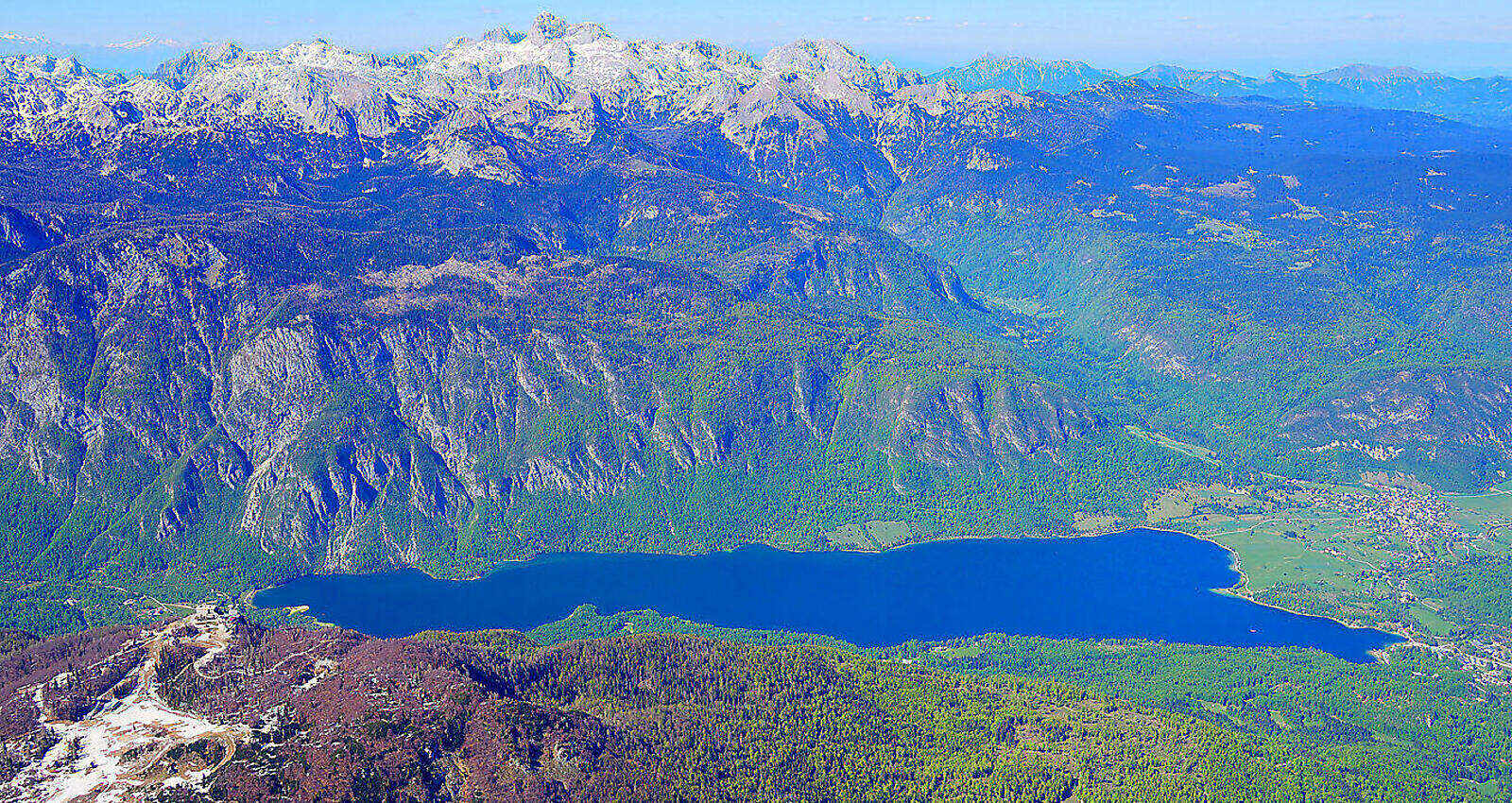
Slovenia: The Julian Alps' Best-Kept Secret — Where Lake Bohinj Rewards the Curious and the Quiet
Slovenia: Lake Bohinj coolcation hiking in Triglav National Park, Seven Lakes Valley trail, and why this wild alpine twin to Bled rewards the curious.
TL;DR
Slovenia has quietly become Europe’s best coolcation secret — a small Alpine country where Lake Bohinj stays at 15–22°C all summer while southern Europe bakes at 40°C. The 2026 coolcation surge is real: travel to Scandinavia is up 35% year-over-year and searches for cooler destinations jumped 300% since 2023, putting Slovenia’s Julian Alps on the map as the accessible, affordable alternative to Iceland and Norway. This guide takes you through 7 days centered on Lake Bohinj — Slovenia’s largest glacial lake, 4.35 km long and ringed by 2,000-meter peaks inside Triglav National Park — where you can swim in 20°C turquoise water, ride the Vogel cable car to alpine meadows, hike to the 78-meter Savica Waterfall, and tackle the legendary Seven Triglav Lakes Valley. The country is tiny (1 hour from Ljubljana to the lake), the Euro is already legal tender, and no visa is needed for US/UK/EU travelers under the Schengen 90/180 rule. Slovenia isn’t trying to be the next Iceland — it is trying to protect what makes it special: silence, space, and water so clear you can count the fish from a kayak.
Who This Guide Is For
Travelers fleeing 2026 heatwaves who want alpine cool without the Nordic price tag — Slovenia hits the sweet spot at €60–120/day for mid-range, half of what Norway or Iceland cost. Hikers who want a taste of the Triglav massif without committing to the full via ferrata summit — the Seven Lakes Valley trail and Vogel ridge walks deliver the drama at approachable difficulty. Photographers who want the mirror-still surface of a glacial lake with peaks reflected perfectly at dawn — Lake Bohinj’s “glass surface” is a local saying for a reason. Families who need an outdoor playground that isn’t a theme park — shallow beaches at Ribčev Laz, easy lakeshore walks, and a cable car that works for strollers at the top. Repeat visitors to the Julian Alps who did Bled and want the wilder twin 30 minutes up the valley — Bohinj is larger, quieter, and more genuinely alpine than its postcard-perfect neighbor. Anyone who reads “coolcation” in a 2026 travel trend report and thinks a lake at 11°C-summer-average altitude sounds exactly right. This guide assumes you are comfortable with a mix of local buses, rental cars, or organized shuttles, and that you believe some places are worth visiting slowly.
Quick Facts
| Question | Answer |
|---|---|
| Best time to visit | June–September for hiking + swimming; January–March for Vogel skiing; May and late September for fewer crowds |
| Typical duration | 7 days (extend to 10 for the full Seven Lakes + Triglav approach) |
| Difficulty | Moderate (hiking requires proper boots; cable car and lakeshore walks are easy) |
| Typical daily budget | €60–€150/day mid-range (see Where to Stay) |
| Visa | Schengen 90/180 days, visa-free for US, UK, EU, Canada, Australia, NZ, Japan, South Korea; see GOV.UK entry requirements |
| Currency | Euro (€) |
| Language | Slovenian; English widely spoken (especially in tourism) |
| Getting there | Fly into Ljubljana (LJU) or Venice (TRS, 1.5 hrs) or Trieste (TRS); bus/train from Ljubljana takes ~1h50m |
Before You Go
Checklist
Documents & Money
- Passport valid 3+ months beyond planned departure from Schengen area; see GOV.UK entry requirements
- Schengen 90/180 rule — track days across all Schengen countries; EES registration may apply for non-EU citizens in 2026 (US State Department Slovenia advisory)
- ETIAS travel authorization (€7) if arriving after Q4 2026 — pre-register at ETIAS official; check EEAS ETIAS announcement
- Travel insurance with mountain rescue coverage (€3,000–10,000 evacuation cost; mandatory for hut overnights)
- Euro cash for park parking, small village restaurants, and hut meals (€20–50/day sufficient)
- Credit card with no foreign transaction fees (widely accepted in Ljubljana, Bled, Bohinj)
Apps to Download
- Google Maps offline for Ljubljana, Bled, and Bohinj area (signal is patchy in the mountains)
- ARSO (Slovenian meteorological service) for mountain weather forecasts
- Avtoceste (Slovenian highways) for real-time toll + traffic
- eHruška (Slovenian mountain hut booking) — book mountain huts 4+ weeks ahead for July–August
- Resalta (Slovenian bus schedules) — Bohinj buses run less frequently than the Ljubljana route
Gear
- Sturdy hiking boots (limestone is sharp; trail runners will slip on the Seven Lakes scree)
- Layers — mountain temps swing from 20°C at the lake to 8°C at 1,500m in Vogel
- Rain jacket — afternoon thunderstorms are common in July/August; start hikes before 2pm
- Swimwear for Lake Bohinj (water reaches 20–22°C in July/August)
- Reusable water bottle (mountain stream water is generally safe above 1,500m; treat or filter below)
Health
- Tick-borne encephalitis (TBE) vaccine recommended for forest hikes May–September; Slovenia tourist board health info
- Basic first-aid kit with blister treatment (limestone trails are unforgiving)
- Sun protection SPF 50+ (high altitude amplifies UV; snow reflection in winter too)
Getting There
Ljubljana Jože Pučnik Airport (LJU) is Slovenia’s main international gateway, 25 km from the capital. Direct flights from London, Frankfurt, Munich, and most European hubs. From LJU, take theAirport Shuttle to Ljubljana (€8, 20 min), then a train or bus to Bled (1h15m, €5) and onward to Bohinj (30 min by bus from Bled, €3.50).
| Route | From | To | Time | Cost |
|---|---|---|---|---|
| International | LHR/LGW → LJU | Direct (easyJet, Lufthansa) | 1h50m | £80–£180 return |
| International | CDG → LJU | 1 stop (Air France via CDG or direct) | 2h30m | €100–€250 return |
| International | FRA → LJU | Direct (Lufthansa) | 1h20m | €150–€350 return |
| Airport → Ljubljana | LJU | Bus/Airport Shuttle | 20 min | €8 |
| Ljubljana → Bled | Ljubljana | Bled | 1h15m | €5 (train) / €10 (bus) |
| Bled → Bohinj | Bled | Bohinj Jezero | 30 min | €3.50 (Arriva bus) / €25 (taxi) |
Visa note: Slovenia is in the Schengen Area. US, UK, and EU citizens can enter without a visa for up to 90 days in any 180-day period. The ETIAS system (€7, 3-year validity) is scheduled to launch Q4 2026 — check EEAS announcements before booking if traveling after October 2026.
Where to Stay
Lake Bohinj offers a stark contrast to Lake Bled: fewer hotels, more authenticity, and prices that reward early booking. The two main settlement hubs are Ribčev Laz (eastern end, more restaurants and facilities) and Ukanc (western end, Vogel cable car base).
| Type | Where | Price Range per Night | What You Get |
|---|---|---|---|
| Hostel | Bohinj Eco Hotel youth rooms | €25–€45 | Shared kitchen, lake access, bike hire |
| Guesthouse | Pension Pod Voglom (Ribčev Laz) | €60–€90 | Family-run, homemade dinner, lakeside walk |
| Mid-range | Hotel Jezero (Ribčev Laz) | €90–€150 | Lakeside rooms, restaurant, boat hire |
| Hotel | Hotel Triglav (near Vogel) | €120–€200 | Mountain views, spa, cable car access |
| Apartment | Bohinj Eco Hotel suites | €100–€180 | Kitchenette, self-catering, sustainable |
Booking tip: July and August fill up fast — book accommodation 2–3 months ahead, especially if you want to stay right on the lake. The park-and-ride system from Bohinjska Bistrica is cheaper than lakeside parking (€2/hour vs €5/day at Ukanc). Shoulder seasons (May, September) offer 30% savings with huts still open on weekends.
Where to Eat
Slovenian alpine cuisine is simple, hearty, and deeply tied to the land — potatoes, cheese, buckwheat, and forest foraged ingredients. The Julian Alps’ “heritage tomatoes” and mountain honey are Protected Designation of Origin products.
| Meal | Recommendation | Where | Approx. Cost |
|---|---|---|---|
| Breakfast | Potica (rolled nut roll) + coffee | Gostilna Pri Planincu (Ribčev Laz) | €8–€12 |
| Lunch | Jota (sauerkraut bean stew) + locally cured ham | Gostilna Pri Hiši (Stara Fužina) | €12–€18 |
| Dinner | Trout from Bohinj + buckwheat kasha | Gostilna Murica (Stara Fužina) | €20–€30 |
| Drink | Slovenian wine (Teran, Rebula) | Vino pivnica Bohinj | €4–€8 per glass |
Etiquette: Tipping 10% is standard but not mandatory. Service is included on most menus. Cash is preferred at rural gostilnas; cards are fine in hotels and tourist restaurants.
Day-by-Day Itinerary
This itinerary centers on Lake Bohinj with a side trip to Bled, designed for mid-June through September when all trails and the cable car are open, and the lake is swimmable.
Day 1: Arrival in Ljubljana → Bled → Bohinj
| Time | Activity | Location | Notes |
|---|---|---|---|
| 09:00 | Land at Ljubljana Airport | LJU | Take Airport Shuttle bus to Ljubljana (€8, 20 min) |
| 10:30 | Arrive in Ljubljana, grab coffee | City center | Try kava at Caffè Accademia near Triple Bridge |
| 12:00 | Train to Bled | Bled | 1h15m, €5; enjoy the Sava River valley views |
| 14:00 | Quick Bled orientation | Bled | Walk the lake (6 km, easy) — see Bled Island and the castle |
| 15:30 | Bus to Bohinj | Bohinj Jezero | Arriva bus, 30 min, €3.50; buy ticket on board |
| 17:00 | Check in at Ribčev Laz guesthouse | Bohinj | Drop bags, walk to lakeshore for first views |
| 19:30 | Dinner at Gostilna Pri Planincu | Ribčev Laz | Try jota (bean-sauerkraut stew) with local wine |
Plan B: If the bus from Bled is delayed, skip the orientation walk and head straight to the lakeshore at Ukanc — the Savica Waterfall trail is independently accessible and the cable car to Vogel runs until 6pm in summer.
Day 2: Vogel Cable Car + Seven Lakes Valley Approach
| Time | Activity | Location | Notes |
|---|---|---|---|
| 07:30 | Early breakfast at guesthouse | Ribčev Laz | Beat the morning bus crowd |
| 08:30 | Walk to Vogel cable car base | Ukanc | 30 min walk along north shore; buy round-trip ticket |
| 09:00 | Vogel cable car to 1,535m | Vogel plateau | 4-min ride; €16–18 return; panoramic views of Triglav |
| 10:00 | Vogel ridge walks | Above treeline | Easy marked trails at altitude; great photo ops |
| 13:00 | Lunch at mountain restaurant | Vogel top | Strudel + views; €15–20 |
| 14:30 | Begin Seven Lakes Valley descent | Vogel → Komna | Start descent toward Komna plateau — the long day approach |
| 17:30 | Return via cable car + lakeshore | Bohinj | Sunset swim at Ribčev Laz beach if water is >18°C |
Plan B: If afternoon thunderstorms threaten (common July/August), skip the Vogel high walks and stay low: do the lakeshore loop (5 km, easy) and visit the Church of St. John the Baptist at Ribčev Laz instead. Book the Seven Lakes full-day hike for Day 4 with a guide.
Day 3: Savica Waterfall + Mostnica Gorge + Swimming
| Time | Activity | Location | Notes |
|---|---|---|---|
| 09:00 | Bus or walk to Savica Waterfall | Ukanc end | 15 min local bus or 45 min walk from Ribčev Laz |
| 10:00 | Savica Waterfall hike | Savica trail | 550 stone steps to 78m cascade; €3–4 entry fee |
| 12:00 | Explore Mostnica Gorge | Stara Fužina | 1.5 km limestone gorge walk; €5 entry; emerald pools |
| 14:00 | Lunch at Gostilna Pri Planincu | Ribčev Laz | Light lunch — soup + open-faced sandwiches |
| 16:00 | Swimming at Ribčev Laz beach | Lake Bohinj | Shallow grass entry, lifeguarded in summer |
| 18:00 | Sunset kayak rental | Ribčev Laz | €15/hour; the lake glass-surfaces at dusk |
Plan B: If the waterfall steps are slippery (they close after heavy rain), substitute the Vintgar Gorge near Bled — a 1.6 km boardwalk through a limestone gorge (€10 entry, open April–October). It’s more touristy but always dry and accessible.
Day 4: Seven Triglav Lakes Valley Full-Day Hike
| Time | Activity | Location | Notes |
|---|---|---|---|
| 07:00 | Early departure to Savica car park | Ukanc | Take local bus or taxi; 550 steps start immediately |
| 07:30 | Begin Seven Lakes Valley hike | Triglav National Park | 1,200m ascent; 22 km round-trip; 7–9 hrs |
| 09:30 | Komna plateau | 1,520m | Rest at Dom na Komni hut if open; panoramic views |
| 10:30 | First lakes: Črno jezero | 1,625m | Limestone alpine lakes in sequence |
| 11:30 | Triglavsko jezero (largest) | 1,640m | Natural lunch stop; hut at 1,685m nearby |
| 12:30 | Seven Lakes Hut (Koča pri Triglavskih jezerih) | 1,685m | Dorm bed €25; dinner €20; book in advance |
| 14:30 | Continue to upper lakes | 1,700–1,990m | Weather-dependent; only proceed if clear |
| 16:30 | Begin descent | Via same route | 2.5–3h return to Savica car park |
| 20:00 | Dinner at Gostilna Murica | Stara Fužina | Hearty meal after the long day — try the trout |
Plan B: Book the guided Seven Lakes Valley day hike (€80–120) if you want navigation support and don’t want to carry gear for a 9-hour hike. The Vogel cable car start reduces distance by 4 km and 400m of ascent if you’re fatigued.
Day 5: Lake Bohinj Leisure + Bled Afternoon
| Time | Activity | Location | Notes |
|---|---|---|---|
| 09:00 | Swimming at Ukanc beach | Western end | Quieter beach, pebble entry |
| 10:30 | Rent SUP / kayak | Stara Fužina jetty | €20/hour; glassy water at dawn |
| 12:00 | Lunch at Gostilna Murica | Stara Fužina | Same restaurant, different side of lake |
| 14:00 | Bus to Bled (30 min) | Bled | Return visit for afternoon photography |
| 15:00 | Bled Castle + Bled Island | Bled | Climb 521 steps to castle; row to island church |
| 17:30 | Kremšnita (cream cake) | Park café | Bled’s famous dessert; €5–7 per slice |
| 19:00 | Return to Bohinj | Bohinj | Bus back; pack for tomorrow’s departure |
Plan B: If Bled is too crowded (it is — 2 million visitors annually), stay in Bohinj and do the lakeshore loop (12 km, 3.5h) on bike instead — rent from Ribčev Laz (€10/half-day). Stop at hidden coves for swimming.
Day 6: Day Trip to Soča Valley or Triglav National Park Visitor Centers
| Time | Activity | Location | Notes |
|---|---|---|---|
| 09:00 | Bus to Soča Valley | Bovec via Jesenice | 2h; famous emerald river, World War I history |
| 11:00 | Soča River walk | Bovec | Easy trail along theemerald water |
| 13:00 | Lunch in Bovec | Bovec | Mountain restaurant — trout, polenta |
| 14:30 | Soča source or Kozjak Lake | Trenta Valley | Short hike to river source (20 min) or lake (45 min) |
| 16:30 | Return to Bohinj | Via Vršič Pass | Scenery changes — Alpine to gorge in minutes |
| 19:00 | Farewell dinner | Ribčev Laz | Celebrate with Slovenian wine + the view |
Plan B: If Soča is too far, substitute a visit to the Triglav National Park Visitor Center in Stara Fužina (free; interactive exhibits about the park’s geology and wildlife) followed by a Vogel ski lift ride in winter mode (the cable car runs year-round, check schedules).
Day 7: Departure via Ljubljana
| Time | Activity | Location | Notes |
|---|---|---|---|
| 09:00 | Check out, slow breakfast | Ribčev Laz | Last potica and coffee with the mountain view |
| 10:30 | Pack and bus to Ljubljana | Route | 1h50m by bus; allow 2h for connections |
| 12:30 | Arrive in Ljubljana, final lunch | City center | Open-air market at Vrnapolska cesta |
| 13:30 | Visit Ljubljana Castle (optional) | Ljubljana | Funicular up; panoramic city views |
| 15:00 | Final souvenirs | Central Market | Try Carniolan sausage, pumpkin seed oil |
| 16:30 | Airport transfer | LJU | Allow 30 min from city center |
Plan B: If your flight is late, store luggage at the bus station lockers and explore the Metelkova art district — Slovenia’s alternative cultural quarter in a former military barracks.
Practical Tips
- Parking in Bohinj is regulated. Use designated car parks only; fines are issued for roadside parking. Park-and-ride from Bohinjska Bistrica is cheapest (€2/hour) with shuttle bus to Ribčev Laz. Lakeside parking at Ukanc costs €5/day.
- Book mountain huts early. Koča pri Triglavskih jezerih (Seven Lakes Hut) fills 4+ weeks ahead in July–August. Use eHruška or book through the Alpine Association of Slovenia.
- The Vogel cable car is a serious money-saver. At €16–18 return from 569m to 1,535m, it’s the cheapest way to access high-alpine terrain without a full-day commitment. Check schedules — it may close for maintenance in early June or late September.
- Swim at dawn. The lake’s “glass surface” is real — arrive at Ribčev Laz before 8am for calm water perfect for kayaking and reflection photography. By 10am, wind chop makes swimming less pleasant.
- Public transport is seasonal. Buses from Bled to Bohinj run every 1–2 hours in summer but reduce to 4 per day in shoulder season. Check Arriva’s current timetable before relying on it.
- Cash is still king in villages. Many family-run gostilnas and mountain huts don’t take cards. Withdraw EUR 100–150 at the Ljubljana main post office (lower ATM fees than airport).
Before You Go: Last-Minute Checks
- Bus ticket Ljubljana → Bled → Bohinj confirmed (Arriva app or buy on board)
- Vogel cable car operating schedule checked (summer: 08:00–18:00)
- Seven Lakes Hut (Koča pri Triglavskih jezerih) booked if hiking overnight, or guided day tour reserved
- Savica waterfall trail open (closed Nov–April due to ice)
- Parking reservation made if arriving by car (Ribčev Laz lots fill by 8am in peak season)
- Rain jacket packed — afternoon thunderstorms are common July–August
- Sturdy hiking boots (not trail runners) for limestone terrain
- TBE vaccination status checked — Slovenia tourist board health page
- EUR cash withdrawn (€100–150 for rural villages and park fees)
- Offline maps downloaded for Triglav National Park area
Insider Tips
- Lake Bohinj is best at sunrise. The lake turns glass-smooth before 8am — perfect for kayaking, photography, and the first swim of the day without boat traffic. The locals know this; arrive early and you’ll have the whole shoreline to yourself.
- Combine Bled and Bohinj in one trip. They’re 30 minutes apart by bus and offer completely different experiences — Bled for the postcard castle and island, Bohinj for swimming, hiking, and silence. Stay in Bohinj and visit Bled for half a day.
- The Seven Lakes Valley is easier with the cable car. Starting from Vogel’s upper station (€16 return) cuts 4 km and 400m of ascent from the full 22 km loop. It makes a 7–9 hour commitment into a 5–6 hour one if you turn back at Triglavsko jezero.
- Try the local kremšnita variation at Vogel’s mountain restaurant. At 1,535m, the strudel tastes different — the recipe has been adjusted for altitude, and the view over the entire Julian Alps is worth the detour.
- September is the secret month. By late September, the huts are still open, the crowds have thinned, the water retains its summer warmth, and the autumn colors begin on the linden and beech trees. It’s when locals say the Alps “breathe again.”
- Ask for “boštjanjačanka” at local restaurants. This is the regional name for a traditional Slovenian soup made with barley, sausage, and vegetables — it’s what mountain hut keepers eat after a long day. Few tourist menus list it by name, but if you ask, they’ll often make it.
Etiquette & Culture
- Slovenia is small and proud. Locals appreciate when visitors make an effort — even a “hvala” (thank you, pronounced KVAH-lah) earns a smile. The country switched from the Tolar to the Euro in 2007 and is fiercely protective of its Alpine identity.
- Leave No Trace is enforced. Triglav National Park has strict rules: no wild camping, no drones without permits, fires only in designated areas. Rangers issue fines of €300–€500 for violations. The park’s “quiet hours” policy (10pm–7am) is taken seriously in Bohinj villages.
- Tipping 10% is standard but not mandatory. Service charge is sometimes included on restaurant bills — check the menu. At mountain huts, rounding up to the nearest Euro is customary.
- Greetings matter in villages. A simple “dobra dan” (GOH-dra dahn, good day) when entering a shop or greeting fellow hikers is expected. In tourist areas, English is widely spoken; in rural villages, a few Slovenian phrases go far.
- Respect the silence. Bohinj’s defining characteristic is its quiet. Keep voices low on trails, use headphones if listening to music, and don’t play music from speakers. The locals have lived with this mountain quiet for centuries — visitors are guests.
Useful Phrases (Slovenian)
| Phrase | Pronunciation | Context |
|---|---|---|
| Hvala | KVAH-lah | Thank you |
| Prosim | PROH-seem | Please / you’re welcome |
| Dobra dan | GOH-dra dahn | Good day |
| Oprostite | OP-roh-stee-teh | Excuse me / I’m sorry |
| Koliko je | KOH-lee-ok yeh | How much is it? |
| Račun prosim | RAH-toon PROH-seem | The bill, please |
| Kje je… | KYEH yeh | Where is… |
| Toaleta | TOH-a-le-tah | Bathroom |
| Kava | KAH-vah | Coffee |
| Voda | VOH-dah | Water |
Good to know (2026)
- Coolcation capital: Slovenia’s Julian Alps are at the center of the 2026 coolcation surge. Summer temperatures at Lake Bohinj (526m) average 20–22°C — 8–10°C cooler than Lake Bled and 15–20°C cooler than southern Europe’s 35–40°C peaks. Travel to Scandinavia is up 35% year-over-year in 2026. Slovenia offers the same cool relief at half the price (Trip.com, July 2026; Euronews coolcation report).
- National Park protection: Lake Bohinj sits entirely inside Triglav National Park, which means strict visitor caps, regulated parking, and a “silent trail” policy on the Seven Lakes Valley. The park welcomed 927,000 visitors in 2025 (+12% YoY), and officials are actively managing capacity (Slovenia tourism board).
- ETIAS 2026: The European Travel Information and Authorization System (ETIAS) launches Q4 2026, adding €7 to the cost of entry for visa-exempt travelers. Pre-register at EC ETIAS page before your trip if arriving after October 2026.
- Digital nomad infrastructure: Slovenia’s digital nomad community has grown 40% in 2026, with reliable 5G in Ljubljana and fiber broadband in mountain towns. Many guesthouses in Bohinj now offer dedicated workspaces with lake views (Slovenia for Digital Nomads).
- Best time for families: June and September offer the best value — water is warm enough for swimming, temperatures are stable, and the Seven Lakes Valley trail is reliably snow-free. July/August are busiest but hut bookings are essential.
FAQs
Do I need a visa for Slovenia? No. Slovenia is in the Schengen Area — US, UK, EU, Canadian, Australian, and New Zealand citizens can enter without a visa for up to 90 days in any 180-day period. Starting Q4 2026, ETIAS (€7, 3-year validity) will be required for visa-exempt travelers. Check GOV.UK entry requirements and US State Department Slovenia advisory for current rules. Sources: GOV.UK · US State Department · Slovenian Ministry of Foreign Affairs
What is the best time to visit Lake Bohinj? June–September for hiking and swimming. July–August are peak (book ahead). May and late September offer fewer crowds with most facilities still open. January–March for Vogel ski season. The Seven Lakes Valley trail is best July–September when snow has melted from the highest sections. Sources: Slovenia Tourist Board · Triglav National Park
Is Slovenia a coolcation destination? Yes. Lake Bohinj sits at 526m elevation in the Julian Alps. Summer temperatures average 20–22°C at the lake — 8–10°C cooler than nearby Lake Bled and 15–20°C cooler than Mediterranean Europe. Travel to Scandinavia (the main coolcation competitor) is up 35% in 2026, making Slovenia a more affordable alternative. Euronews coolcation analysis. Sources: Euronews · Trip.com · Slovenia Tourism Board
Do I need a car? No — Bohinj is accessible by bus from Ljubljana (1h50m) and Bled (30 min). However, a rental car gives you flexibility for trailheads (Vogel cable car, Savica waterfall) and day trips (Soča Valley via Vršič Pass). Parking is regulated — use designated lots. From Ljubljana, the e-vignette (digital highway vignette) is required for motorway driving (Slovenian highways). Sources: Slovenia Tourist Board · ARSO weather
What is the Seven Lakes Valley hike? The Seven Triglav Lakes Valley (Dolina Triglavskih jezer) is a 22 km full-day hike with 1,200m of ascent. Starting from Bohinj or Vogel cable car, it passes seven alpine lakes at 1,625–1,990m with Triglav’s north face as backdrop. Difficulty is rated red (moderate to strenuous) — proper hiking boots required, no via ferrata sections. Overnight at Koča pri Triglavskih jezerih hut (1,685m, €25/dorm). Best July–September when snow has melted. Sources: Triglav National Park · Alpine Association of Slovenia
Is Slovenia safe for solo travelers? Yes. Slovenia is consistently ranked among the safest countries in the world (Global Peace Index top 10). Violent crime is rare even in cities. The main risks are ticks in forested areas (carry repellent) and afternoon thunderstorms in the mountains (start hikes early). Emergency number is 112. US State Department rates Slovenia Level 1 (Exercise Normal Precautions). Sources: US State Department · Global Peace Index
Related Guides
- Botswana: The Okavango Delta — Where the Desert Teaches You What Water Means — for another extreme coolcation: desert at 20–28°C while Europe hits 40°C
- Italian Dolomites: The Complete Hiking Guide to the Alta Via and Beyond — for Alpine hiking without the Slovenian crowds (or prices)
- Romania: The Balkans’ Best-Kept Secret — Where Medieval Castles Meet Wild Carpathians — for budget-friendly European mountains with a different vibe
The Bottom Line
Lake Bohinj is what the Alps were before they became theme parks. You can swim in 20°C water at 10am without seeing another soul, ride a cable car to 1,500m and have an entire mountain ridge to yourself, and pay €12 for a three-course meal in a family-run gostilna that has been serving the same jota recipe since 1923. In 2026, while southern Europe burns at 40°C and Iceland charges €300/night for a room with a view, Slovenia offers the same Alpine drama at half the price — and the quiet is free.
But that last part is the catch. The Julian Alps are no longer a secret. Travel to the region is up 35% in 2026 and buses from Bled to Bohinj now run every hour instead of every three hours. The morning kayakers at Ribčev Laz were German, Dutch, and Australian — and the German family at the next table were booking their third visit. The hotel keeper at our guesthouse confirmed: “Last year this room was free in August. This year, I have a waiting list.”
So go before the cable car needs a reservation system, before the Seven Lakes Hut introduces lottery tickets, and before “coolcation” becomes a word that fills guidebooks instead of conversations at breakfast tables overlooking a lake that is still, impossibly, all yours at 8am.
Because in Slovenia, even the silence charges by the night now — and the lake glass doesn’t last forever.
The best trips do not just move you across a map. They change how you see the world. Use this guide to build your own story.
Start Planning Your Story